
How to Build Speaking Confidence for Presentations

Stepping onto a stage or joining a video call with investors can feel daunting even for accomplished professionals in fast-paced tech startups. Confident public speaking is crucial for building trust and communicating ambitious ideas, yet many struggle to identify where their delivery needs work. Integrating AI-powered speech evaluation tools empowers you to receive personalised feedback on your speaking habits, helping you recognise hidden strengths and areas for growth. This guide shows you how to harness advanced analytics and structured goals to refine your presentations and maximise your impact.
Table of Contents
- Step 1: Assess Current Speaking Habits With AI Analysis
- Step 2: Set Clear Speaking Improvement Goals
- Step 3: Practise With Real-Time Feedback On Pavone.ai
- Step 4: Refine Delivery Using Targeted Insight
- Step 5: Verify Progress And Adjust Your Approach
Quick Summary
| Key Insight | Explanation |
|---|---|
| 1. Utilize AI for Objective Feedback | Advanced AI speech analysis provides real-time insights into your performance, highlighting specific areas for improvement. |
| 2. Set SMART Speaking Goals | Create precise, measurable objectives to systematically track your progress and enhance your speaking skills. |
| 3. Practice with Immediate Feedback | Use platforms like Pavone.ai to receive instant evaluations, allowing for targeted improvements in your delivery style. |
| 4. Refine Delivery Techniques | Analyse feedback to make focused adjustments in tone, pace, and body language for more impactful presentations. |
| 5. Monitor Progress Over Time | Maintain a development journal to document improvements, challenges, and overall growth in your speaking capabilities. |
Step 1: Assess current speaking habits with AI analysis
Building speaking confidence requires a strategic understanding of your current communication patterns. Advanced AI speech analysis enables professionals to gain precise insights into their presentation skills through comprehensive evaluation.
The process involves recording your presentation and allowing artificial intelligence to analyse multiple dimensions of your speaking performance. These sophisticated tools examine crucial elements like vocal fluency, pronunciation clarity, speaking pace, tone variation, and non verbal communication signals. By providing objective feedback across these parameters, AI helps you identify specific areas for improvement that might otherwise remain unnoticed.
Most AI speaking assessment platforms generate detailed performance reports highlighting strengths and potential refinement opportunities. These insights help you develop targeted strategies for enhancing your presentation confidence. Reviewing these analytics systematically allows you to track progress and implement incremental improvements in your communication approach.
Pro tip: Record multiple practice presentations to build a comprehensive performance profile and observe your skill progression over time.
The table below summarises key advantages of integrating AI into your public speaking improvement strategy:
| Aspect Enhanced | AI Contribution | Impact on Development |
|---|---|---|
| Self-awareness | Objective performance analytics | Identifies unseen weaknesses |
| Feedback Quality | Precise, consistent insights | Pinpoints areas for growth |
| Progress Tracking | Detailed metric comparisons | Visualises skill advancement |
| Engagement | Interactive, real-time evaluation | Maintains motivation |
Step 2: Set clear speaking improvement goals
Transforming your public speaking skills begins with establishing precise and achievable objectives. Setting SMART speaking goals provides a structured approach to methodical self improvement, ensuring you make tangible progress in your communication capabilities.
Start by identifying specific areas of your speaking performance that require development. These might include reducing filler words, improving vocal projection, enhancing storytelling techniques, or managing presentation anxiety. Break down larger goals into smaller, measurable milestones that you can track systematically. For instance, instead of a vague goal like “become a better speaker,” aim for concrete targets such as “reduce umm and err usage by 50 percent in my next three presentations” or “maintain eye contact with audience members for at least 70 percent of my speaking time”.
Consistent goal tracking allows you to monitor your advancement and adjust strategies accordingly. Each accomplished milestone builds confidence and motivates further improvement. Regularly record your presentations, analyse your performance metrics, and update your objectives to reflect your growing communication skills.

Pro tip: Create a dedicated speaking improvement journal to document your goals, track progress, and reflect on your communication journey.
Below is a reference table to help you formulate clearer, stronger speaking goals:
| Goal Component | Example for Speaking Improvement |
|---|---|
| Specific | Reduce filler words in presentations |
| Measurable | Achieve 70 percent eye contact |
| Achievable | Practise three times per week |
| Relevant | Applies to work-based presentations |
| Time-bound | Reach goal within two months |
Step 3: Practise with real-time feedback on Pavone.ai
Advancing your speaking skills requires consistent practice with immediate, targeted guidance. AI-assisted feedback platforms offer an innovative approach to developing communication abilities by providing instantaneous analysis of your speaking performance.
To begin, record a presentation or speaking scenario using Pavone.ai, which will analyse multiple aspects of your communication style. The platform examines critical elements such as vocal clarity, pronunciation precision, speaking rhythm, tone modulation, and non verbal communication signals. Unlike traditional methods, AI technology provides granular insights into your speaking patterns, highlighting specific areas where you can improve. This real-time evaluation helps you understand nuanced aspects of your communication that might otherwise remain unnoticed.
The feedback mechanism allows you to iterate quickly, making incremental improvements with each practice session. By reviewing detailed performance metrics and targeted recommendations, you can systematically refine your speaking skills. The platform tracks your progress over time, enabling you to visualise your growth and maintain motivation through tangible evidence of your development.
Pro tip: Practice different presentation scenarios to expose yourself to varied speaking challenges and receive comprehensive feedback on your communication skills.
Step 4: Refine delivery using targeted insight
Transforming your speaking skills requires a strategic approach to understanding and improving your communication techniques. Mastering presentation delivery involves carefully analysing each aspect of your verbal and non verbal communication.
Begin by reviewing the detailed feedback from your previous practice sessions, paying close attention to specific areas that need improvement. Focus on key elements such as vocal tone, speaking pace, body language, and overall presentation structure. Identify patterns in your communication style that might be hindering your effectiveness. Are you speaking too quickly? Do you use filler words excessively? Are your gestures supporting or distracting from your message? Each piece of targeted insight provides an opportunity to make precise adjustments to your speaking approach.
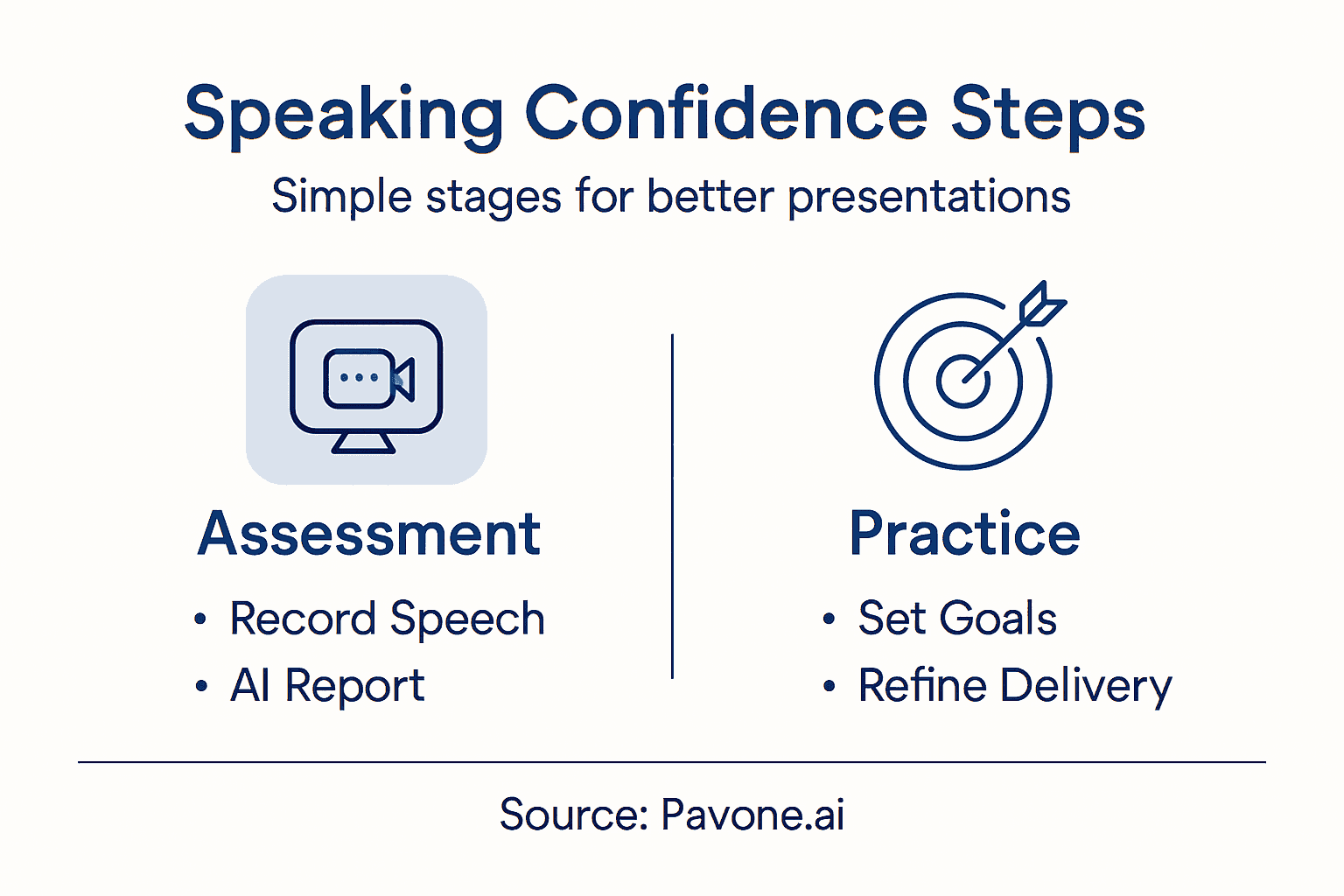
Practice is crucial in implementing these refinements. Rehearse your presentations multiple times, consciously applying the insights you have gained. Record yourself and compare your new delivery with previous versions, noting the incremental improvements. Pay special attention to your voice modulation, eye contact, and overall confidence. The goal is not perfection but continuous improvement that builds your speaking capabilities and professional presence.
Pro tip: Video record your presentations from different angles to gain a comprehensive view of your non verbal communication and delivery style.
Step 5: Verify progress and adjust your approach
Continuous improvement requires systematic tracking and strategic refinement of your speaking capabilities. Structured progress verification involves creating a comprehensive approach to measuring and enhancing your presentation skills.
Begin by establishing clear metrics for evaluation. Collect and compare performance data from multiple presentation recordings, looking for tangible improvements in key areas such as speaking tempo, vocal clarity, body language, and audience engagement. Pay attention to quantitative feedback like reduced filler word usage, increased eye contact duration, and more confident vocal projection. Additionally, seek external perspectives by requesting constructive feedback from colleagues, mentors, or trusted peers who can offer objective insights into your communication strengths and potential areas for development.
Create a personal development journal to document your speaking journey. Track each presentation attempt, noting specific challenges, breakthrough moments, and incremental improvements. This reflective practice helps you maintain motivation and provides a clear visual representation of your growing communication skills. Remember that progress is not linear and small setbacks are part of the learning process. The key is maintaining consistent effort and a growth mindset towards developing your presentation capabilities.
Pro tip: Develop a standardised self assessment template to ensure objective and consistent evaluation of your presentation performance.
Boost Your Speaking Confidence with AI-Driven Insights
Struggling to build speaking confidence for presentations is a common challenge that hinges on understanding your communication habits and setting clear improvement goals. This article highlights key pain points such as managing filler words, enhancing vocal clarity, and tracking progress effectively—areas where real-time, objective feedback is essential for meaningful growth. Using terms like “vocal fluency,” “non verbal communication,” and “SMART speaking goals,” it underscores the need for precise analysis and actionable insights to overcome anxiety and become a more compelling speaker.
Harness the power of technology to transform your presenting skills. At Pavone.ai, our AI-powered platform provides detailed evaluations of your speech—covering clarity, tone variation, pace, posture, and even eye contact. Whether you want to reduce filler words or refine your delivery, Pavone offers personalized feedback that helps you see real progress. Discover how easy it is to turn your presentations into confident performances with a tool trusted by professionals and students alike.
Ready to elevate your speaking confidence today? Visit Pavone.ai now and start recording your presentations for instant, detailed feedback. Explore how our platform supports your journey from assessment to mastery and finally to sustained growth in public speaking. Take control of your communication skills and make every presentation count.
Frequently Asked Questions
How can I assess my current speaking habits effectively?
To assess your speaking habits, record your presentations and use AI analysis tools to evaluate your performance. Focus on elements like vocal fluency, pronunciation clarity, and speaking pace to identify specific areas for improvement.
What are SMART goals for improving my speaking skills?
SMART goals are Specific, Measurable, Achievable, Relevant, and Time-bound objectives that guide your speaking improvement. For example, aim to reduce filler words by 50% in your next three presentations, ensuring you can track your progress clearly.
How do I practice speaking effectively with real-time feedback?
Utilise platforms that offer AI-assisted feedback by recording your presentations and analysing the results immediately. Focus on critical elements such as vocal clarity and tone modulation, and iterate on your performance with each practice session to see gradual improvements.
What steps should I take to refine my delivery after each practice?
After each practice, review the feedback received and concentrate on areas requiring improvement, such as speaking pace and body language. Rehearse your presentations multiple times while applying the insights gained, and compare recordings to note your progress.
How can I verify my progress in building speaking confidence?
To verify your progress, establish clear metrics for evaluation, such as monitoring speaking tempo and reducing filler words. Keep a personal development journal documenting your presentations and track improvements over time to maintain motivation and see tangible results.
Recommended
Ready to practice?
Start improving your speaking skills with AI-powered feedback and analysis.
Try Pavone Free