How Do I Prepare for Interview: Achieve Clear Confident Delivery

Stepping into a high-stakes interview can feel daunting, especially for professionals aiming to advance in competitive fields like Technology and Finance. Establishing a structured practice routine in a space that mirrors real interview conditions helps transform nerves into confidence. By embracing a personalised environment and focusing on adaptive practice tailored to individual needs, you will build sharper communication skills and reduce anxiety for your next interview.
Table of Contents
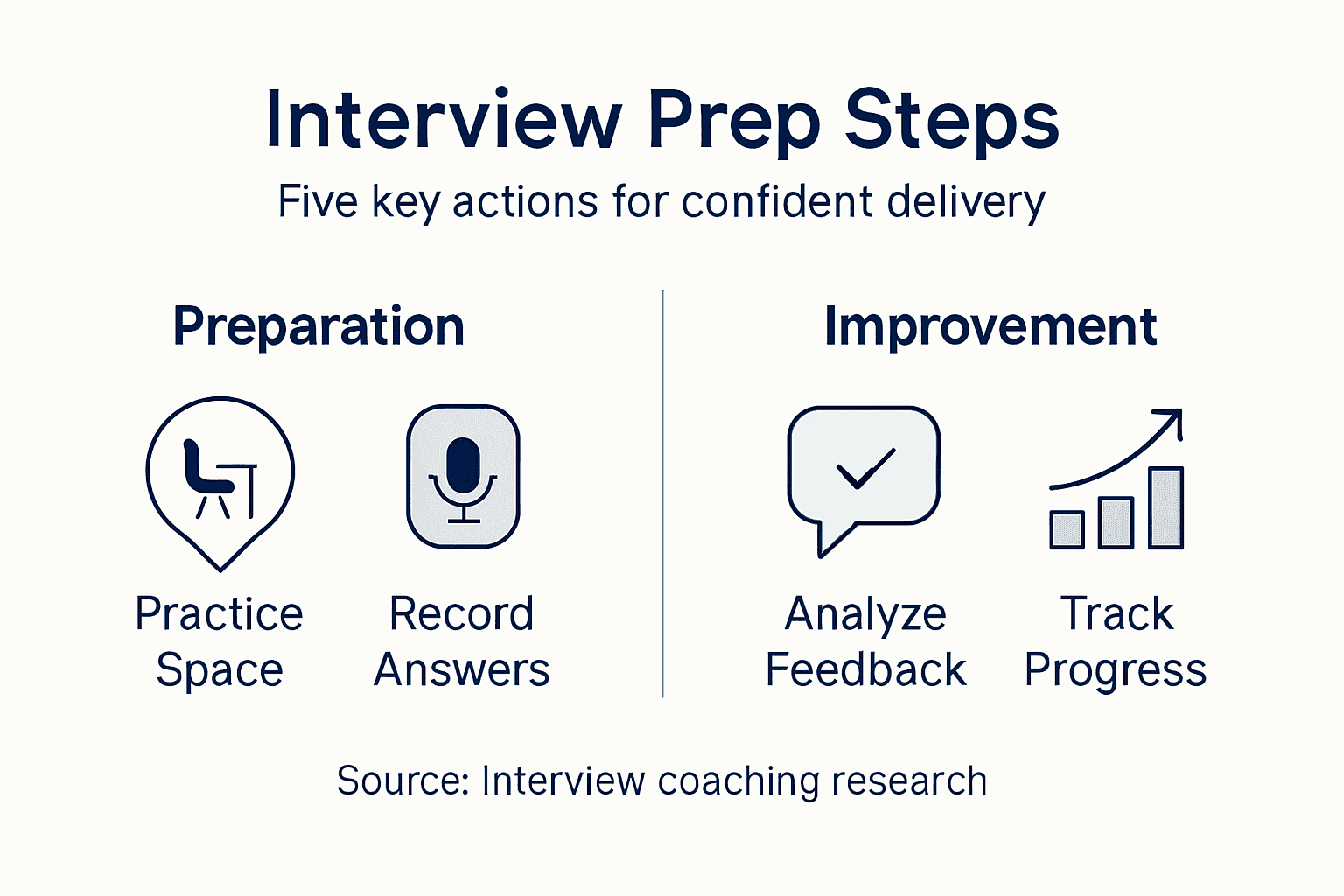
- Step 1: Set Up A Personalised Interview Practice Environment
- Step 2: Identify Common Questions And Record Sample Answers
- Step 3: Analyse Feedback To Improve Structure And Delivery
- Step 4: Refine Responses Focusing On Clarity And Confidence
- Step 5: Track Progress And Test Readiness For Real Interviews
Quick Summary
| Key Point | Explanation |
|---|---|
| 1. Create a tailored interview space | Establish a quiet and professional-looking area to enhance confidence and reduce distractions during practice sessions. |
| 2. Record and critique sample answers | Systematically identify common interview questions and practise recorded responses to improve clarity and communication skills. |
| 3. Analyse feedback for improvement | Evaluate your recorded responses focusing on content, delivery, body language, and coherence to enhance overall performance. |
| 4. Refine responses for precision and confidence | Focus on clear language, structured narratives, and positive framing to develop compelling and authentic interview answers. |
| 5. Track progress through structured methods | Implement metrics, feedback logs, and self-assessments to monitor improvement and ensure readiness for real interviews. |
Step 1: Set up a personalised interview practice environment
Creating a tailored interview practice space helps you develop confidence and refine your communication skills. By designing an environment that mimics professional settings, you’ll transform interview preparation from a stressful task into a strategic skill-building opportunity.
To establish your personalised practice zone, consider these essential elements:
- Choose a quiet, professional-looking space: Select a location with neutral background, good lighting, and minimal distractions
- Technical setup: Use a device with good camera quality and stable internet connection
- Practice attire: Dress in interview-appropriate clothing to simulate real conditions
- Recording equipment: Ensure your camera or recording tool captures clear video and audio
Researchers highlight that personalised learning environments are crucial for building targeted skills through adaptive practice. A mock interview setting allows you to rehearse answers while receiving targeted feedback.
Prepare your space like a professional studio: position your camera at eye level, test audio quality, and create a clean, uncluttered background that looks polished and intentional.
Top tip: Test your entire setup at least 24 hours before your first practice session to resolve any technical issues and ensure a smooth recording experience.
Step 2: Identify common questions and record sample answers
Developing a strategic approach to interview preparation involves mastering the art of anticipating and eloquently answering common interview questions. By identifying key questions and practising recorded responses, you’ll build confidence and refine your communication skills.
Start by researching and compiling a comprehensive list of standard interview questions, which typically include:
- Introductory questions: ‘Tell me about yourself’
- Experience-based queries: ‘Describe your leadership experience’
- Behavioural scenarios: ‘Give an example of a challenge you overcame’
- Career progression questions: ‘Where do you see yourself in five years?’
- Motivation assessments: ‘Why should we hire you?’
As researchers suggest, common interview questions are designed to assess your past experiences and predict future performance. Systematically record your responses to these questions, focusing on clarity, concision, and showcasing your unique professional strengths.
When recording, ensure you use your personalised practice environment, maintain professional attire, and aim for natural yet structured responses that highlight your skills and alignment with the role.

Top tip: Review and critique your recorded answers critically, paying attention to your tone, body language, and the structure of your responses.
Step 3: Analyse feedback to improve structure and delivery
Mastering interview performance requires a systematic approach to reviewing and refining your communication skills. By carefully analysing interview feedback, you’ll transform your recorded responses into powerful, confident presentations.
Develop a structured feedback analysis process by examining multiple critical dimensions:
- Verbal content: Assess the clarity and relevance of your answers
- Delivery style: Evaluate tone, pace, and vocal modulation
- Body language: Review non-verbal communication signals
- Structural coherence: Check logical flow and answer organisation
- Time management: Ensure responses are concise and well-paced
Researchers suggest systematically transcribing and evaluating interview responses to identify improvement opportunities. Pay special attention to:
- Specific language patterns you frequently use
- Unnecessary filler words or hesitations
- Areas where your narrative loses clarity or focus
By critically examining your recorded interviews, you’ll develop a keen understanding of your communication strengths and areas requiring refinement.
Top tip: Create a consistent feedback tracking sheet to document your progress and highlight specific areas of improvement across multiple practice sessions.
Here’s how various feedback dimensions contribute to your interview improvement process:
| Feedback Dimension | What It Evaluates | Sample Improvement Action |
|---|---|---|
| Verbal content | Clarity and directness of answers | Refine main message for precision |
| Delivery style | Tone, pace, vocal modulation | Practise voice control exercises |
| Body language | Gestures, posture, eye contact | Record and correct nervous habits |
| Structural coherence | Organisation and logical flow | Follow structured response models |
| Time management | Conciseness and timing | Use a timer during practice |
Step 4: Refine responses focusing on clarity and confidence
Transforming your interview communication requires strategic refinement of both content and delivery. By crafting clear interview narratives, you’ll develop responses that showcase your skills with precision and self-assurance.
Focus on these key strategies to enhance your communication effectiveness:
- Language precision: Choose words that are specific and meaningful
- Narrative structure: Develop logical, concise answer frameworks
- Positive framing: Transform potential weaknesses into growth opportunities
- Authentic expression: Balance professionalism with genuine personality
- Context alignment: Tailor responses to the specific job role
Researchers emphasise that interview communication skills can be systematically improved through deliberate practice. Pay particular attention to:
- Eliminating unnecessary filler words
- Creating crisp, well-articulated sentences
- Maintaining a confident yet humble tone
By consistently applying these principles, you’ll develop interview responses that are both compelling and authentic.
Top tip: Record yourself answering questions and critically review each response, focusing on your vocal tone, pace, and the clarity of your narrative arc.
Step 5: Track progress and test readiness for real interviews
Preparing for interviews requires a strategic approach to measuring and validating your communication skills. By systematically tracking interview preparation, you’ll transform nervous anticipation into confident, measurable progress.
Develop a comprehensive progress tracking strategy using these key methods:
- Performance metrics: Create numerical ratings for communication skills
- Video review logs: Document improvements across multiple practice sessions
- Skills checklist: Monitor development of specific interview competencies
- Confidence assessment: Rate your comfort level in different interview scenarios
- Response quality evaluation: Track the clarity and relevance of your answers
Researchers recommend work readiness assessments that provide comprehensive feedback on your interview preparedness. Consider implementing a structured evaluation process:
- Set baseline performance metrics
- Practice mock interviews regularly
- Compare and analyse your progress objectively
- Identify specific areas for targeted improvement
By maintaining a rigorous tracking system, you’ll transform interview preparation from a subjective experience to a data-driven journey of continuous improvement.
Top tip: Create a dedicated progress tracking spreadsheet with columns for skill areas, ratings, and specific improvement notes to maintain a clear, visual record of your interview preparation journey.
This table summarises effective progress tracking strategies for interview preparation:
| Tracking Method | Purpose | Example Usage |
|---|---|---|
| Performance metrics | Quantifies key skills objectively | Rate communication 1–5 scale |
| Video review logs | Monitors session-by-session change | Note improvements per attempt |
| Skills checklist | Ensures coverage of core areas | Tick off competencies mastered |
| Confidence assessment | Measures comfort in scenarios | Self-rate before/after practice |
| Response evaluation | Tracks clarity and relevance | Score each answer for impact |
Enhance Your Interview Confidence with Pavone.ai
Preparing for interviews often involves overcoming challenges like structuring clear answers, managing nervous body language, and maintaining confident delivery — all highlighted in the article “How Do I Prepare for Interview: Achieve Clear Confident Delivery”. If you find yourself struggling with these very hurdles or need a personalised way to analyse your speaking style and pacing, Pavone.ai offers the perfect solution. By focusing not just on what you say but how you say it, you can transform interview anxiety into polished communication skills.
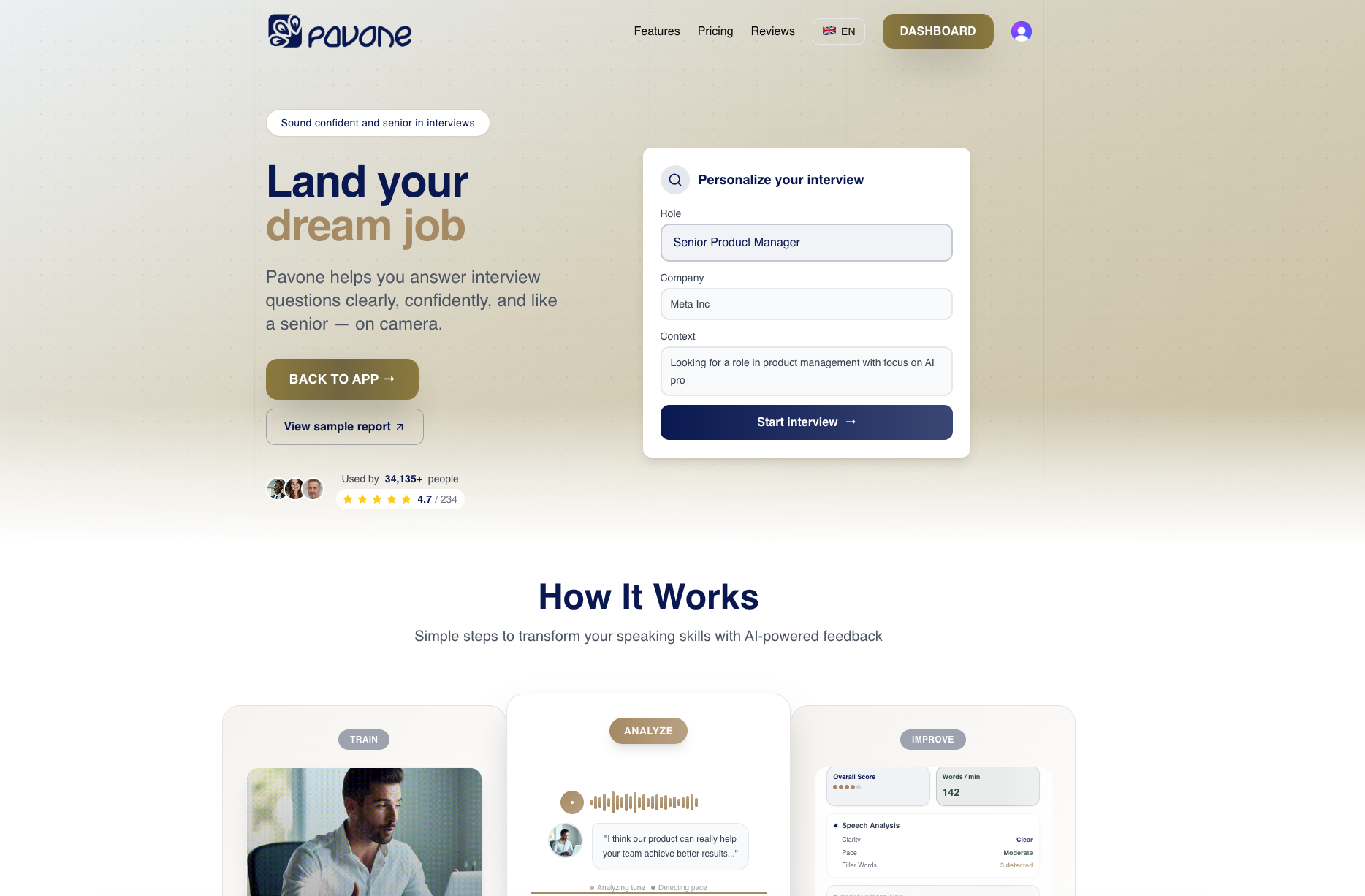
Ready to practice answers in a professional, private environment while receiving immediate feedback on clarity, structure, pacing, and confidence Build your skills efficiently with Pavone.ai and track your progress over time. Visit Pavone.ai to start your journey and see why it is trusted as the personal coach for professionals aiming to improve interview delivery. Don’t wait to gain the clarity and poise that can make all the difference — begin your confident interview preparation today. Learn more about how you can practice common interview questions and receive real-time feedback with expert precision.
Frequently Asked Questions
How can I create a personalised interview practice environment?
Creating a personalised interview practice environment involves selecting a quiet space with good lighting and minimal distractions. Set up your camera at eye level, ensure clear audio, and dress in interview-appropriate attire to simulate real conditions.
What common interview questions should I prepare for?
Common interview questions often include ‘Tell me about yourself’, ‘Describe your leadership experience’, and ‘Give an example of a challenge you overcame’. Compile a list of these questions and practice articulating your responses clearly and confidently.
How should I evaluate feedback on my interview practice responses?
Evaluate feedback by examining key areas such as the clarity of your verbal content, the effectiveness of your delivery style, and your body language. Make notes on specific improvements needed, such as eliminating filler words or enhancing your narrative structure.
What strategies can I use to refine my interview responses?
To refine your interview responses, focus on choosing precise language, developing a logical answer framework, and maintaining a confident tone. Practice delivering your refined responses regularly to internalise them and increase your comfort level.
How can I measure my progress in interview preparation?
You can measure your progress by creating a tracking system that includes performance metrics, video logs of your practice sessions, and self-assessments of your confidence. Regularly review your tracking sheets to identify areas of improvement and adjust your practice accordingly.
Why is it important to simulate interview conditions during practice?
Simulating interview conditions during practice helps you become accustomed to the pressure of a real interview, enhancing your delivery and overall performance. By practising in a setting that mirrors the actual interview, you build confidence and reduce anxiety over time.
Recommended
- Master Business Interview Questions and Answers for Senior Roles | Pavone Academy
- How to Speak Confidently in Job Interviews - Pavone
- Interviewing for Mid and Senior Roles: Succeed with Confidence | Pavone Academy
- Corporate Interview Questions: Succeeding with Clarity | Pavone Academy
- Create Your Success: Ultimate Goal Setting Checklist
- All you need to know for a TEFL job interview – Part 1 - EBC Trinity CertTESOL and TEFL courses
Ready to practice?
Start improving your speaking skills with AI-powered feedback and analysis.
Try Pavone Free