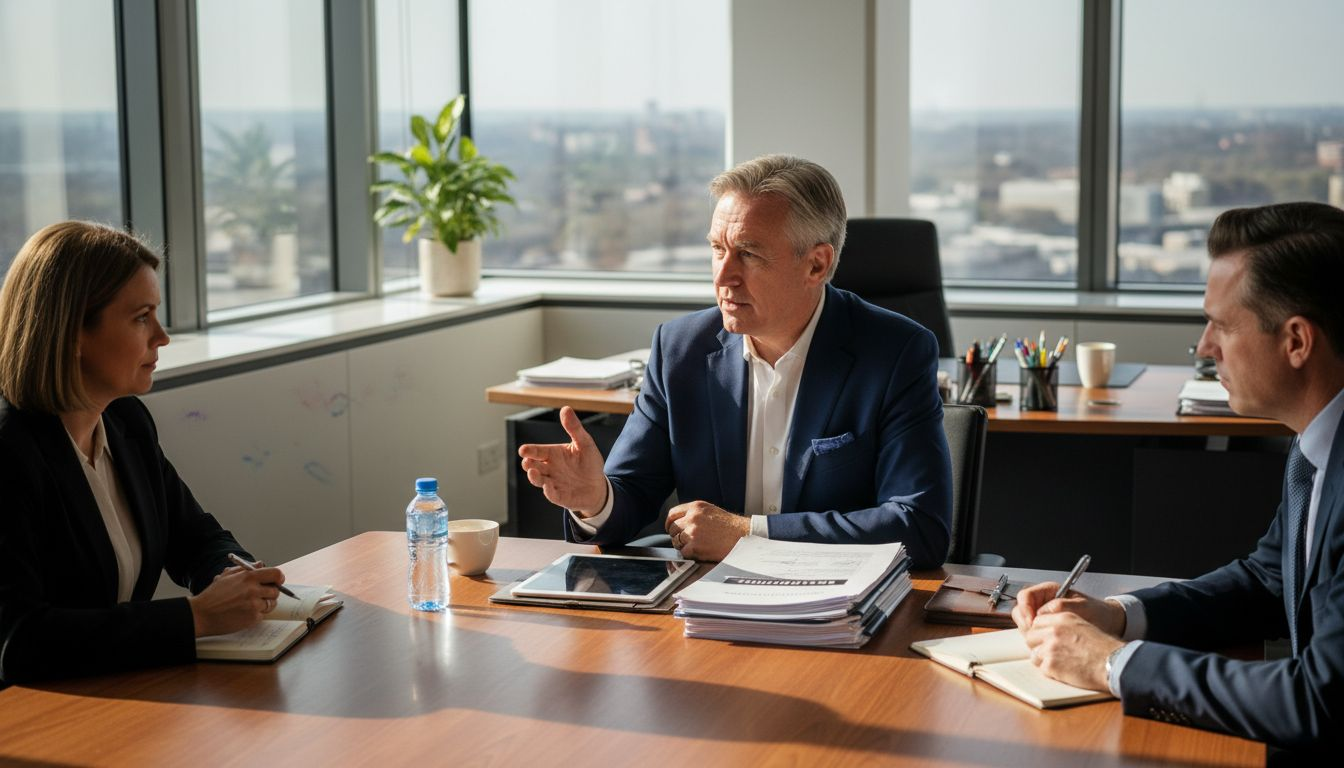
Job Interview Preparations for Confident Video Responses

Facing a virtual interview for a senior role can feel daunting, even for experienced professionals in technology. Your environment and preparation have a real impact on both confidence and performance during video interviews. Creating a quiet, professional setting and structuring your answers with care enables you to deliver authentic, clear, and impressive responses. This guide outlines actionable steps, from optimising your practice space to integrating feedback, designed to help you present your most competent self.
Table of Contents
- Step 1: Set Up Your Interview Practice Environment
- Step 2: Identify Key Questions And Structure Your Answers
- Step 3: Record Responses Using Targeted Techniques
- Step 4: Review Transcriptions And Analyse Delivery
- Step 5: Implement Feedback To Enhance Performance
Quick Summary
| Key Point | Explanation |
|---|---|
| 1. Create a Professional Environment | Choose a quiet, tidy space with good lighting and camera positioning to enhance your confidence and performance. |
| 2. Use the STAR Method | Structure your responses by outlining the Situation, Task, Action, and Result to clearly showcase your experience. |
| 3. Record and Analyse Responses | Record your practice interviews to evaluate your delivery, non-verbal cues, and areas for improvement effectively. |
| 4. Seek Constructive Feedback | Gather and implement feedback on your performance to continuously refine your interview skills and communication techniques. |
| 5. Transcribe for Self-Assessment | Transcribe your responses to examine clarity and coherence, identifying specific areas for language and content improvement. |
Step 1: Set up your interview practice environment
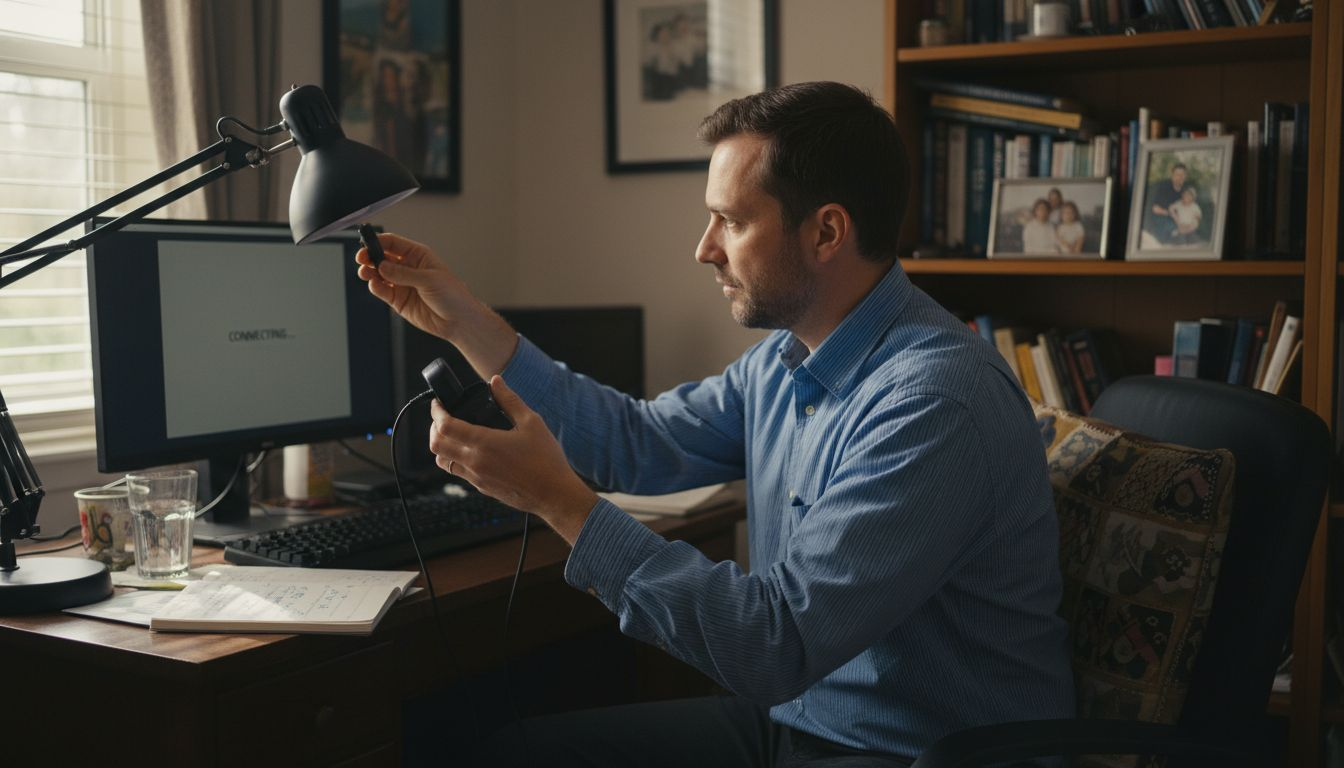
Preparing an optimal video interview practice space requires strategic planning and attention to technical details. Your environment directly impacts your performance and confidence during virtual interviews.
Start by selecting a quiet, professional setting with minimal background noise and distractions. Professional interview preparation emphasises creating an environment that supports authentic and confident responses. Consider these key elements:
- Choose a neutral, uncluttered background
- Ensure consistent, soft lighting facing you directly
- Position your camera at eye level for natural eye contact
- Use a stable, high-speed internet connection
Technical setup matters as much as physical space. Test your equipment beforehand to avoid last-minute complications:
Here is a summary of the most impactful elements to optimise your video interview environment:
| Aspect | Why It Matters | Common Pitfalls |
|---|---|---|
| Background | Reduces distractions, appears tidy | Cluttered or overly busy spaces |
| Lighting | Enhances visibility and professionalism | Harsh backlighting or shadows |
| Camera Position | Natural eye contact, engages interviewer | Camera too low or angled poorly |
| Connectivity | Ensures smooth communication | Unstable or slow internet |
- Check microphone and camera quality
- Verify audio input and output levels
- Close unnecessary computer applications
- Have a backup device or connection method ready
A well-prepared environment reduces anxiety and helps you present your most professional self.
Pro tip: Conduct a test recording to review your background, lighting, and camera positioning before your actual interview practice session.
Step 2: Identify key questions and structure your answers
Successfully navigating job interviews requires strategic preparation and a systematic approach to anticipating and responding to potential questions. Your ability to craft focused interview responses can significantly influence the interviewer’s perception of your professional capabilities.
Start by thoroughly researching the role and organisation to identify the critical competencies they seek. Break down the job description into core skills and potential interview themes:
- Technical expertise relevant to the position
- Leadership and teamwork capabilities
- Problem-solving and strategic thinking skills
- Adaptability and learning agility
- Specific industry or role-related knowledge
Utilise the STAR method to structure your responses systematically:
- Situation: Briefly describe the context
- Task: Explain your specific responsibility
- Action: Detail the steps you took
- Result: Share quantifiable outcomes and learnings
Structured responses demonstrate clarity, professionalism, and strategic thinking.
Anticipate common questions by reviewing typical interview scripts for your industry, preparing concise yet comprehensive answers that showcase your unique professional narrative.
Pro tip: Practice your responses aloud, recording yourself to refine delivery and identify areas for improvement.
Step 3: Record responses using targeted techniques
Effective video interview practice requires strategic recording approaches that capture your authentic professional persona. Advanced interview preparation techniques leverage technology to provide nuanced performance feedback, helping you refine your communication skills.
When recording your interview responses, focus on creating high-quality, professional video demonstrations that showcase your capabilities:
- Maintain consistent eye contact with the camera
- Speak with clear, measured pronunciation
- Use natural hand gestures to enhance communication
- Dress in professional attire matching the interview context
- Ensure consistent, soft lighting that illuminates your face
Implement a structured approach to recording your responses:
- Prepare your interview questions in advance
- Set up your recording environment
- Practice your responses multiple times
- Review and critically analyse your recordings
- Iterate based on your observations
Deliberate practice transforms raw potential into polished professional communication.
Pay special attention to non-verbal communication and emotional intelligence, as these elements significantly impact how interviewers perceive your professional competence.
Pro tip: Create a feedback journal to track your improvement and identify specific areas requiring further development.
Step 4: Review transcriptions and analyse delivery
Transcribing your interview responses provides a powerful mechanism for detailed self-assessment and performance improvement. Intelligent speech recognition technologies enable precise capture of your verbal communication, revealing nuanced insights into your interview delivery.
When analysing your transcriptions, focus on these critical evaluation dimensions:
- Verbal clarity and articulation
- Grammatical structure and coherence
- Pace and rhythm of speech
- Use of professional vocabulary
- Contextual relevance of responses
Implement a systematic approach to transcription analysis:
- Transcribe your recorded interview responses
- Identify recurring speech patterns
- Highlight potential improvement areas
- Compare against professional communication standards
- Document specific refinement strategies
Objective self-analysis transforms interview performance from good to exceptional.
Pay particular attention to filler words, hesitation markers, and sentence complexity to enhance your overall communication effectiveness.
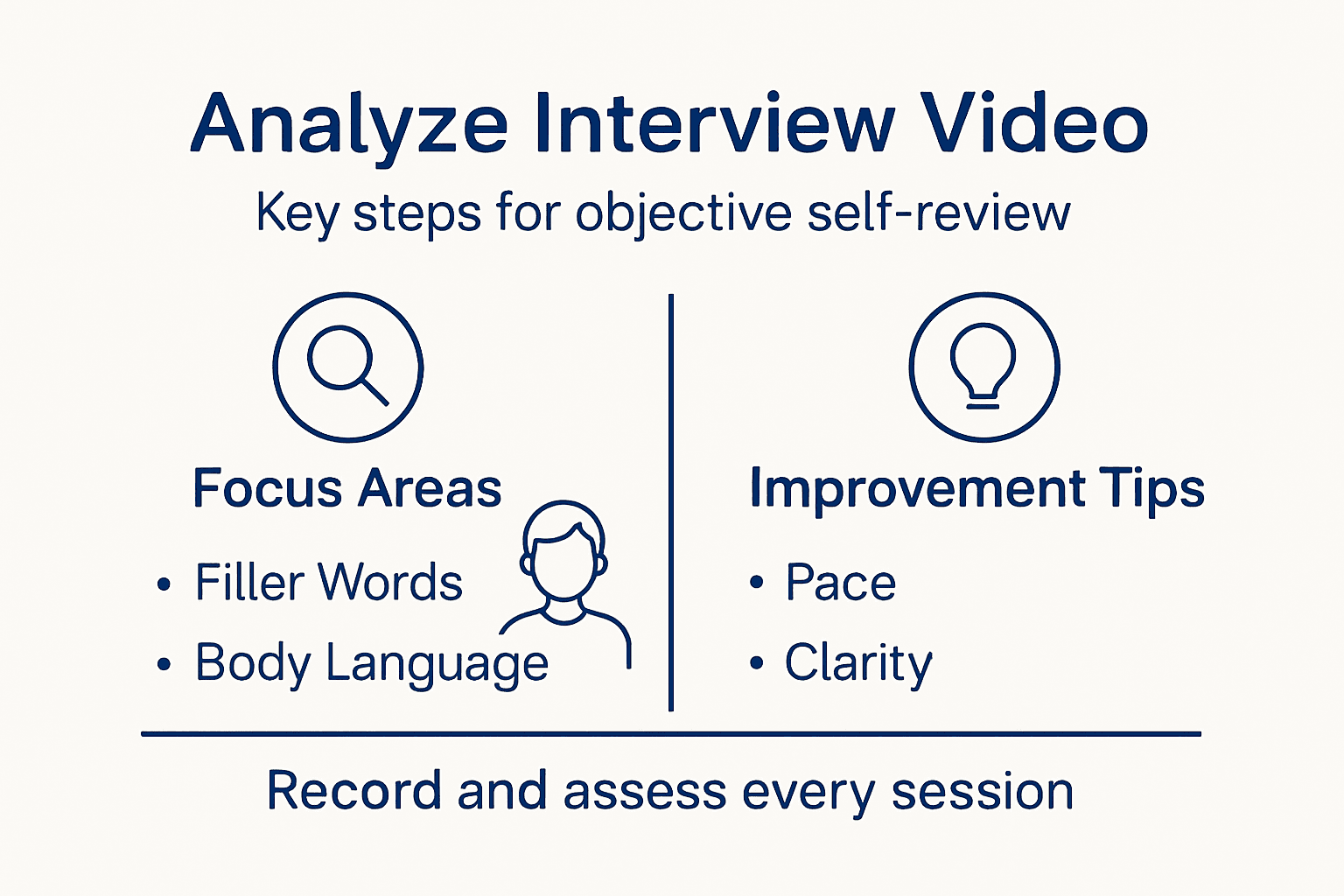
The following table contrasts self-assessment methods to enhance your interview preparation:
| Method | Key Benefit | Best Used For |
|---|---|---|
| Video Review | Identifies visual presentation issues | Non-verbal cues, body language, attire |
| Audio Analysis | Assesses speech clarity and pacing | Pronunciation, filler words, tone |
| Transcript | Refines content and structure | Grammar, structure, vocabulary choice |
Pro tip: Create a personalised scoring rubric to track your communication skills objectively across multiple practice sessions.
Step 5: Implement feedback to enhance performance
Transforming interview skills requires a strategic approach to integrating constructive feedback. Interactive feedback systems enable candidates to engage in dynamic conversations that support continuous professional development and communication refinement.
Develop a structured method for implementing performance improvements:
- Break down feedback into specific, actionable components
- Prioritise critical areas for immediate development
- Create targeted practice strategies for each identified skill gap
- Track progress through systematic performance measurements
- Maintain a growth mindset towards continuous learning
Organise your feedback implementation process:
- Review detailed performance analysis
- Categorise improvement areas
- Design specific skill enhancement strategies
- Practice refined communication techniques
- Reassess and validate improvements
Consistent, purposeful practice transforms potential into professional excellence.
Pay special attention to non-verbal communication, response structure, and linguistic precision when refining your interview delivery.
Pro tip: Maintain a dedicated development journal documenting each improvement iteration to visualise your professional communication evolution.
Boost Your Confidence with Targeted Video Interview Practice
Nailing video interviews is about more than just knowing what to say. This article highlights common challenges like managing your environment, structuring answers clearly with the STAR method, and analysing your delivery for clarity and confidence. Many candidates struggle with filler words, pacing, and maintaining natural eye contact—all critical factors that influence how professional and senior you appear.
Pavone.ai offers a smart solution that directly addresses these pain points by providing a private, easy-to-use platform where you can record real interview-style answers anytime. The platform transcribes your responses and gives immediate, actionable feedback on clarity, pacing, structure, and confidence so you know exactly where to improve. With Pavone as your personal interview coach, you transform nervous trial runs into polished, professional conversations.
Improve your interview skills now with Pavone.ai
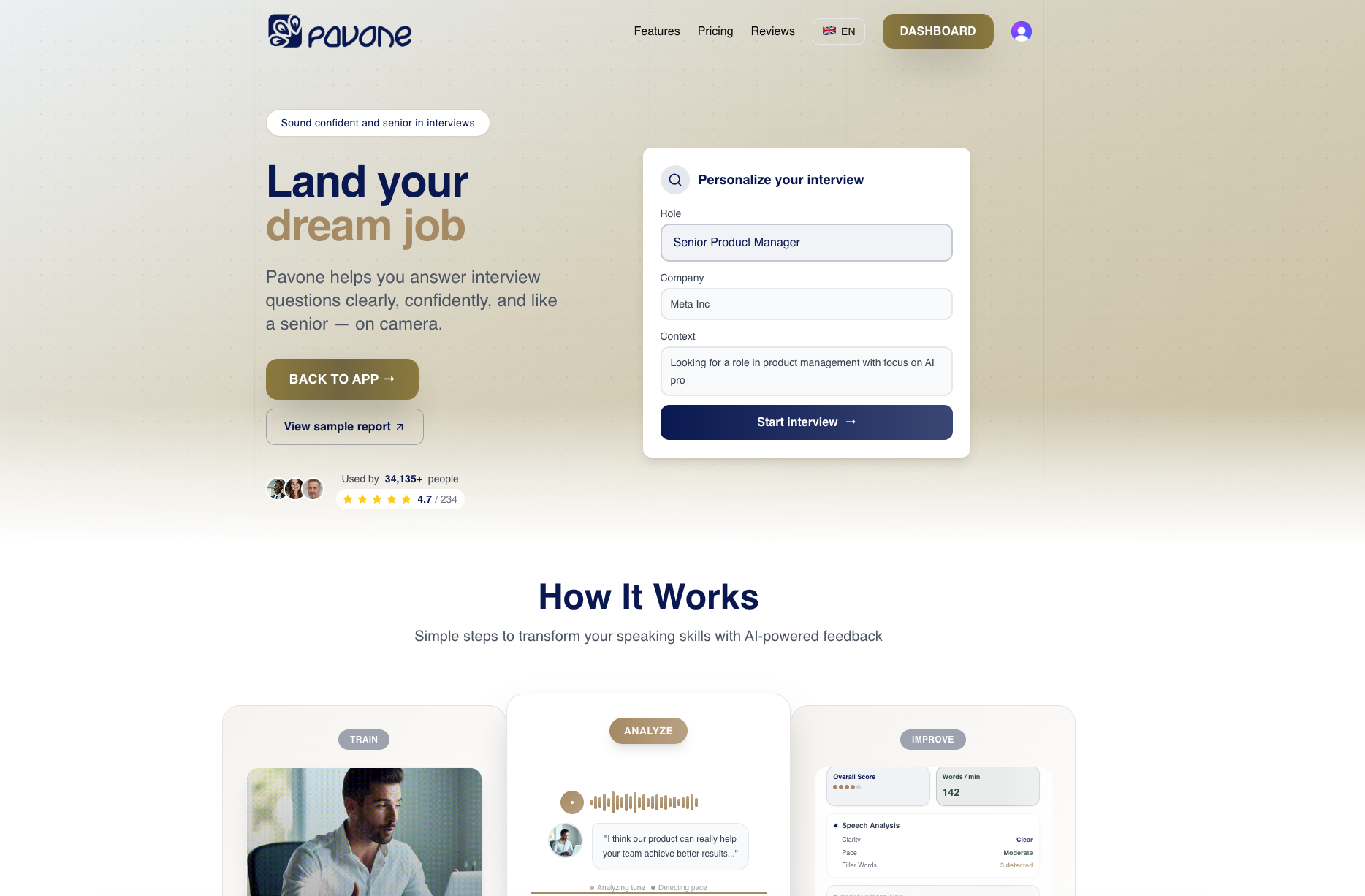
Take control of your interview preparation today by practising with Pavone’s focused feedback system that fits effortlessly into your busy schedule. Visit Pavone.ai to start turning your video interview challenges into real strengths.
Frequently Asked Questions
How can I create a professional video interview environment?
Creating a professional video interview environment involves choosing a quiet, uncluttered background with soft lighting facing you directly. Ensure the camera is positioned at eye level and that you have a stable internet connection to minimise disruptions.
What should I focus on while structuring my answers for a video interview?
Focus on the STAR method to structure your answers: describe the Situation, explain your Task, outline the Actions you took, and share the Result. This clear format will help you articulate your experiences effectively and demonstrate your competencies.
How can I analyse my performance after recording my interview responses?
After recording your responses, transcribe the video to assess verbal clarity, grammar, pace, and coherence. Highlight areas needing improvement, and compare your performance against professional communication standards for better refinement.
What techniques can I use to practice my video interview responses effectively?
To practice effectively, record your responses multiple times and review the footage critically. Focus on maintaining eye contact, clear pronunciation, and natural hand gestures, adjusting your approach based on your observations.
How can I implement feedback to improve my video interview performance?
To implement feedback, break it down into specific, actionable tasks and prioritise them for immediate development. Create targeted practice strategies for each skill gap identified and regularly track your progress to visualise your improvement.
What common pitfalls should I avoid when preparing for video interviews?
Avoid common pitfalls such as poor lighting, cluttered backgrounds, and unstable internet connections. Ensure all equipment is in good working order and eliminate distractions to project a confident, professional image during your interview.
Recommended
- How to Speak Confidently in Job Interviews - Pavone
- Master Business Interview Questions and Answers for Senior Roles | Pavone Academy
- How Do I Prepare for Interview: Achieve Clear Confident Delivery | Pavone Academy
- Corporate Interview Questions: Succeeding with Clarity | Pavone Academy
- All you need to know for a TEFL job interview – Part 1 - EBC Trinity CertTESOL and TEFL courses
- From Classroom to Career: Student Success Strategies that Work
Ready to practice?
Start improving your speaking skills with AI-powered feedback and analysis.
Try Pavone Free