
Why Monitor Speaking Pace for Career Success

Every job interview or business meeting can feel like a balancing act between clarity and self-assurance. For early-career professionals aiming to stand out in competitive sectors like UK technology or American marketing, mastering your speaking pace is more than a soft skill—it shapes how confidently and clearly you are understood. Knowing how to adjust your words per minute for better comprehension and presence can help you overcome anxiety and make a stronger impression, especially with the rise of AI-driven interview assessments.
Table of Contents
- Defining Speaking Pace And Its Importance
- Key Effects On Communication And Understanding
- How Speaking Pace Influences Interviews
- Using AI Tools For Real-Time Feedback
- Common Pitfalls And Ways To Improve
Key Takeaways
| Point | Details |
|---|---|
| Importance of Speaking Pace | Speaking pace significantly impacts audience comprehension and engagement, influencing how messages are perceived. |
| Optimal Speaking Pace Range | Most professionals should aim for a speaking pace of 125-150 words per minute for clarity and effectiveness. |
| Impact on Professional Perceptions | In interviews and presentations, effective pace can signal confidence and competence, affecting career opportunities. |
| AI Tools for Improvement | Utilising AI-driven tools can provide personalised feedback on speaking pace, facilitating targeted communication skill development. |
Defining Speaking Pace And Its Importance
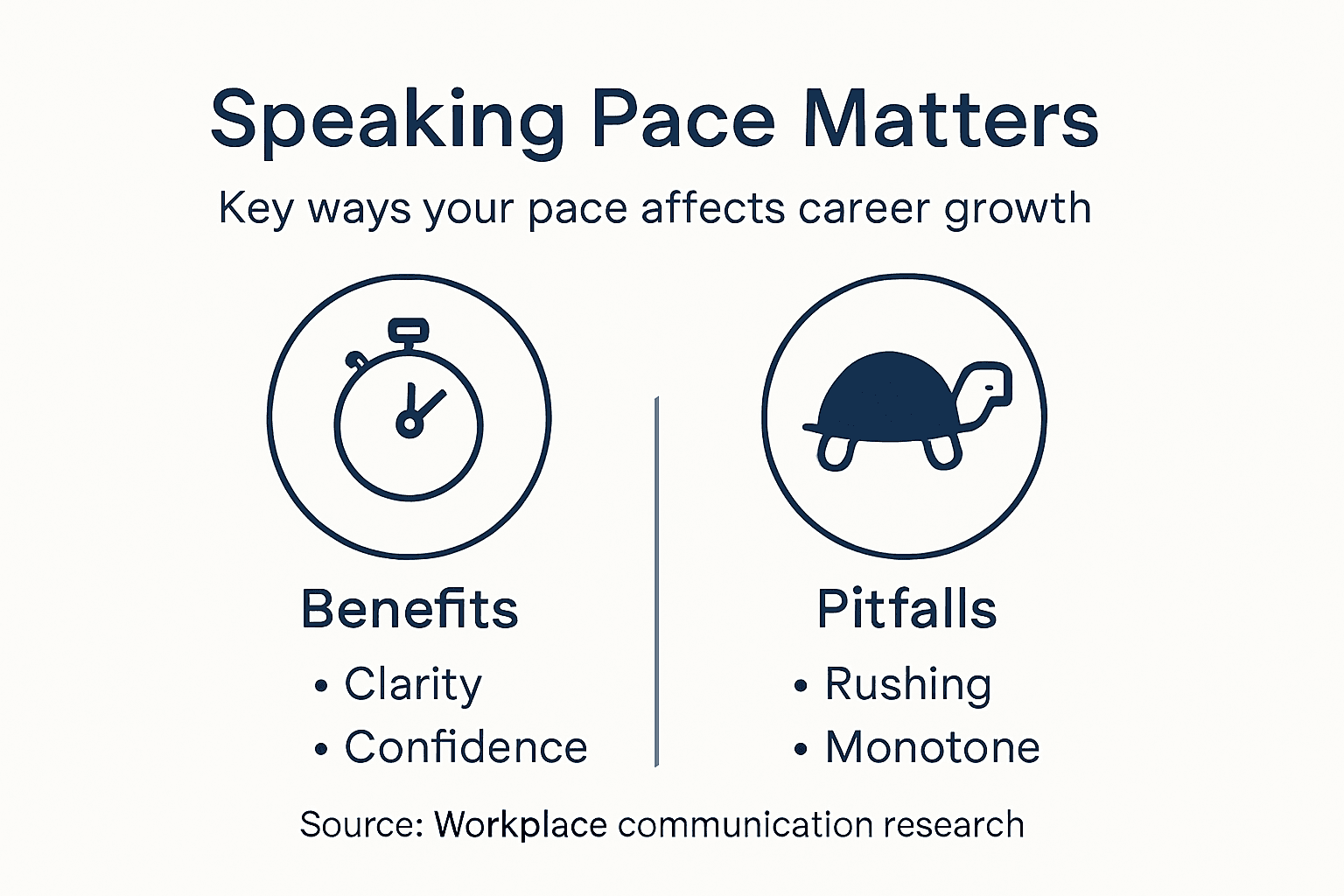
Speaking pace represents the speed at which individuals deliver words and ideas, typically measured in words per minute. Speaking pace is a critical communication skill that significantly impacts professional interactions, influencing how messages are perceived and understood. Speaking pace matters profoundly because it directly affects audience comprehension and engagement.
The optimal speaking pace balances clarity and dynamism. Communication experts suggest that most professionals speak between 125-150 words per minute, which allows for clear articulation without becoming monotonous. Speaking too quickly can create confusion, while speaking too slowly risks losing audience attention. Effective communicators learn to modulate their pace strategically:
- Adjust speed based on content complexity
- Use intentional pauses for emphasis
- Match pace to audience comprehension levels
- Vary rhythm to maintain listener engagement
Professional impact extends beyond mere word delivery. Pace influences communication effectiveness by signalling confidence, expertise, and emotional intelligence. Non-native speakers, in particular, find that mastering speaking pace can dramatically improve their perceived professional competence.
Pro tip: Practice recording yourself speaking and analyse your natural pace to identify areas for improvement.
Key Effects On Communication And Understanding
Communication effectiveness fundamentally depends on how speakers manage their verbal delivery, with speaking pace playing a critical role in audience comprehension. Speaking too quickly or slowly can dramatically undermine message clarity and listener engagement. Pacing directly impacts communication competency, influencing how audiences perceive and process information.
The neurological and psychological effects of speaking pace are complex and multifaceted. When speakers maintain an optimal pace, they create several important communication outcomes:
- Enhance listener comprehension
- Reduce cognitive processing strain
- Improve information retention
- Signal confidence and expertise
- Create emotional connection with audience
Cognitive processing requires listeners to simultaneously absorb, interpret, and contextualise spoken information. A well-modulated speaking pace helps listeners map linguistic content against their existing mental frameworks, enabling smoother understanding. Conversely, inconsistent or inappropriate pacing can overwhelm or disengage listeners, causing them to lose track of the core message.
Professional communicators understand that pace is not about speaking quickly or slowly, but about strategic variation. Different contexts—such as technical presentations, motivational speeches, or interpersonal negotiations—demand nuanced approaches to verbal delivery. Skilled communicators learn to adjust their speaking rhythm dynamically, matching the complexity of content and the receptiveness of their audience.
Pro tip: Record and analyse your speaking patterns to identify natural pace variations and develop more intentional communication strategies.
How Speaking Pace Influences Interviews
Interview communication represents a critical moment where speaking pace can dramatically influence professional perceptions. Candidate speaking dynamics significantly impact interviewer evaluations, with subtle variations in verbal delivery potentially determining career opportunities. The way professionals manage their speaking rhythm communicates far more than just words.
Research reveals several key insights about speaking pace during interviews:
- Demonstrates mental clarity and structured thinking
- Reflects emotional composure and confidence
- Signals professional communication skills
- Helps manage interview anxiety
- Enables clearer information transmission
Optimal speaking pace typically ranges between 130-150 words per minute, a zone that balances comprehensive communication with listener comprehension. Speaking too rapidly suggests nervousness or lack of preparation, while speaking too slowly may indicate uncertainty or limited engagement. Professional communicators understand that consistent pace supports interview success, creating a perception of competence and self-assurance.

Interestingly, interview contexts—whether conducted by humans or AI systems—subtly alter speaking patterns. Candidates often unconsciously adjust their pace based on perceived social dynamics, with technological interfaces potentially inducing different verbal behaviours. Understanding these nuanced communication mechanisms can help professionals develop more adaptable speaking strategies.
Here is a summary table illustrating speaking pace recommendations across various professional contexts:
| Context | Recommended Pace (wpm) | Typical Audience | Strategic Benefit |
|---|---|---|---|
| Business Presentation | 125-150 | Colleagues, clients | Improves clarity |
| Interview | 130-150 | Employers, recruiters | Shows confidence |
| Technical Briefing | 120-135 | Specialists | Enhances detail retention |
| Motivational Speech | 140-160 | General audience | Boosts engagement |
Pro tip: Practice mock interviews while recording your speaking pace to identify and smooth out unintentional speed fluctuations.
Using AI Tools For Real-Time Feedback
Artificial intelligence has revolutionised the approach to communication skill development, offering unprecedented opportunities for precise, personalised feedback. Advanced speech analysis technologies now provide professionals with real-time insights into their verbal delivery, transforming how individuals understand and improve their speaking patterns.
AI-powered speaking tools offer multiple sophisticated features:
- Instant pace detection and analysis
- Comprehensive linguistic breakdown
- Objective performance metrics
- Personalised improvement recommendations
- Contextual communication insights
Professional development has been dramatically enhanced by these technological innovations. AI-based speaking platforms dynamically adapt to individual communication styles, offering nuanced feedback that traditional methods could never provide. These tools go beyond simple speed measurement, examining emotional tone, clarity, confidence, and contextual appropriateness of verbal communication.
The technological approach enables unprecedented self-awareness. By capturing micro-variations in speaking pace, tone, and structure, AI tools help professionals identify subtle communication patterns that might otherwise remain unnoticed. This granular analysis allows for targeted, incremental improvements in verbal communication skills, making professional growth more accessible and measurable.
Below is a reference table comparing traditional and AI-driven speaking feedback methods:
| Feedback Method | Analysis Depth | Personalisation Level | Real-Time Capability |
|---|---|---|---|
| Self-Recording | Basic | Low | No |
| Peer Review | Subjective | Moderate | No |
| AI Tools | Advanced | High | Yes |
Pro tip: Select an AI speaking tool that provides comprehensive analytics and practice consistently to track your communication skill progression.
Common Pitfalls And Ways To Improve
Professional communication requires nuanced understanding of speaking challenges that can undermine effective message delivery. Common speaking pitfalls compromise communication effectiveness, creating barriers that prevent professionals from connecting authentically with their audience.
Primary communication challenges include:
- Monotonous vocal delivery
- Speaking too rapidly or slowly
- Insufficient breath control
- Lack of emotional variation
- Unclear articulation
- Excessive use of filler words
Strategic improvement involves deliberate practice and self-awareness. Professional communication skills demand consistent refinement, with targeted techniques helping individuals overcome natural speaking limitations. Professionals must develop a multifaceted approach that addresses both technical and emotional aspects of verbal communication.
Mastering communication requires understanding that speaking pace is not just about speed, but about creating meaningful connections. Effective communicators learn to modulate their voice, use strategic pauses, and maintain a rhythm that keeps listeners engaged. This involves developing emotional intelligence, practicing active listening, and remaining attentive to audience reactions.
Pro tip: Record yourself speaking and analyse the recording with specific focus on pace, clarity, and emotional resonance.
Take Control of Your Speaking Pace to Accelerate Career Success
Mastering your speaking pace is key to conveying confidence and clarity in professional settings. If you find yourself struggling with inconsistent speed or want to harness the power of pace to engage audiences and interviewers more effectively, Pavone.ai offers the perfect solution. Our AI-driven platform provides detailed, real-time feedback on your speech patterns including pace, tone, and clarity so you can transform your communication skills.
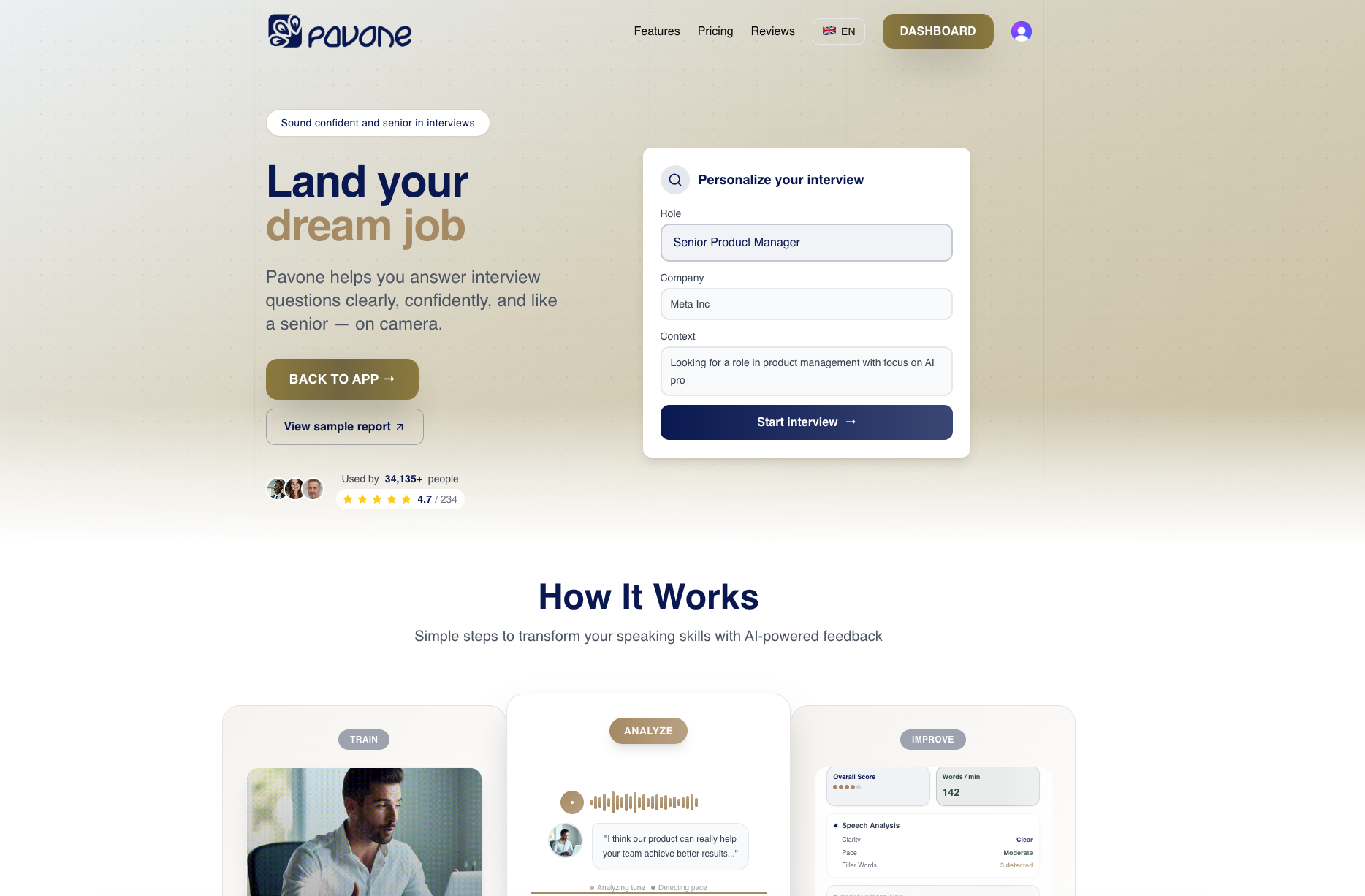
Unlock your potential with Pavone.ai today and start receiving personalised insights that help you refine your verbal delivery. Whether preparing for an important interview or polishing your presentations, our easy-to-use tools empower you to practise smarter and track your progress over time. Visit Pavone.ai now and begin your journey toward becoming a more confident and articulate communicator.
Frequently Asked Questions
What is speaking pace and why is it important?
Speaking pace is the speed at which words are articulated, typically measured in words per minute. It is crucial for effective communication, as it affects audience comprehension, engagement, and overall impression during professional interactions.
How can I determine my optimal speaking pace?
To find your optimal speaking pace, practice recording yourself while speaking. Aim for a pace between 125-150 words per minute. Adjust your speed based on audience comprehension and content complexity, analysing recordings to identify areas for improvement.
How does speaking pace influence interview outcomes?
Speaking pace during interviews can demonstrate your mental clarity, emotional composure, and professional communication skills. An optimal pace helps convey confidence and facilitates clearer information transmission, positively influencing how interviewers perceive candidates.
What are some common pitfalls to avoid regarding speaking pace?
Common pitfalls include speaking too quickly or slowly, using a monotonous tone, or over-relying on filler words. To improve, focus on modulating your pace, maintaining clarity, and ensuring emotional variation to engage your audience effectively.
Recommended
- Pavone - Your AI Speaking Coach
- Pavone - Your AI Speaking Coach
- Academy - Public Speaking & Communication Tips | Pavone
- Speak Confidently in Meetings - Pavone Academy
- Create Your Success: Ultimate Goal Setting Checklist
- Teacher talking time, control it to keep your students focussed - EBC Trinity CertTESOL and TEFL courses
Ready to practice?
Start improving your speaking skills with AI-powered feedback and analysis.
Try Pavone Free