Succeed in a Netflix interview: confident virtual delivery
TL;DR:
- Netflix prioritizes clear, candid communication, sound judgment, and independent decision-making.
- Using the STAR method helps structure concise, impactful answers demonstrating Netflix values.
- On-camera confidence and deliberate practice are essential for succeeding in virtual Netflix interviews.
Landing a Netflix interview is exciting. But here is what surprises most candidates: Netflix does not care whether you sound like a native English speaker or whether your home office looks like a film set. What they do care about is whether you can communicate clearly, think independently, and demonstrate sound judgement under pressure. Netflix’s virtual interview process is now standard, and success hinges far more on structured, candid delivery than on technical wizardry. This guide will walk you through exactly what Netflix expects, how to structure your answers, and how to show up on camera with the kind of confidence that gets you to the next round.
Table of Contents
- What makes a Netflix interview unique?
- Essential communication skills for Netflix’s virtual format
- Mastering structured answers with the STAR method
- Building on-camera confidence and avoiding common pitfalls
- The real reason Netflix interviews trip up even strong candidates
- Take the next step in your Netflix interview preparation
- Frequently asked questions
Key Takeaways
| Point | Details |
|---|---|
| Netflix prioritises clarity | Clear, structured answers matter more than technical know-how in Netflix interviews. |
| STAR method is essential | Using the STAR method builds relevant, concise stories that impress interviewers. |
| Practise on-camera delivery | Rehearse your answers virtually to boost confidence and natural delivery. |
| Culture fit is critical | Demonstrate candour and independent thinking to match Netflix’s values. |
What makes a Netflix interview unique?
Netflix is not like most companies you will interview with. Where many large technology firms focus heavily on algorithmic puzzles or case studies, Netflix places cultural fit at the very centre of its hiring process. Their famous Culture Deck is not just a marketing document. It is a genuine blueprint for how they expect employees to behave, and interviewers actively test for it.
Specifically, Netflix prioritises three qualities above almost everything else: candour, sound judgement, and the ability to make independent decisions. Netflix emphasises clear, direct communication in interviews, especially in behavioural rounds testing culture values like candour, judgement, and independent decision-making. This means you will be asked questions like “Tell me about a time you disagreed with your manager” or “Describe a decision you made without all the information you needed.” These are not trick questions. They are invitations to demonstrate senior-level thinking.
“Netflix does not want polished corporate-speak. They want honest, direct, well-reasoned answers that show you can handle ambiguity without constant supervision.”
Here is how Netflix interviews compare to a typical Big Tech interview process:
| Factor | Typical Big Tech | Netflix |
|---|---|---|
| Primary focus | Technical skills, algorithms | Cultural fit, communication |
| Interview format | Coding rounds, case studies | Behavioural, situational |
| Key quality tested | Problem-solving speed | Candour, judgement, clarity |
| Virtual format | Mixed | Predominantly virtual |
| Answer style expected | Precise and technical | Clear, candid, senior-level |
The virtual setting adds another layer of complexity. Without the natural energy of a face-to-face conversation, your words carry even more weight. Pauses feel longer. Rambling answers lose the interviewer faster. This is why candidates who excel in traditional settings sometimes struggle at Netflix. For more on how to approach this kind of process, the senior-level interview advice on Pavone’s academy is a strong starting point.
Now that you know what sets the stage for Netflix interviews, let us clarify the essential communication skills Netflix expects.
Essential communication skills for Netflix’s virtual format
Netflix interviewers are listening for specific things. Not your accent. Not whether you use perfect grammar. They are listening for clarity, structure, and evidence of senior-level thinking. Understanding this distinction is genuinely liberating, especially if English is not your first language.
Virtual interviews are now common, and preparation should focus on thinking out loud, structured responses using the STAR method, and production-quality explanations. The STAR method, which stands for Situation, Task, Action, and Result, gives your answers a clear shape that interviewers can follow easily. It stops you from rambling and ensures you always land on a concrete outcome.
Here is what Netflix hiring managers are specifically listening for:
- Structure: Does your answer have a clear beginning, middle, and end?
- Conciseness: Can you make your point without unnecessary detail?
- Candour: Are you being direct and honest, even about difficult situations?
- Judgement: Does your answer show that you weighed options and made a reasoned decision?
- Outcome focus: Do you finish with a measurable or meaningful result?
For non-native speakers, the most useful technique is thinking out loud. Rather than pausing silently to gather your thoughts, briefly narrate your thinking. Saying “Let me give you a specific example” or “The key action I took was…” signals confidence and keeps the interviewer engaged. It also buys you a moment to organise your ideas without the silence feeling awkward.
Diction matters more than accent. Speaking at a measured pace, signposting your answer (“First… then… finally…”), and avoiding filler words like “um” or “you know” all contribute to sounding more polished. You can build these habits with clear English practice tips and strengthen your on-camera presence with this on-camera confidence guide.
Pro Tip: Record yourself answering one practice question and play it back without sound. Watch your facial expressions and posture. Then play it back with sound only. You will quickly spot where your delivery loses energy or clarity.
With these company expectations in mind, let us focus next on how to master clear, structured responses and on-camera delivery.
Mastering structured answers with the STAR method
The STAR method is the single most effective tool for Netflix interviews. It gives your answers a mental roadmap that both you and the interviewer can follow. Structured responses using the STAR method are central to performing well in Netflix’s virtual format, and the good news is that this structure is learnable with deliberate practice.
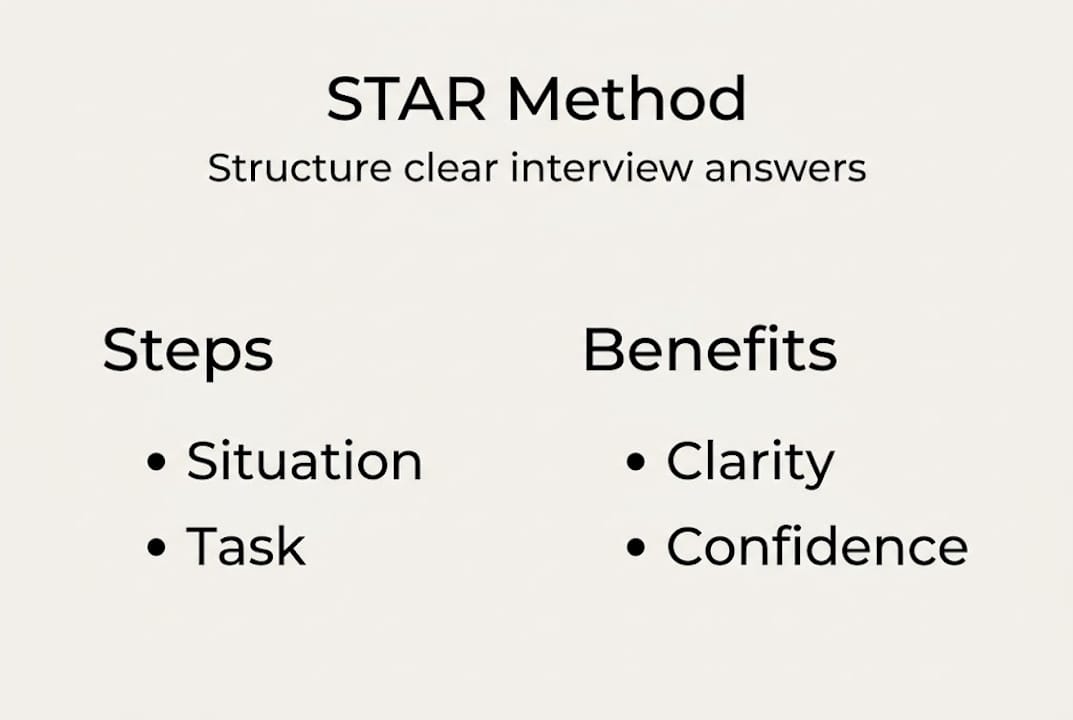
Here is a breakdown of each component:
| STAR component | What it covers | Ideal length |
|---|---|---|
| Situation | The context and background | 1-2 sentences |
| Task | Your specific responsibility | 1-2 sentences |
| Action | The steps you personally took | 3-4 sentences |
| Result | The measurable outcome | 1-2 sentences |
Notice that the Action section is the longest. This is where Netflix interviewers are paying closest attention. They want to understand your individual contribution, not what the team did collectively. Use “I” rather than “we” when describing actions.
Here is a numbered approach to building a strong STAR answer for Netflix:
- Choose a story that reflects a Netflix value. Candour, independent judgement, and resilience are ideal themes.
- Set the scene briefly. Give just enough context for the interviewer to understand the stakes.
- State your specific role. Make it crystal clear what you were personally responsible for.
- Walk through your actions methodically. Use signposting language: “First I…”, “Then I decided to…”, “The key action was…”
- End with a concrete result. Quantify where possible: “reduced costs by 20%”, “delivered two weeks ahead of schedule.”
A common mistake non-native speakers make is over-explaining the Situation and running out of time for the Result. Keep your context tight. The interviewer does not need the full backstory. They need to see your thinking and your impact. You can practise building answers like this using the STAR method template on Pavone.
Another frequent error is using passive language: “The project was completed” instead of “I led the project to completion.” Active, direct language signals ownership and confidence, both of which Netflix values deeply.
Building on-camera confidence and avoiding common pitfalls
Once your answers are structured, the next challenge is delivery. Even the best-crafted STAR response can fall flat if you appear nervous, stiff, or disconnected on camera. The good news is that on-camera confidence is a skill, not a personality trait. You can build it.
Before the call, set up your environment deliberately:
- Camera position: Place your camera at eye level so you appear to look directly at the interviewer.
- Lighting: Natural light from in front of you is ideal. Avoid sitting with a window behind you.
- Background: Keep it neutral and uncluttered. A plain wall works perfectly.
- Audio: Use headphones with a built-in microphone if possible. Clear audio matters enormously.
- Notes: Keep bullet points visible but off-screen. Glancing at notes is fine; reading from them is not.
Clear articulation is critical for non-native speakers in virtual settings, where audio quality and pacing become even more important than in person. Slow down slightly. Pause between key points. Let your sentences breathe.

During the interview, maintain soft eye contact by looking at the camera lens rather than at your own image on screen. This small adjustment makes a significant difference to how engaged and confident you appear. Smile naturally when appropriate. Nod to show you are listening. These micro-behaviours signal warmth and composure.
Pro Tip: Do at least one full mock interview on video before the real thing. Review the video interview practice tips and then watch your recording back. Pay attention to pacing, filler words, and whether your answers feel conversational or rehearsed. Adjust accordingly.
Avoid the trap of memorising answers word for word. Scripted responses sound robotic and lose the natural energy that makes you memorable. Instead, memorise your key stories and the structure of your answers, then let the words come naturally in the moment. For further guidance on presenting well on screen, the on-camera interview advice from Pavone covers this in practical detail.
The real reason Netflix interviews trip up even strong candidates
Here is something worth sitting with. Many candidates who sail through rigorous technical interviews at other companies stumble badly at Netflix. It is not because they lack intelligence or experience. It is because they have never been asked to communicate with this level of clarity and candour before.
Most interview preparation focuses on what to say. Netflix demands that you also master how you say it. A brilliant answer buried in hedging language, passive voice, and unnecessary caveats will not land. Netflix wants to hear you own your decisions, speak directly about failure, and articulate your reasoning without a safety net.
The uncomfortable truth is that many rejections come down to storytelling, not capability. Candidates who practise with confidence-building techniques and focus on delivery, not just content, consistently outperform those who simply rehearse facts. Stop chasing perfection. Start practising clarity.
Take the next step in your Netflix interview preparation
You now have a clear picture of what Netflix is looking for and how to deliver it. The next step is putting it into practice before the real interview arrives.
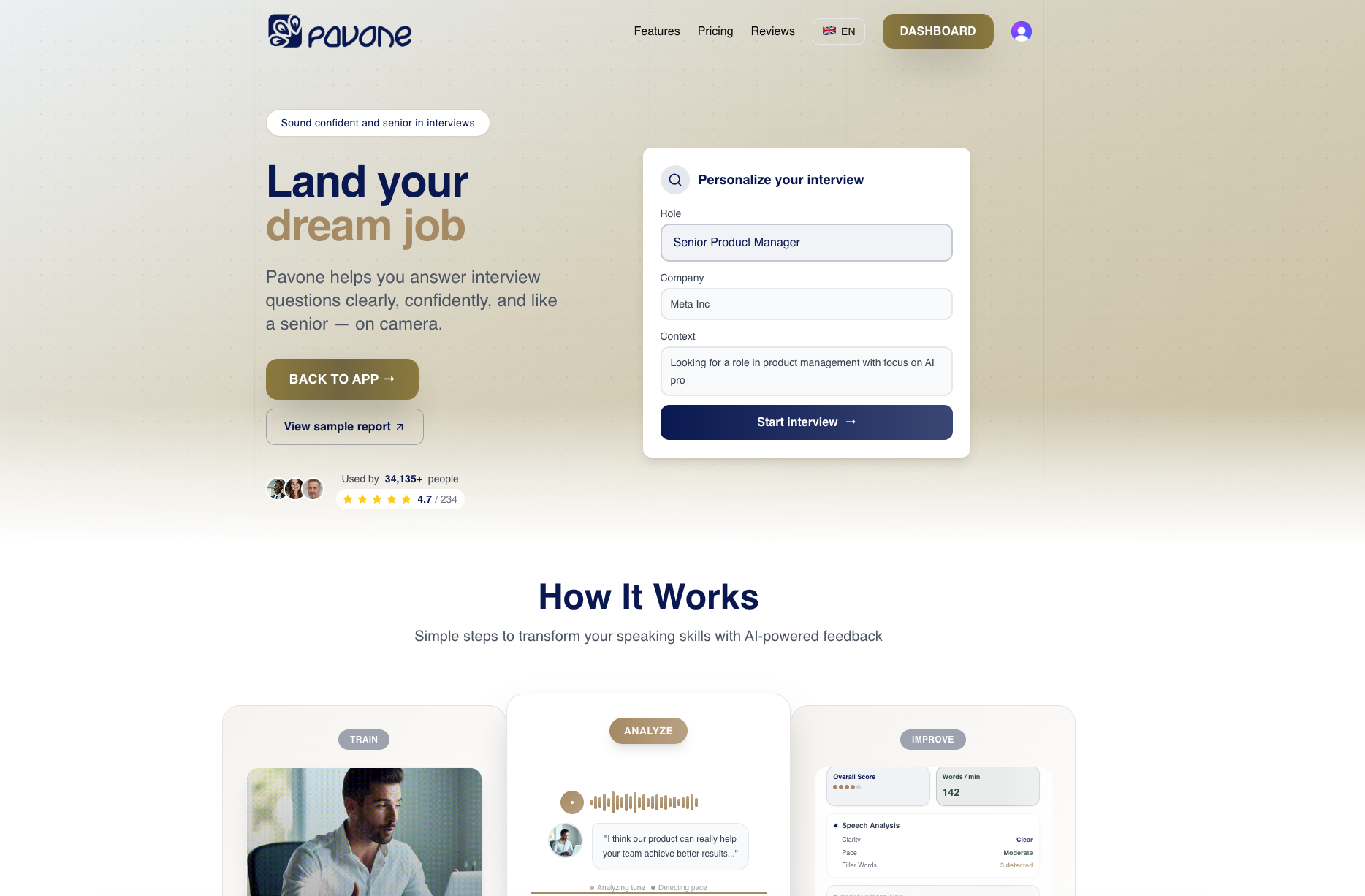
Pavone.ai is built for exactly this kind of preparation. Whether you are working on your on-camera presence, refining your STAR answers, or building confidence as a non-native speaker, the platform gives you immediate, actionable feedback after every recorded response. Start with the on-camera practice course to sharpen your virtual delivery, explore the video response preparation guide for structured practice, or use the interview question generator to practise with real Netflix-style questions. Your next interview round is closer than you think.
Frequently asked questions
Are Netflix interviews always virtual in 2026?
Yes, Netflix interviews are predominantly virtual, with most candidates completing behavioural and technical interviews online. Preparation should reflect this format from the start.
What qualities does Netflix look for in interviews?
Netflix seeks clear, structured answers showing candour, independence, and sound judgement. Netflix emphasises direct communication in behavioural rounds, and candidates must demonstrate senior-level clarity without supervision.
How can I make my answers clearer as a non-native speaker?
Use the STAR method, practise speaking out loud regularly, and focus on concise, signposted storytelling. Structured responses and thinking out loud are the most effective techniques for improving clarity in virtual settings.
What is the biggest mistake candidates make in Netflix interviews?
Most candidates fail by not providing direct, senior-level responses that reflect Netflix’s values. Netflix values clear, candid communication above all else, and vague or over-hedged answers are the most common reason for rejection.
Recommended
- Excel at Netflix interview questions with expert strategies | Pavone Academy
- How to ace Amazon interviews: confident on-camera techniques | Pavone Academy
- Preparing for a Job Interview: From Nerves to Confidence | We Are Over The Moon
Ready to practice?
Start improving your speaking skills with AI-powered feedback and analysis.
Try Pavone Free