
Master interview practice with AI: confident English 2026

Many job seekers misunderstand what AI interview practice can actually do for them, often dismissing it as robotic or impersonal. In reality, AI-powered tools have evolved into sophisticated platforms that analyse not just what you say, but how you say it, offering targeted feedback on clarity, structure, and vocal tone. For mid-to-senior professionals preparing for English-language interviews, particularly non-native speakers, these tools provide a private, scalable way to build genuine confidence and refine communication skills.
Table of Contents
- How AI Interview Practice Works: Technology And Features
- Benefits Of AI Interview Practice For Non-Native English Speakers
- Limitations And Challenges Of AI Interview Practice
- Practical Tips For Using AI Interview Practice Effectively
- Summary And Next Steps For Confident Interview Preparation
- Enhance Your Interview Practice With Pavone AI Tools
- Frequently Asked Questions
Key takeaways
| Point | Details |
|---|---|
| AI technology foundation | AI-powered interview tools use Natural Language Processing and Machine Learning to simulate interviews and analyse responses in real time. |
| Non-native speaker support | These platforms identify communication issues like sentence structure and filler words, offering personalised feedback that builds confidence through repeated, low-pressure practice. |
| Current limitations | AI can misinterpret ambiguous questions and may reflect biases from training data, requiring human oversight for nuanced feedback. |
| Effective usage strategy | Combine regular AI practice sessions with self-review and human coaching to maximise skill development and track measurable improvement. |
| Security and accessibility | Modern platforms use modular architecture and bring-your-own-key models to enhance privacy whilst reducing costs for users. |
How AI interview practice works: technology and features
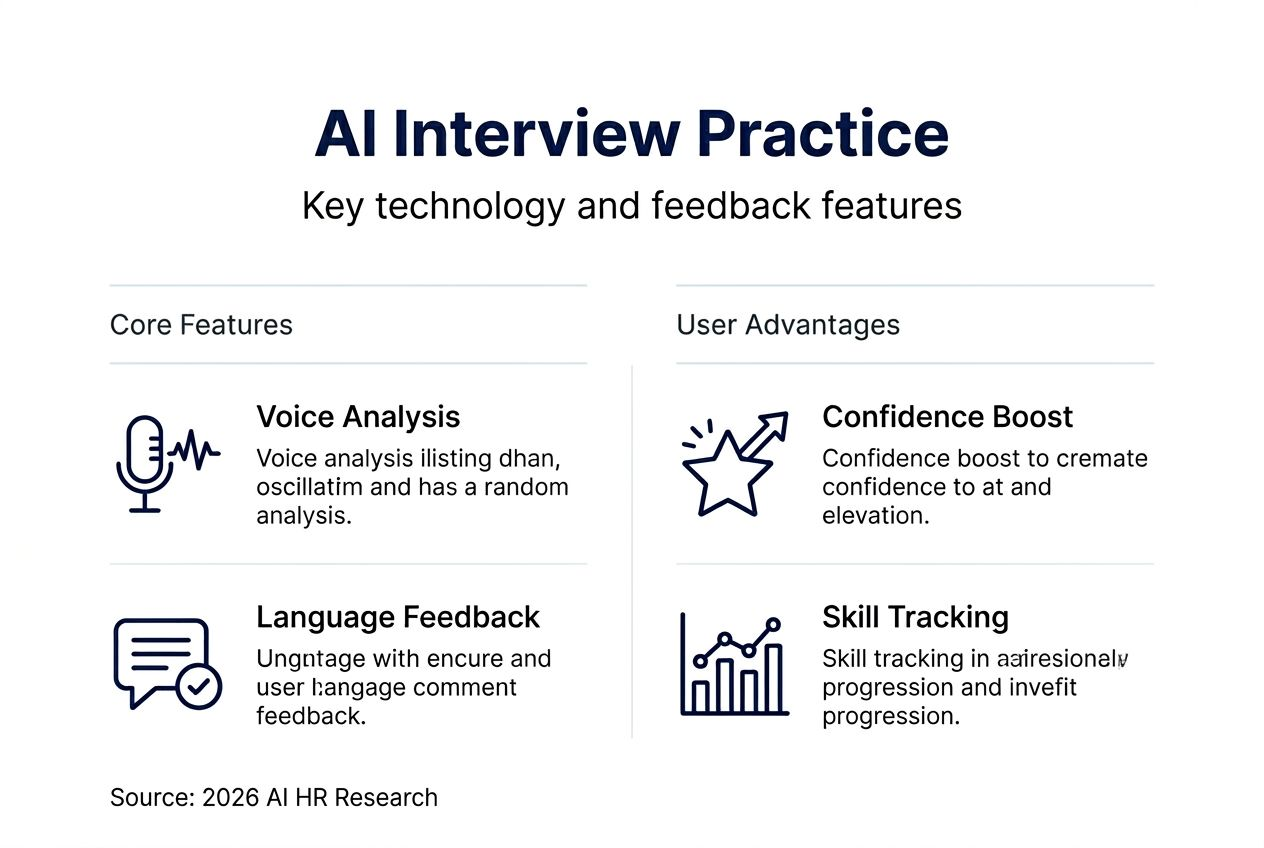
Understanding the technology behind AI interview practice helps you evaluate which tools genuinely support your preparation goals. AI-powered interview tools utilise Natural Language Processing and Machine Learning to simulate interview scenarios, analyse responses, and provide feedback. NLP enables these systems to interpret both spoken and written language during practice sessions, whilst ML models draw on datasets of past interviews to generate relevant, actionable insights.
Real-time voice interaction creates natural interview conditions that engage users more effectively than text-based alternatives. Voice interaction technology like LiveKit’s WebRTC infrastructure delivers low-latency communication, simulating the pressure and flow of genuine conversations. This immediacy helps candidates practise thinking on their feet and responding with appropriate pacing.
Behind the scenes, interview platforms use modular architectures for question generation, speech recognition, NLP analysis, and feedback generation. State machines manage the interview flow, ensuring smooth transitions between questions and maintaining structured interactions. Example platforms include FluentInterview and MockFlow-AI, which offer multiple feedback dimensions:
- Grammar and vocabulary accuracy
- Sentence structure and logical flow
- Vocal tone, pacing, and confidence markers
- Filler word frequency and hesitation patterns
- Content relevance to the question asked
These systems continuously improve through machine learning, refining their feedback models as they process more interview data. For candidates seeking to master interview online practice, understanding this technical foundation clarifies what AI can realistically deliver and where human judgement remains essential.
Benefits of AI interview practice for non-native English speakers
Non-native English speakers face unique challenges in interviews, particularly when communication skills matter as much as technical expertise. AI interview practice addresses these challenges by identifying issues that extend far beyond basic grammar. The primary communication barriers include sentence structure weaknesses, excessive filler words, and unclear vocal delivery, all areas where AI provides precise, repeatable feedback.
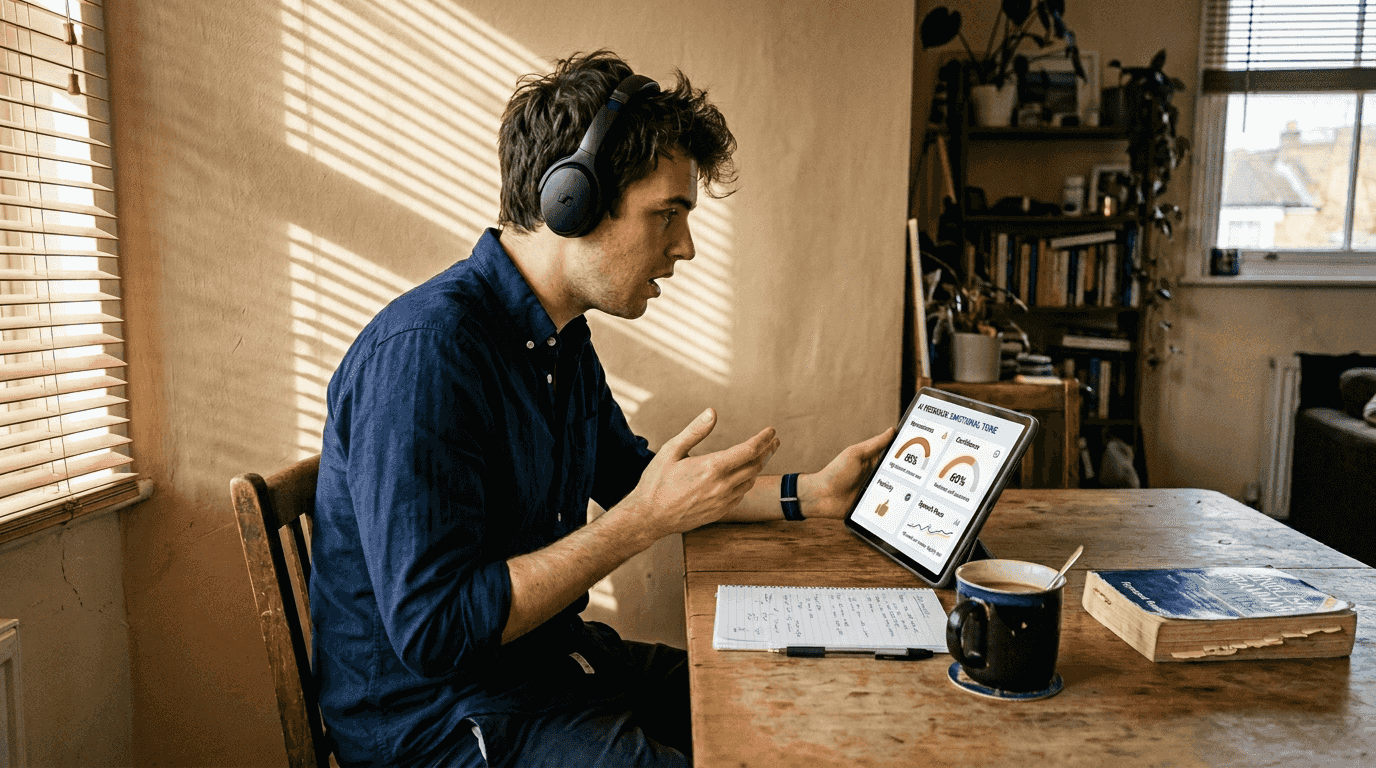
Emotional and vocal tone analysis represents a significant advancement in AI interview tools. Platforms using emotional feedback technology improved interview confidence by 40% amongst users, demonstrating that addressing how candidates sound directly impacts their self-assurance. This matters especially for professionals worried about sounding hesitant or uncertain during high-stakes conversations.
Repeated, low-pressure practice sessions allow non-native speakers to internalise correct patterns without the anxiety of live interviews. You can rehearse the same question multiple times, refining your response until it feels natural. AI-powered interview coaching significantly improves performance for job seekers, including those for whom English is a second language, by offering consistent standards and immediate corrections.
Personalisation enhances this benefit further. Advanced AI tools adapt question sets based on your background, target role, and communication strengths, focusing practice where you need it most. This targeted approach accelerates improvement compared to generic interview guides. Key advantages include:
- Identifying recurring communication weaknesses you might not notice yourself
- Building muscle memory for clear, structured responses through repetition
- Reducing interview anxiety by familiarising you with common question formats
- Providing objective feedback without the social pressure of human observers
- Tracking progress over time to validate your improvement and maintain motivation
Pro Tip: Whilst AI delivers valuable feedback on communication mechanics, combine it with human coaching to refine storytelling, cultural fit, and strategic positioning. This hybrid approach addresses both ai mock interview confidence and clarity whilst ensuring your answers resonate emotionally with interviewers. The measurable gains in confidence and readiness make AI practice an essential component of modern interview preparation, particularly when AI interview practice cuts anxiety through consistent, supportive training.
Limitations and challenges of AI interview practice
Despite their sophistication, AI interview tools cannot fully replace human judgement in complex communication scenarios. AI tools struggle with ambiguous questions that require contextual understanding or industry-specific nuance, potentially offering feedback that misses the mark. When questions involve subjective leadership examples or ethical dilemmas, AI may analyse surface-level structure whilst missing deeper strategic thinking.
Bias in training data poses a genuine concern for fairness and accuracy. If an AI system learned predominantly from interviews in specific industries or cultural contexts, it may unconsciously favour certain communication styles over others. Effectiveness varies based on training data quality and algorithm sophistication, meaning not all AI interview platforms deliver equally reliable insights. This variability makes platform selection critical.
Some feedback remains generic and lacks the human touch that identifies unique strengths or suggests creative improvements. AI might correctly flag filler words but fail to recognise that your authentic communication style includes natural pauses that convey thoughtfulness rather than hesitation. Over-reliance on AI risks neglecting critical self-assessment and interpersonal skills development.
“AI should supplement, not replace, human practice and feedback in interview preparation. The technology excels at pattern recognition but cannot yet replicate the empathy and strategic insight that experienced coaches provide.”
Human reviewers and coaches enhance AI-generated insights by adding context, interpreting subtle cues, and offering encouragement tailored to your specific situation. Challenges to consider include:
- Difficulty interpreting nuanced or culturally specific communication styles
- Risk of reinforcing formulaic answers that lack authenticity
- Limited ability to assess non-verbal communication beyond vocal tone
- Potential for algorithmic bias affecting diverse candidates unfairly
- Inability to provide strategic career advice or industry-specific guidance
Experts recommend using AI as a supplement within a broader preparation strategy that includes mock interviews with humans, self-reflection, and company research. Understanding these limitations helps you set realistic expectations and avoid disappointment. For deeper insight into ai communication challenges, recognise that AI works best when paired with human oversight and genuine self-awareness about your communication goals.
Practical tips for using AI interview practice effectively
Integrating AI interview practice into your preparation routine requires strategic planning to maximise learning and confidence gains. Begin with standard AI-led mock interviews to familiarise yourself with the format and feedback style. This initial exposure reduces any discomfort with technology and helps you understand how the platform interprets your responses.
Focus your attention on communication feedback areas that directly impact how interviewers perceive you:
- Grammar accuracy and vocabulary appropriateness for your target role
- Sentence structure and logical flow that demonstrates clear thinking
- Vocal tone consistency and pacing that conveys confidence
- Filler word frequency and hesitation patterns that undermine authority
- Content relevance ensuring your answers directly address questions asked
Use AI question prediction features to prepare for common and role-specific enquiries. Successful candidates use AI for predicting questions, surfacing relevant stories from their experience, and refining responses through multiple practice attempts. This proactive approach builds a mental library of polished answers.
Review AI feedback reports systematically to identify recurring weaknesses and track improvements over time. Many platforms generate detailed analytics showing trends in your communication patterns. This data-driven approach validates progress and highlights persistent issues requiring extra attention. Combine AI sessions with video recordings to self-assess body language, facial expressions, and overall presence.
Pro Tip: Schedule regular practice sessions spaced weeks apart rather than cramming before interviews. This spacing enhances skill retention through distributed practice, allowing your brain to consolidate learning between sessions. Aim for two to three focused practice sessions weekly during active job searches.
Rehearsal should align with your actual experience and target company culture. Use AI to practise stories that highlight achievements on your CV, ensuring you can articulate them clearly under pressure. Platforms offering multiple feedback dimensions improve confidence and communication skills significantly by addressing holistic interview performance.
| Platform | Feedback Dimensions | Voice Interaction | Customisation Options |
|---|---|---|---|
| FluentInterview | Grammar, structure, filler words, content relevance | Real-time voice with instant transcription | Role-specific question banks, difficulty levels |
| ParrotPrep | Emotional tone, confidence, pacing, vocal clarity | Low-latency WebRTC voice | Industry templates, custom question upload |
| MockFlow-AI | Comprehensive communication analysis, sentiment | Native voice with state management | BYOK security, modular architecture |
| Pavone | Clarity, structure, pacing, filler words, delivery | Camera-based practice with voice | Personal tracking, actionable feedback |
To master interview online practice, treat AI as a training partner rather than a judge. Experiment with different answer approaches, test new stories, and push yourself outside comfortable communication patterns. The private, judgement-free environment allows risk-taking that accelerates learning.
Summary and next steps for confident interview preparation
AI-powered interview practice provides personalised, scalable feedback that transforms how candidates prepare for professional conversations. The technology analyses communication mechanics with precision that would be impractical for human coaches to deliver repeatedly. For non-native English speakers, this represents a breakthrough in accessible preparation that directly addresses language and confidence barriers.
Yet AI tools have clear limits requiring complementary human insight and self-review. They excel at pattern recognition and consistency but cannot replicate empathy, strategic thinking, or cultural nuance that experienced interviewers value. Balanced preparation integrates AI practice with human mock interviews, peer feedback, and self-reflection. Key takeaways include:
- AI interview platforms use NLP and ML to deliver real-time, actionable communication feedback
- Non-native speakers gain critical support in structure, vocabulary, and vocal confidence
- Current limitations require human oversight for ambiguous questions and strategic positioning
- Effective usage combines regular AI sessions with recording review and human coaching
- Platform selection matters; evaluate feedback dimensions, voice quality, and customisation
Structured, repeated AI practice helps build real-world readiness by familiarising you with question formats, refining your responses, and reducing anxiety through exposure. Start your journey with accessible platforms that match your preparation timeline and budget. Prioritise tools offering voice interaction and detailed feedback reports that track improvement.
For online interview practise confidence, commit to consistent practice rather than sporadic sessions. Treat each AI interview as seriously as the real thing, creating an environment that mirrors actual interview conditions. This mental rehearsal strengthens your ability to perform under pressure whilst the feedback refines your technical communication skills.
Enhance your interview practice with Pavone AI tools
Preparing for interviews demands more than reading advice; it requires deliberate practice with immediate feedback on how you actually sound. Pavone offers AI-driven interview practice designed specifically for professionals who want to improve clarity, structure, and confidence on camera. The platform transcribes your answers and analyses interview-relevant factors like pacing, filler words, and overall delivery.
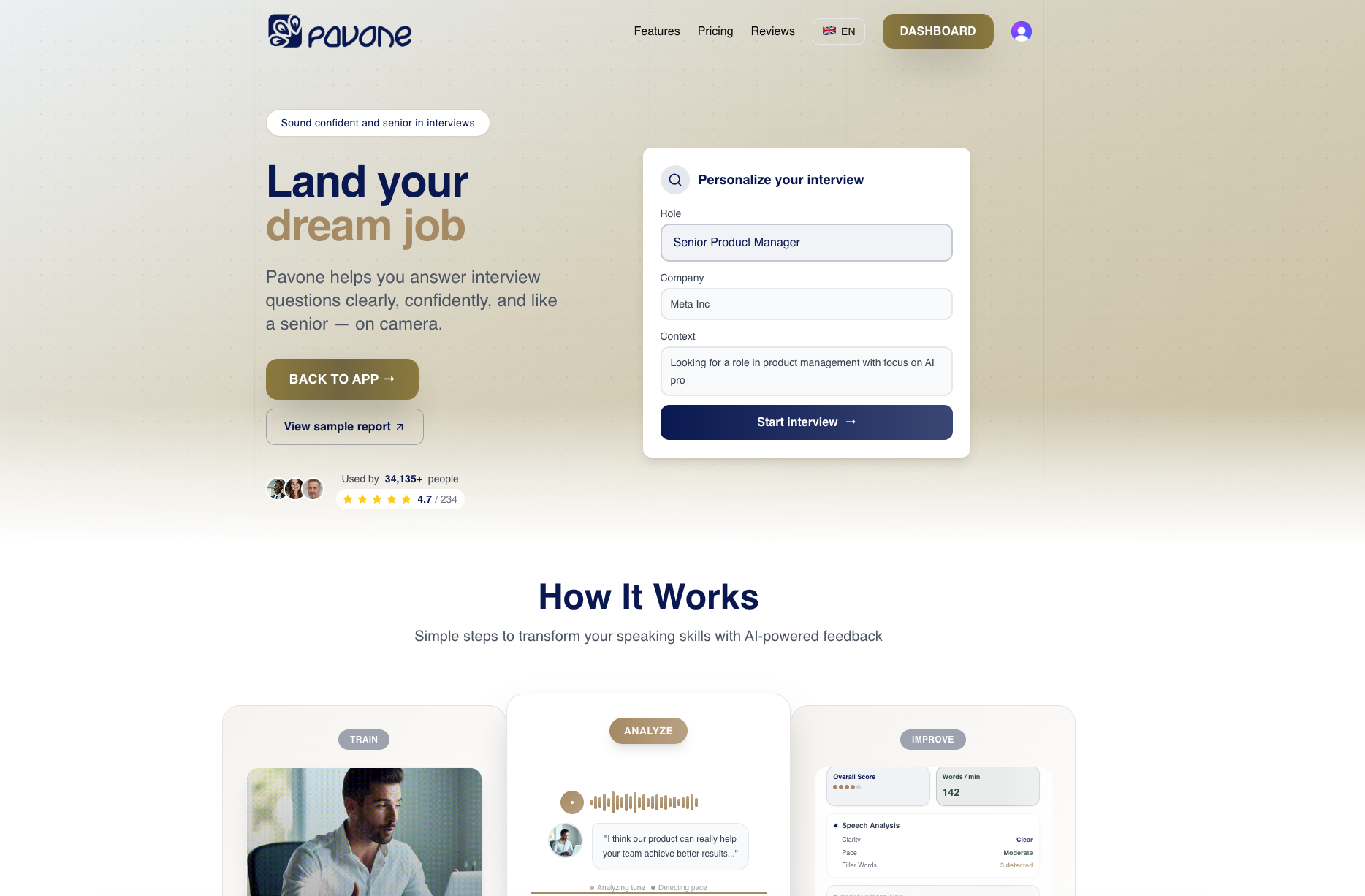
Unlike generic coaching, Pavone AI job interview practice focuses on how your communication lands with interviewers, not just what you say. Users record real interview-style answers privately, receive actionable feedback, and track improvement over time. This approach fits naturally into active job searches with short practice sessions you can complete anytime.
Explore master interview online practice courses through Pavone Academy, offering guided workflows suited to mid-to-senior roles. Whether you struggle with structure, confidence, or speaking naturally on camera, these tools provide the repeated, focused practice that builds genuine interview practise confidence for high-stakes conversations.
Frequently asked questions
How does AI interview practice improve communication skills for non-native English speakers?
AI analyses sentence structure, vocabulary precision, and filler word patterns, offering targeted feedback that addresses specific communication weaknesses. By practising repeatedly in a low-pressure environment, non-native speakers build muscle memory for clear, confident responses. This focused improvement directly translates to stronger interview performance and reduced anxiety about language barriers.
For deeper support, explore ai mock interview confidence and clarity resources.
Can AI interview tools replace human feedback completely?
No, AI serves as a powerful supplement but lacks the nuanced understanding that experienced human coaches provide. Whilst AI excels at identifying patterns in communication mechanics, humans interpret context, recognise authentic strengths, and offer strategic positioning advice. The most effective preparation combines AI’s scalable feedback with human insight for complex scenarios and cultural fit assessment.
Learn more about ai communication challenges when used independently.
How often should I practise with AI interview tools for best results?
Regular, spaced sessions typically two to three times weekly during active job searches optimise skill retention and continuous improvement. This frequency allows you to implement feedback between sessions whilst maintaining momentum. Spacing practice over weeks rather than daily cramming enhances long-term learning through distributed practice principles.
Discover structured approaches at master interview online practice.
Are AI interview practice platforms secure and affordable for advanced users?
Many modern platforms use modular architecture and bring-your-own-key models to enhance privacy whilst reducing operational costs. These designs allow users to maintain control over their data and interview recordings. Pricing varies widely, with some offering free tiers for basic practice and premium features for comprehensive feedback. Evaluate platform security and cost structures before committing to ensure they match your privacy requirements and budget.
Recommended
Ready to practice?
Start improving your speaking skills with AI-powered feedback and analysis.
Try Pavone Free