Guide to Confident Speaking for Successful Interviews
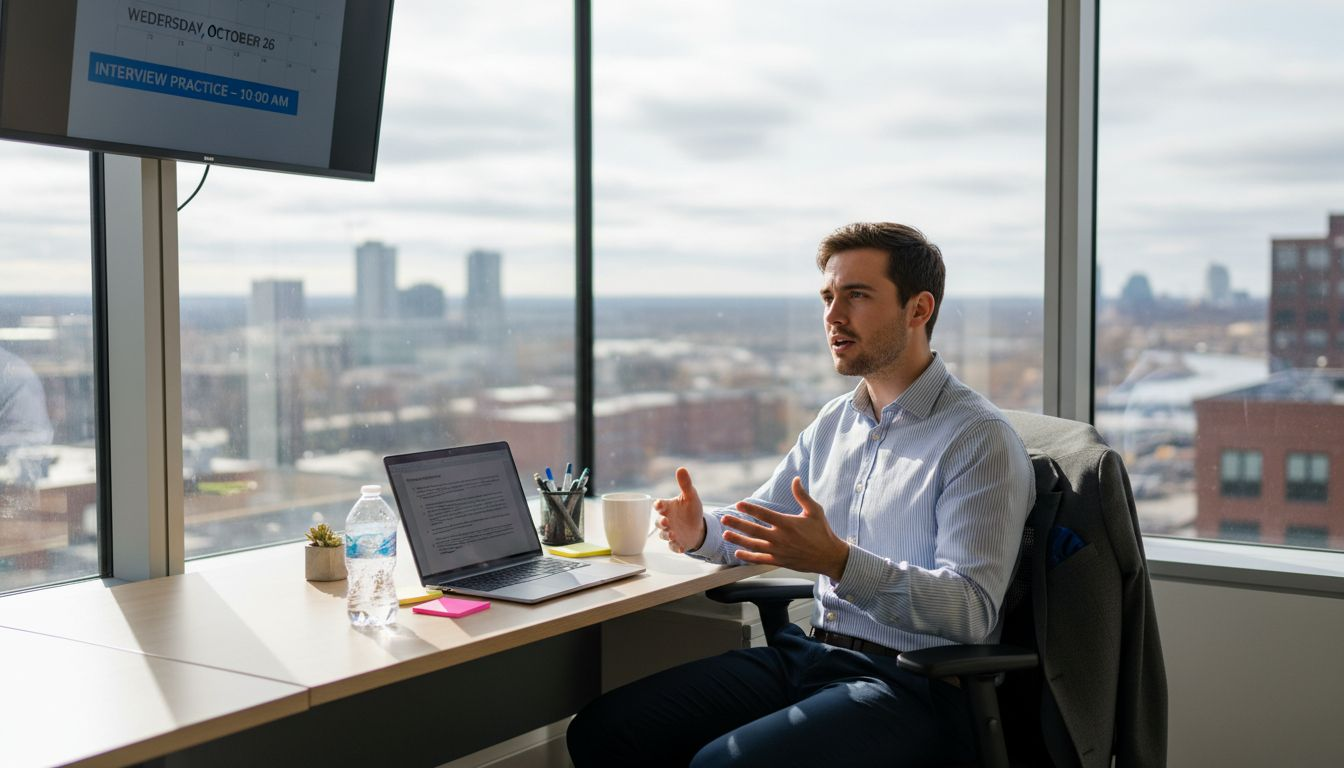
Stepping into a leadership interview at a top technology firm is challenging enough without the added pressure of speaking in front of a camera, especially if English is not your first language. The atmosphere you create and the structure you use can make all the difference between clear communication and anxious stumbles. This guide draws on expert strategies to help you craft a supportive environment, build logical responses, and approach every on-camera interview with confident clarity.
Table of Contents
- Step 1: Prepare Your Environment For Speaking
- Step 2: Structure Your Answer For Clarity
- Step 3: Practise Your Delivery On Camera
- Step 4: Review Feedback For Improvement
- Step 5: Track Your Progress With Repeat Sessions
Quick Summary
| Key Point | Explanation |
|---|---|
| 1. Create a distraction-free environment | Choose a quiet, well-lit space to improve focus and comfort during interviews. |
| 2. Use a structured response format | Follow a clear three-part structure to enhance clarity in your answers. |
| 3. Practice on camera regularly | Simulate interview conditions to refine delivery, confidence, and communication skills. |
| 4. Actively review and apply feedback | Engage with constructive criticism to identify areas for improvement effectively. |
| 5. Track your progress systematically | Document and review your performance to ensure consistent development and skill enhancement. |
Step 1: Prepare your environment for speaking
Creating the right physical and mental environment is crucial for delivering confident interview responses. Your speaking space directly impacts your performance, comfort, and overall presentation quality.
Start by selecting a quiet, well-lit area with minimal background distractions. This means choosing a room with neutral walls, good natural or artificial lighting, and minimal noise interference. Practical speaking preparation involves creating a controlled environment that helps you feel secure and focused.
Key elements for your speaking environment include:
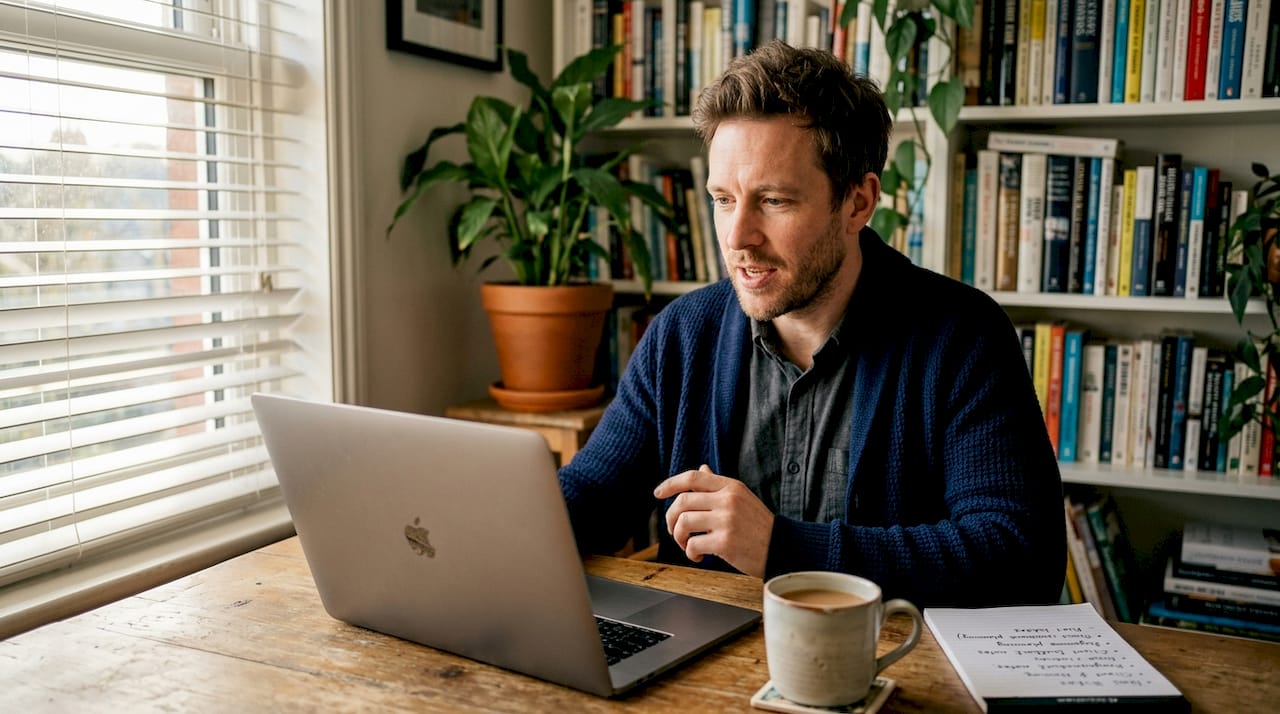
- A stable, neutral background (plain wall or professional bookshelf)
- Good front-facing lighting that illuminates your face evenly
- A comfortable chair that supports good posture
- A stable camera or recording device positioned at eye level
- Reliable internet connection and minimal potential interruptions
Practice your interview responses in this prepared space multiple times to build familiarity and confidence. By rehearsing in the same environment, you’ll reduce anxiety and become more comfortable with your surroundings.
Professional Suggestion: Test your technology and environment at least 24 hours before your actual interview to identify and resolve any potential technical or spatial challenges.
Step 2: Structure your answer for clarity
Mastering a clear, logical response structure is essential for successful interviews. Your ability to articulate thoughts concisely can significantly impact the interviewer’s perception of your communication skills.
Adopt a straightforward three-part approach when constructing your interview responses. Structured opinion techniques provide a reliable framework for presenting information effectively:
- Begin with a clear statement addressing the specific question
- Provide a concise reason or explanation
- Support your point with a relevant example or additional detail
This method helps you maintain logical flow and prevents rambling. When practising, focus on these key structural elements:
- Keep introductions brief and direct
- Ensure smooth transitions between ideas
- Use linking words to connect your thoughts
- Maintain a natural, conversational pace
- Avoid unnecessary technical jargon
Clarity comes from structured thinking, not just structured speaking.
Remember that practice is crucial. Rehearse your responses out loud, recording yourself to identify areas where you can improve your clarity and coherence.
Professional Suggestion: Time your interview responses to ensure they remain concise and impactful, typically aiming for 1.5-2 minutes per answer.
Step 3: Practise your delivery on camera
Mastering on-camera delivery is crucial for interview success, transforming nervous energy into confident communication. Video practice techniques provide a powerful method for developing self-awareness and polishing your interview performance.
Set up a consistent practice environment with good lighting, a neutral background, and a stable camera position. This allows you to focus entirely on your delivery without technical distractions. Your practice sessions should simulate real interview conditions as closely as possible:
- Use a tripod or stable surface for consistent camera positioning
- Choose a quiet space with minimal background noise
- Dress in interview-appropriate attire
- Position the camera at eye level for natural eye contact
- Ensure reliable internet and recording equipment
Systematic recording helps you identify and improve key communication elements. Pay attention to:
- Vocal tone and modulation
- Facial expressions and body language
- Pace and clarity of speech
- Use of hand gestures
- Overall confidence and energy
Your camera is a mirror that reveals your communication strengths and areas for improvement.
Review your recordings critically, looking for patterns in your speech and non-verbal communication. Consider sharing recordings with a trusted friend or mentor who can provide constructive feedback.
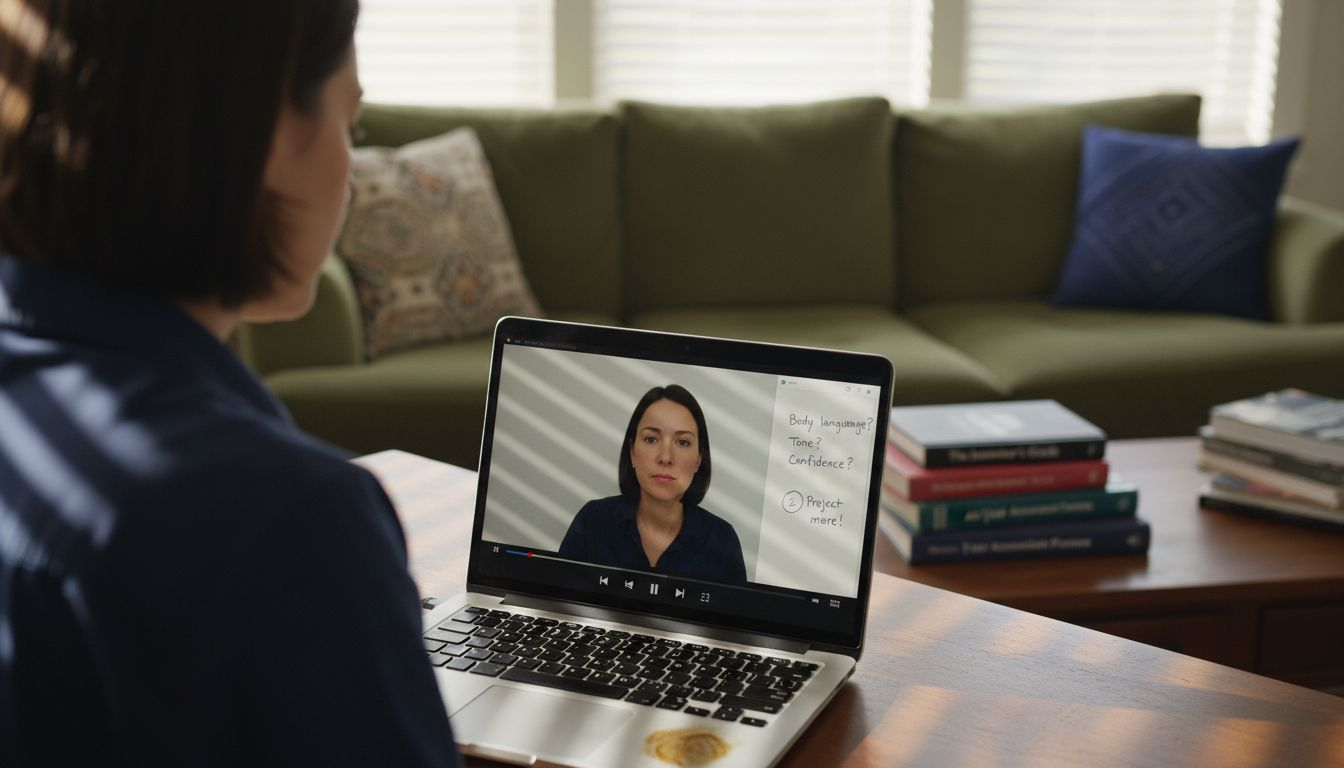
Professional Suggestion: Practice recording at least three complete mock interview responses each week, focusing on incremental improvements in your delivery.
Step 4: Review feedback for improvement
Navigating interview feedback requires a strategic approach that transforms critique into actionable learning. Constructive feedback strategies offer a powerful pathway to enhance your communication skills and boost interview confidence.
Approach feedback with an open and analytical mindset. Your goal is to identify specific areas of improvement rather than becoming defensive. Break down the feedback into clear, manageable components:
- Separate objective observations from subjective impressions
- Distinguish between recurring patterns and isolated incidents
- Categorise feedback into verbal and non-verbal communication elements
- Prioritise actionable insights over general comments
- Track your progress across multiple practice sessions
Systematic feedback analysis involves several key steps:
- Listen carefully without immediate self-justification
- Request specific examples to understand context
- Ask clarifying questions about suggested improvements
- Document key recommendations
- Create a targeted improvement plan
Effective feedback is a dialogue, not a monologue.
Consider involving a trusted mentor or experienced professional who can provide nuanced insights. They might notice subtleties in your communication that you might overlook.
Professional Suggestion: Maintain a feedback journal documenting specific observations, creating a visual roadmap of your continuous improvement journey.
The following table contrasts feedback types and their benefits for interview performance:
| Feedback Type | Source | Typical Benefit |
|---|---|---|
| Self-evaluation | Reviewing recordings | Increased self-awareness |
| Peer assessment | Trusted friends/mentors | Personalised, constructive tips |
| Professional input | Experienced interviewers | Targeted skills enhancement |
Step 5: Track your progress with repeat sessions
Consistent self-assessment is the cornerstone of interview performance improvement. Speaking practice strategies reveal that systematic tracking transforms raw practice into meaningful skill development.
Design a structured approach to monitor your interview communication skills. Your tracking system should capture detailed insights across multiple dimensions of your performance:
- Record baseline performance metrics
- Document specific improvement areas
- Compare responses across different practice sessions
- Quantify progress using consistent evaluation criteria
- Create visual representation of skill advancement
Performance tracking involves these critical elements:
- Set clear, measurable communication goals
- Use standardised evaluation criteria
- Record practice responses consistently
- Compare current performance against previous benchmarks
- Adjust practice strategies based on observed trends
Measurement transforms random practice into purposeful skill development.
Consider using a spreadsheet or dedicated tracking tool to log your progress systematically. This approach provides objective evidence of your communication skill evolution.
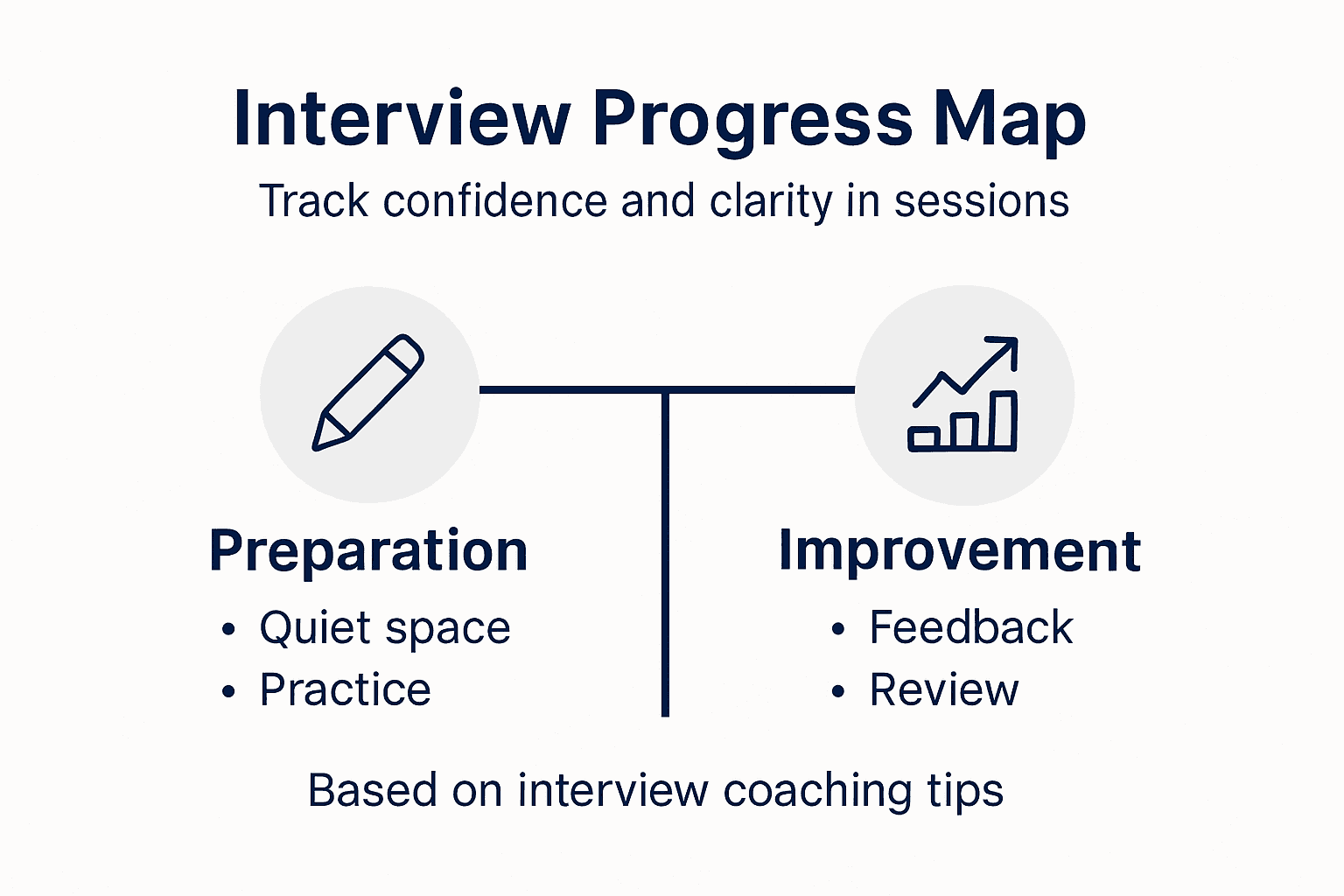
Professional Suggestion: Schedule a monthly review of your tracked metrics to identify significant improvements and recalibrate your interview preparation strategy.
Here is a summary of interview preparation strategies by stage:
| Preparation Stage | Main Focus | Key Outcome |
|---|---|---|
| Environment Setup | Physical and technical comfort | Reduced distractions |
| Structuring Answers | Concise, logical responses | Improved clarity |
| On-Camera Practice | Delivery and presence | Enhanced confidence |
| Feedback Review | Analysing and applying advice | Targeted improvements |
| Progress Tracking | Measuring and adapting skills | Consistent development |
Boost Your Interview Confidence with Pavone.ai
The article highlights the struggle many face with creating a confident speaking environment, structuring clear answers, and mastering on-camera delivery. If you find yourself overwhelmed by managing your interview space or unsure how to track and apply crucial feedback to improve your delivery, you are not alone. Many candidates battle with anxiety, unclear communication, or difficulty showcasing their true potential during interviews. Pavone.ai addresses these exact challenges by offering a personalised platform to practise interview answers in a private, low-pressure setting while receiving immediate, detailed feedback on key factors like clarity, structure, pacing, and confidence.
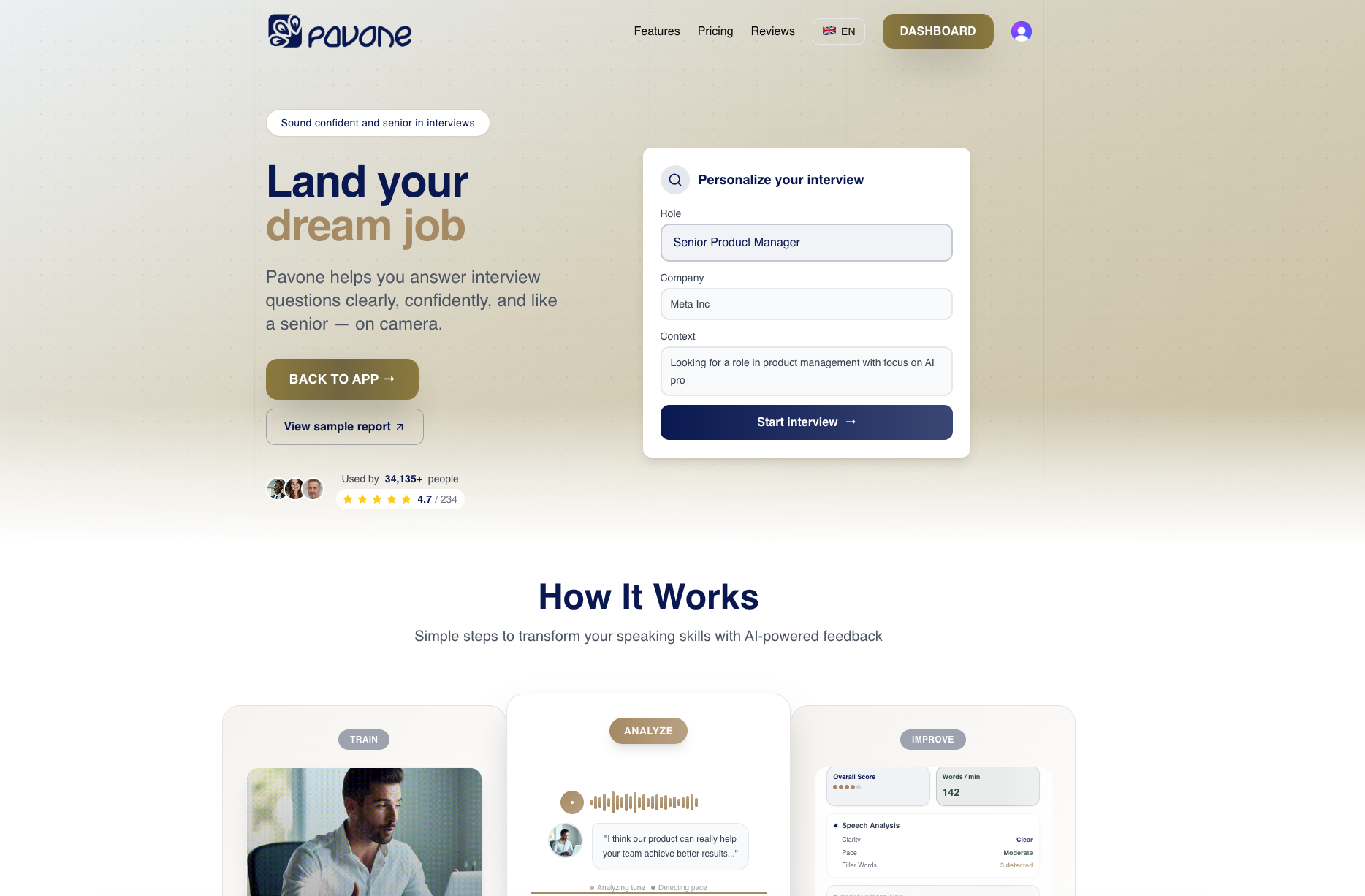
Take control of your preparation with Pavone.ai today. Experience a personal interview coach available 24/7 that helps you transform nervous energy into clear, concise, and impactful responses. Visit Pavone.ai now to start practising your answers, review comprehensive feedback, and track your progress effortlessly. Improve your interview skills with exercises designed to mirror real scenarios, so you can enter your next interview with genuine confidence and poise.
Frequently Asked Questions
How can I prepare my environment for confident speaking during interviews?
Creating a suitable environment involves finding a quiet space with good lighting and minimal distractions. Aim to set up a neutral background, ensure your camera is at eye level, and check your internet connection before the interview.
What is the best way to structure my answers for clarity during interviews?
Use a three-part structure: start with a clear statement, provide a reason, and follow with a relevant example. Practising this method can help you articulate your thoughts effectively and keep your responses organised.
How should I practise my delivery on camera for interviews?
Set up a mock interview environment that closely resembles actual conditions, including lighting and attire. Record your practice sessions and review them to refine your vocal tone, body language, and overall delivery.
How do I utilise feedback to improve my interview skills?
Approach feedback with an open mindset by separating objective observations from personal feelings. Document the key recommendations and create an improvement plan based on the insights you gather during your practice sessions.
How can I track my progress in speaking for interviews?
Establish a recording and evaluation system to capture your performance metrics across different practice sessions. Aim to document at least one practice response each week and adjust your strategies based on your observed progress.
Recommended
- How Do I Prepare for Interview: Achieve Clear Confident Delivery | Pavone Academy
- Why Practice Speaking Matters for Interview Success | Pavone Academy
- How to Speak Confidently in Job Interviews - Pavone
- Job Interview Preparations for Confident Video Responses | Pavone Academy
- How to Build Hypnotherapy Confidence for Practitioners
- All you need to know for a TEFL job interview – Part 1 - EBC Trinity CertTESOL and TEFL courses
Ready to practice?
Start improving your speaking skills with AI-powered feedback and analysis.
Try Pavone Free