Interview Anxiety – How It Affects On-Camera Success
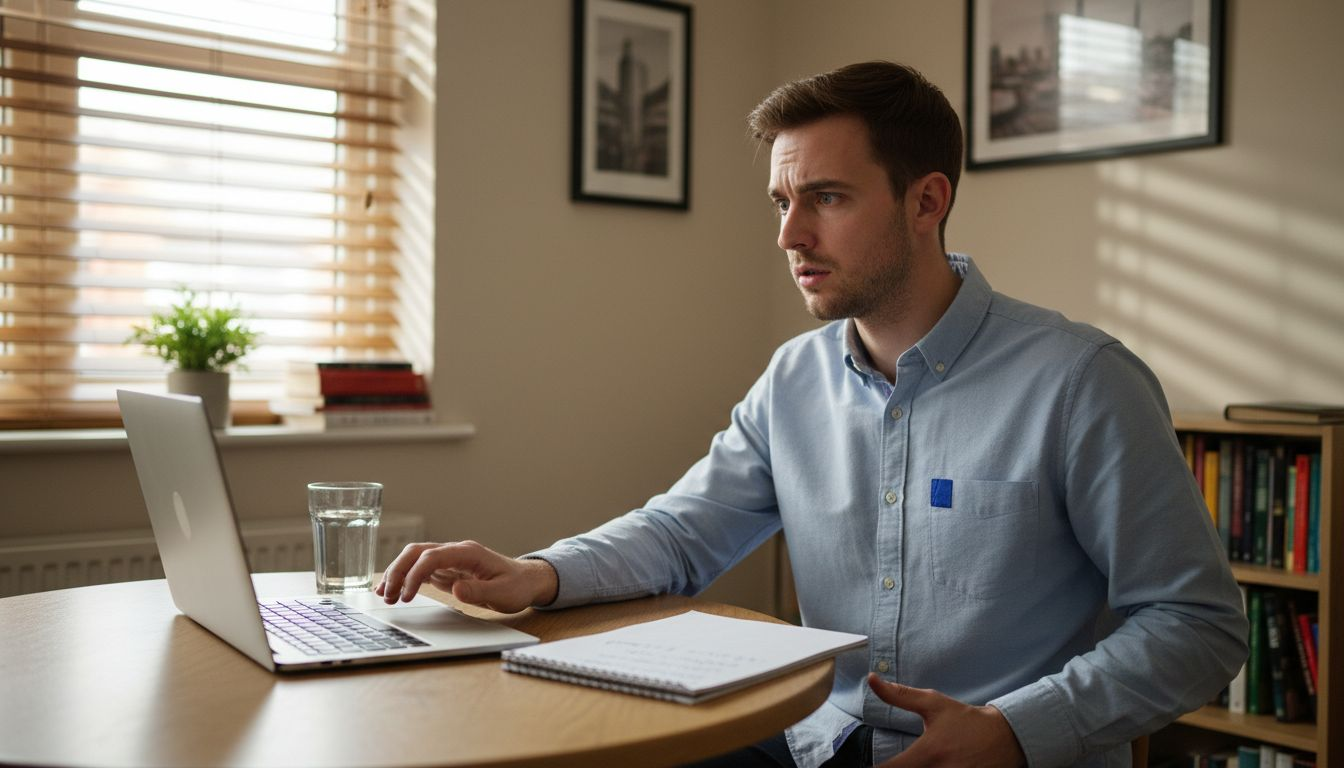
Facing a job interview on camera can send nerves racing, especially when English is not your first language. Many highly skilled professionals in tech feel stressed about how they come across, worrying more about minor slip-ups than their real strengths. The truth is that interviewers value assertiveness and interpersonal warmth over small signs of anxiousness, and research shows interview anxiety does not automatically mean you will perform worse. Understanding the real impact of anxiety helps you focus on what really matters for success.
Table of Contents
- Defining Interview Anxiety And Common Myths
- Types And Symptoms Of Interview Anxiety
- Why On-Camera Interviews Amplify Stress
- Practical Solutions For Non-Native English Speakers
- Mastering Confidence Through Interview Practice
Key Takeaways
| Point | Details |
|---|---|
| Understanding Interview Anxiety | Interview anxiety is a common response to social evaluation, affecting how candidates perform during interviews. It is a natural reaction, not a sign of inadequacy. |
| Myth Busting | Nervousness does not necessarily ruin performance; interviewers value communication over perfection. Understanding this can alleviate pressure. |
| Camera Challenges | On-camera interviews can amplify anxiety due to heightened self-awareness. Practising on camera helps manage this stress and improve overall performance. |
| Preparation Strategies | Recording practice sessions can build confidence and proficiency, transforming anxiety into composure for real interviews. |
Defining Interview Anxiety and Common Myths
Interview anxiety is real, and it affects far more professionals than you might think. Fear of negative evaluation during job interviews creates genuine nervousness that impacts how candidates present themselves on camera. But here’s what matters: understanding what interview anxiety actually is separates fact from fiction.
Interview anxiety refers to the nervousness, tension, or worry you experience before and during a job interview. It’s not a character flaw or weakness—it’s a natural stress response to social evaluation. Your body perceives the interview as a high-stakes situation, triggering familiar anxiety symptoms.
Common signs include:
- Racing thoughts or mind going blank
- Physical trembling or shaky voice
- Difficulty maintaining eye contact
- Speaking too quickly or hesitantly
- Excessive sweating or dry mouth
- Feeling your heart beating faster
Yet professionals often hold beliefs about interview anxiety that simply don’t match research. Let’s address the most damaging myths head on.
Myth 1: Nervousness Always Ruins Your Performance
This is the myth that keeps people up at night. Research shows that anxious interviewees can perform equally well as less anxious ones, especially in roles requiring interpersonal skills. Your anxiety doesn’t automatically disqualify you.
Interviewers understand nervousness is normal. What matters more is how you communicate despite the nerves.
Myth 2: Small Nervous Habits Destroy Your Chances
Candidates obsess over fidgeting, filler words, or brief pauses. The research tells a different story: interviewers focus more on traits like assertiveness and interpersonal warmth than on minor nervous tics. You won’t be rejected because your hand shook slightly or you said “um” once.
Interviewers evaluate whether you understand the role, can solve problems, and fit the team culture.
Myth 3: Anxiety Means You Aren’t Ready
Anxiety doesn’t indicate lack of qualification. Tech professionals with years of expertise still experience pre-interview nerves. Anxiety and competence exist independently.
The difference lies in preparation and how you manage the anxiety on camera.
Myth 4: You Must Appear Completely Confident
Perfect confidence doesn’t exist in real interviews. Interviewers expect some natural nervousness—it shows you care about the opportunity. What they notice is whether you recover quickly and stay focused on communicating your value.
Authenticity with composure beats false bravado every time.
The goal isn’t eliminating interview anxiety—it’s managing it so your competence shines through on camera.
Understanding these myths removes the pressure of perfection. You’re not trying to eliminate every trace of nervousness. Instead, you’re learning to perform despite it, keeping your actual words and ideas sharp and clear.
Recording practice interviews on camera helps you see what interviewers actually see—your communication, not your internal stress level. When you practise repeatedly, your mind builds confidence in the process itself, reducing anxiety’s grip over time.
Pro tip: Record a practice answer to a common question and watch it back. You’ll likely discover that what felt like overwhelming anxiety was barely noticeable on camera—this reality check reduces future anxiety significantly.
Types and Symptoms of Interview Anxiety
Interview anxiety doesn’t present itself in just one way. Different candidates experience different patterns, and recognising which type affects you most helps you address it directly. Understanding how anxiety manifests through both cognitive and physiological symptoms gives you clarity on what to expect and how to manage it on camera.
Four Main Types of Interview Anxiety
Interview anxiety typically falls into these categories:
- Communication anxiety – difficulty expressing your thoughts clearly, speaking hesitantly, or jumbled phrasing that obscures your meaning
- Appearance anxiety – worry about how you look on camera, body language, or physical presentation
- Social anxiety – discomfort with the evaluative dynamic, feeling watched or judged during the conversation
- Performance anxiety – pressure to deliver perfect answers, fear of making mistakes or appearing incompetent
Most candidates experience a blend of these types rather than just one. A tech professional might feel confident discussing technical knowledge but anxious about seeming warm and approachable on video.
Here’s a concise overview of interview anxiety types and their main challenges:
| Anxiety Type | Core Challenge | Common Impact |
|---|---|---|
| Communication anxiety | Difficulty structuring ideas | Reduced clarity, hesitation |
| Appearance anxiety | Excessive self-monitoring | Distracted, less engagement |
| Social anxiety | Fear of being judged | Avoidance, nervousness |
| Performance anxiety | Pressure for perfect answers | Stumbling, overthinking |
Physical and Cognitive Symptoms
Fear of negative evaluation triggers a cascade of responses in your body and mind. Your nervous system activates, preparing to react to perceived threat—even though the interview isn’t a physical danger.
Common physical symptoms include:
- Rapid heartbeat or chest tightness
- Shaky voice or trembling hands
- Sweating or dry mouth
- Stomach butterflies or nausea
- Tense shoulders and neck muscles
- Difficulty breathing normally
Cognitive symptoms occur in your mind:
- Negative self-talk (“I’ll mess this up”)
- Racing thoughts or mind going blank
- Difficulty concentrating on the question
- Overthinking past mistakes
- Catastrophising about outcomes
Anxiety symptoms are your body’s survival response activated by stress—they’re not a sign you’re not ready for the role.
How Anxiety Affects Your Interview Presence
When anxiety strikes, it influences how you come across on camera. You might speak too quickly without pausing for breath, reducing your perceived assertiveness. Alternatively, anxiety can make you quiet or hesitant, diminishing the interpersonal warmth interviewers seek.
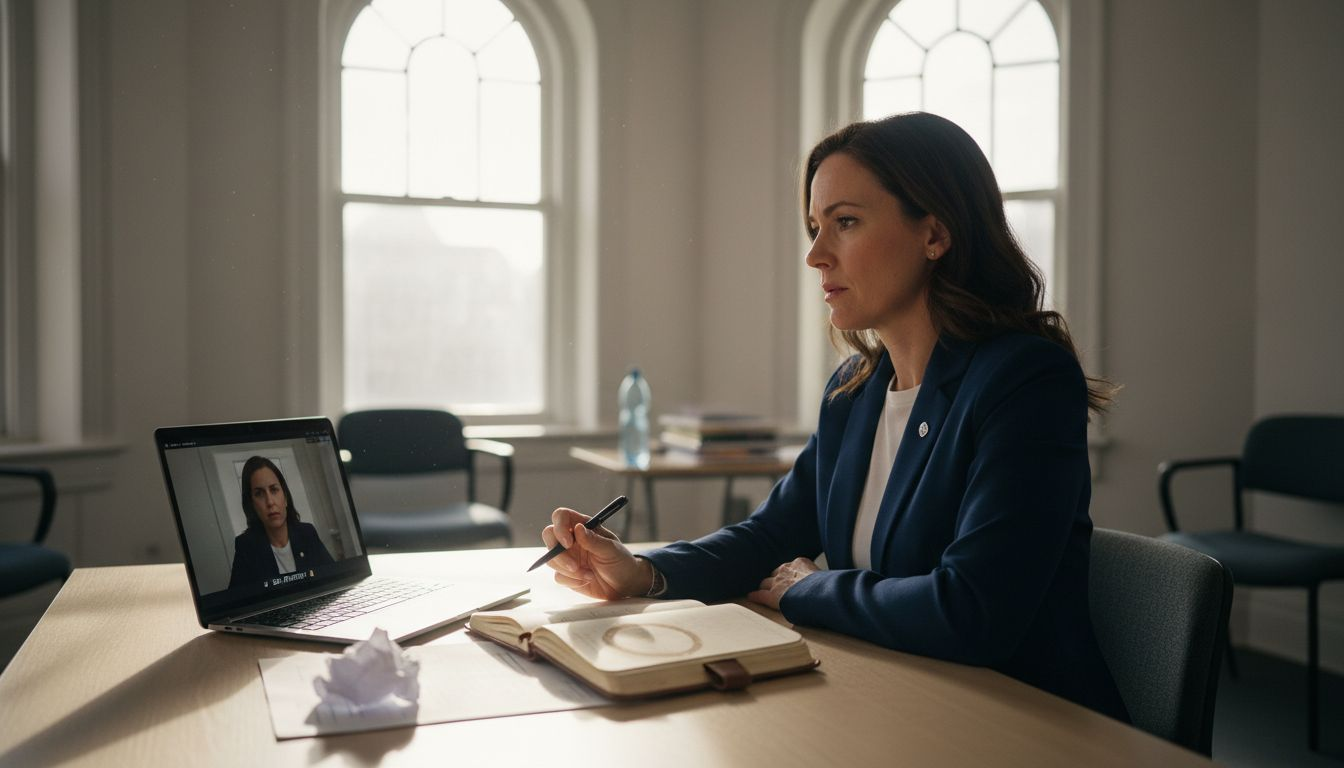
Your anxiety also affects your focus. Instead of listening carefully to the question and crafting a thoughtful response, your brain redirects energy to managing physical symptoms. This creates a loop: anxiety impairs your communication, which increases anxiety further.
The key difference between anxious and confident candidates isn’t whether anxiety exists—it’s whether they manage it during the actual interview response.
Pro tip: Record yourself answering an interview question whilst deliberately noting your symptoms—racing heart, trembling voice, or scattered thoughts—then watch the playback to see how much is actually visible to others on camera.
Why On-Camera Interviews Amplify Stress
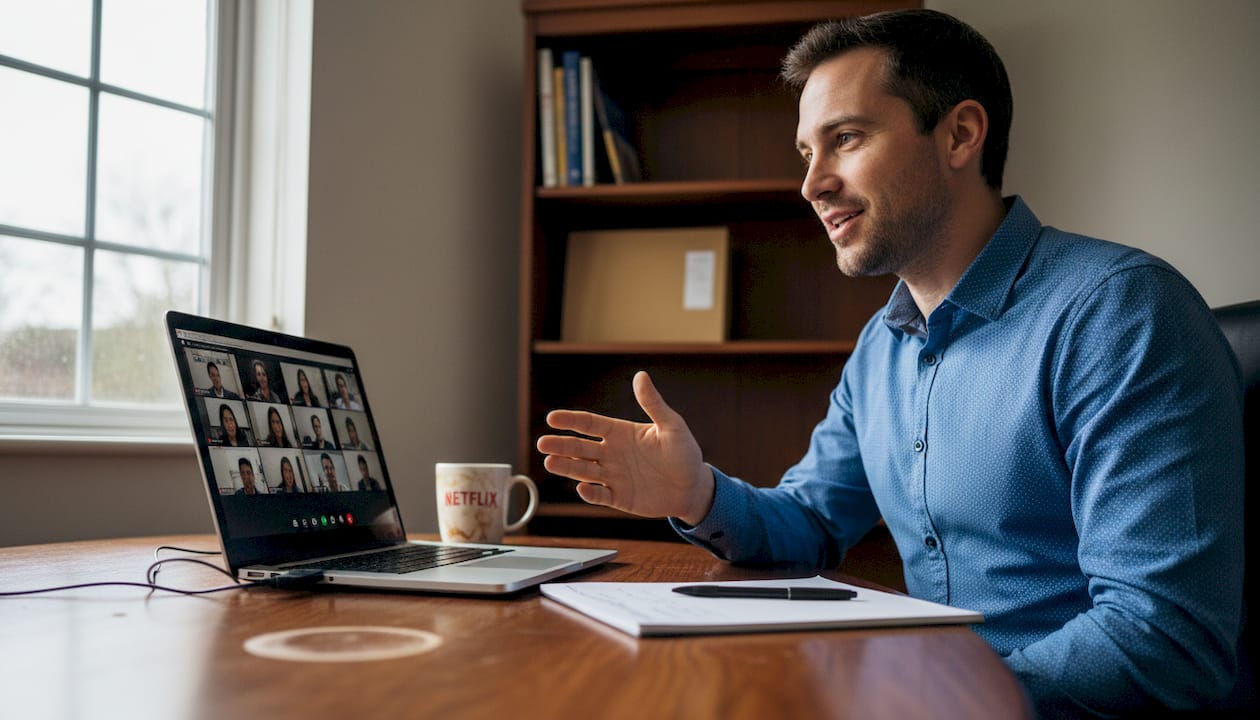
In-person interviews are challenging enough. Add a camera, and something shifts. Being on camera during virtual interviews increases fatigue and stress more than the meetings themselves, according to research on video communication. This isn’t weakness—it’s a documented psychological phenomenon that affects even experienced professionals.
The camera changes how you perceive yourself and how you think others perceive you. This heightened self-awareness creates additional cognitive load that in-person interviews don’t demand.
The Self-Awareness Trap
When you’re on camera, part of your brain constantly monitors your appearance. Are you sitting straight? Does your face look confident? Is your lighting flattering? In a physical interview, you might fidget slightly and move on. On camera, you notice every micro-expression and analyse it.
This divided attention weakens your actual interview performance:
- Your focus splits between answering the question and evaluating how you look
- Mental energy redirects from listening to the interviewer’s follow-up questions
- Anxiety about your on-camera presence interferes with articulate thinking
- You second-guess your natural body language and vocal patterns
Camera-Induced Fatigue
Sustained eye contact efforts and heightened self-presentation demands create psychological fatigue during virtual interviews. Your brain works harder to manage the visual performance aspect whilst simultaneously processing interview content.
This fatigue manifests as:
- Reduced vocal confidence and engagement
- Less animated or expressive responses
- Difficulty maintaining conversational naturalness
- Quicker mental exhaustion during longer interviews
- Reduced ability to recover from a difficult answer
The camera doesn’t just record your words—it redirects your mental resources from what you say to how you appear saying it.
Who Feels This Most Acutely
Research reveals that certain groups experience heightened stress during on-camera interviews. Women and newer professionals often feel increased pressure to perform visually, worrying more about appearance and presentation. Non-native English speakers face compounded stress: managing accent anxiety, language precision, and camera presence simultaneously.
Tech professionals interviewing for senior roles also report higher stress, partly because they feel they should appear perfectly composed and technically articulate on camera.
Your background, experience level, and language confidence all influence how much the camera amplifies your baseline interview anxiety.
Compare how on-camera interviews amplify stress for different groups:
| Group | Amplified Stress Factor | Additional Challenge |
|---|---|---|
| Women | Appearance expectations | Self-presentation fatigue |
| New professionals | Inexperience on camera | Visual performance pressure |
| Non-native English speakers | Language precision | Accent anxiety and comprehension |
| Senior tech professionals | High composure expectations | Pressure to be technically articulate |
The Real Impact on Your Answers
When stress and fatigue intensify, your communication suffers. You might speak too quickly, skip important details, or use filler words more frequently because your brain is managing multiple cognitive demands simultaneously.
Interviewers notice these communication shifts, sometimes attributing them to lack of preparation or confidence rather than understanding they’re symptoms of camera-induced stress.
Pro tip: Record practice interviews on camera multiple times before your real interview—repetition habituates you to the camera’s presence, reducing the novelty stress and shifting cognitive resources back to your actual answers.
Practical Solutions For Non-Native English Speakers
Non-native English speakers face a compounded challenge during on-camera interviews: managing language precision, accent awareness, and camera anxiety simultaneously. The good news is that targeted strategies reduce this cognitive overload significantly. Slowing your speech pace and clarifying key points through cognitive modelling are proven approaches that build confidence and reduce anxiety during high-pressure conversations.
You already possess technical expertise and communication ability. The interview challenge is translating that under stress on camera.
Slow Your Speech Intentionally
Non-native speakers often accelerate when anxious, assuming faster speech sounds more confident. The opposite is true. Slowing deliberately improves clarity, reduces perceived accent anxiety, and gives your brain processing time for complex technical terminology.
Practical techniques:
- Pause for 1-2 seconds after each question before answering
- Use natural pauses between sentences, not just at the end
- Speak at approximately 120-140 words per minute (slightly slower than native speakers)
- Record yourself and count pauses—aim for 3-5 intentional pauses per 60-second answer
Slowed speech also signals thoughtfulness to interviewers, making you appear more senior and deliberate.
Master Key Terminology in Advance
Prepare pronunciation guides for technical terms specific to your target role and company. Write out difficult words phonetically and practise them until they feel natural, not rehearsed.
This eliminates one major anxiety trigger: stumbling over crucial terminology mid-answer. When you can articulate technical concepts smoothly, your confidence visibly increases on camera.
Use the Pause-and-Clarify Strategy
If you lose your train of thought mid-answer, pause briefly and say, “Let me clarify that point.” This signals intentionality rather than confusion. It also buys your brain time to regroup.
Non-native speakers worry that pausing signals weakness. Research and practice reveal the opposite: confident professionals pause regularly to ensure precision.
Speaking slowly and clearly demonstrates respect for the conversation—interviewers interpret this as professionalism, not uncertainty.
Practice With Real Interview Pacing
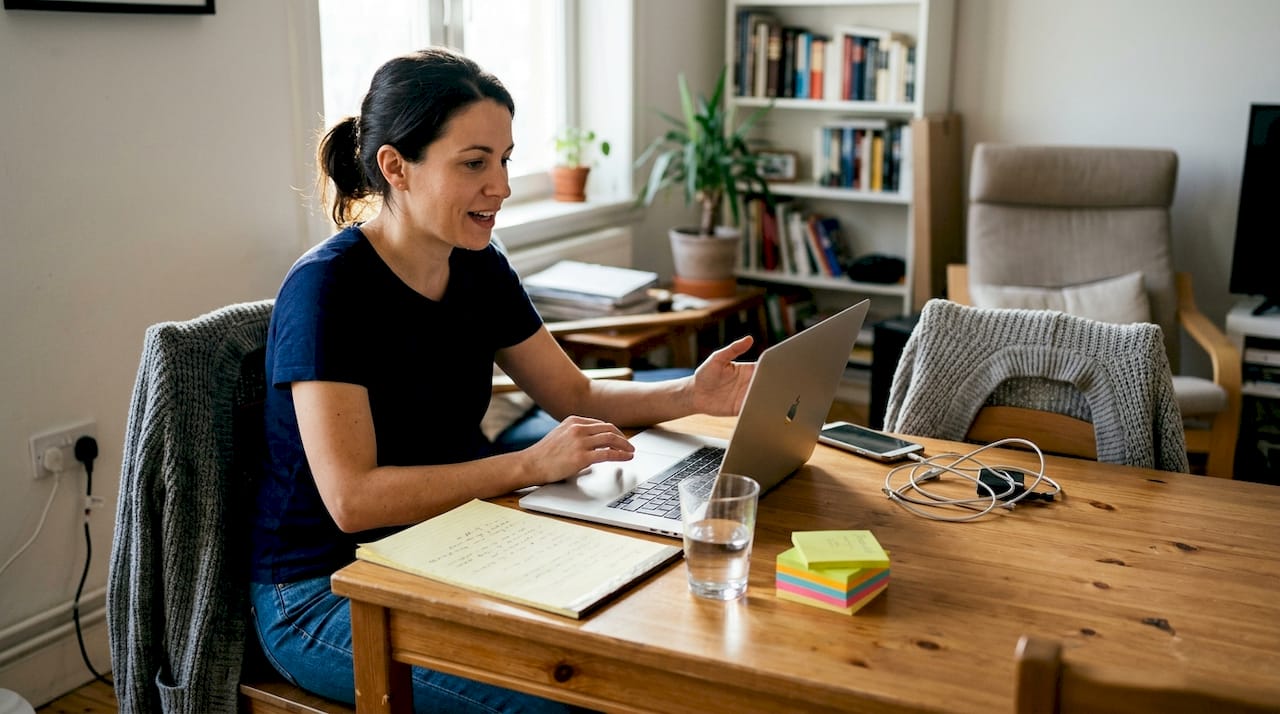
The best anxiety reducer for non-native speakers is repeated on-camera practice. Record yourself answering common interview questions, then review the playback specifically for speech pace, clarity, and accent.
After 5-10 practice recordings, you’ll notice:
- Your anxiety about accent diminishes
- Speech becomes more natural and less forced
- Pausing feels intentional rather than awkward
- Technical terminology flows smoothly
- Overall confidence increases measurably
This repeated exposure to your own voice and presence on camera habituates you to the camera itself, freeing mental resources for content and delivery.
Build a Personal Accent Strategy
Accent isn’t a problem unless it impairs comprehension. Focus on clarity over accent elimination, which is both unrealistic and unnecessary. Tech interviewers evaluate your technical knowledge and communication clarity, not accent conformity.
Consider recording and asking trusted colleagues for honest feedback: “Is my accent affecting understanding of my technical points?” Usually the answer is no.
Pro tip: Record three practice answers with deliberately slow pacing, then three with your natural faster pace, and compare how much more clearly you communicate at the slower speed—this visual evidence builds confidence for your real interview.
Mastering Confidence Through Interview Practice
Confidence isn’t something you’re born with—it’s built through deliberate practice. Systematic preparation, communication rehearsal, and practicing under realistic conditions transform anxiety into composure. The candidates who perform best on camera aren’t naturally fearless; they’ve simply practised enough times that the camera becomes invisible.
This is where interview anxiety genuinely loses its power over you.
The Practice-Confidence Loop
Each time you record a practice interview answer, your brain gathers data. It learns the question pattern, develops a response structure, and experiences the camera environment without real stakes. After the fifth or tenth recording, the novelty stress diminishes dramatically.
This isn’t confidence built on false optimism. It’s confidence rooted in evidence: you’ve done this before, you know what to expect, and you’ve improved measurably.
Structure Your Practice Sessions
Random practice helps less than structured practice. Design your sessions strategically:
- Select 5-7 common questions relevant to your target role
- Record one complete answer per session (aim for 60-90 seconds)
- Review the recording focusing on one element: clarity, pacing, or structure
- Re-record the same question 2-3 times, implementing feedback each attempt
- Move to the next question only after you’re satisfied with delivery
- After two weeks, revisit earlier questions to track improvement
This approach builds mastery rather than just familiarity.
Optimise Your Non-Verbal Communication
Building confidence involves optimising verbal and non-verbal communication, including tone, body language, and overall presence. On camera, these elements matter as much as your words.
Focus areas during practice:
- Eye contact: Look slightly above the camera lens to simulate direct eye contact
- Posture: Sit upright but relaxed; tension visible on camera reduces credibility
- Hand movements: Natural gestures enhance communication; white-knuckled stillness signals anxiety
- Facial expression: Practise smiling naturally when appropriate; rigidity undermines warmth
- Vocal tone: Vary pitch and pace to maintain engagement; monotone delivery suggests disinterest
Review each recording specifically for one element, rather than judging everything at once.
Build Psychological Resilience
Confidence includes resilience—the ability to recover from difficult questions or stumbled answers. During practice, deliberately answer questions poorly, pause awkwardly, or lose your train of thought.
Then re-record the same question cleanly. This teaches your nervous system that mistakes aren’t catastrophic; they’re just opportunities to try again.
Confidence comes from knowing you’ve practised enough times that imperfection doesn’t derail you.
Track Your Measurable Progress
Keep a simple log of your practice sessions: question answered, recording date, key improvements, and areas for next focus. After 10-15 sessions, review your earliest recordings alongside recent ones.
You’ll notice decreased filler words, better pacing, clearer answers, and visibly more relaxed body language. This concrete evidence of improvement builds genuine confidence that withstands real interview pressure.
Pro tip: Record your answer to the same question weekly for four weeks without watching previous attempts, then watch all four versions back-to-back to see dramatic improvement in clarity, confidence, and presence—this visual evidence is far more motivating than any reassurance.
Overcome Interview Anxiety and Master Your On-Camera Presence with Pavone.ai
Interview anxiety can disrupt your confidence and cloud your communication during crucial on-camera moments. As the article explains, managing nerves, pacing your speech, and maintaining authenticity are key to performing well under pressure. If you find yourself struggling with racing thoughts, camera-induced fatigue, or simply want to build real confidence through targeted practice, there is a way forward.
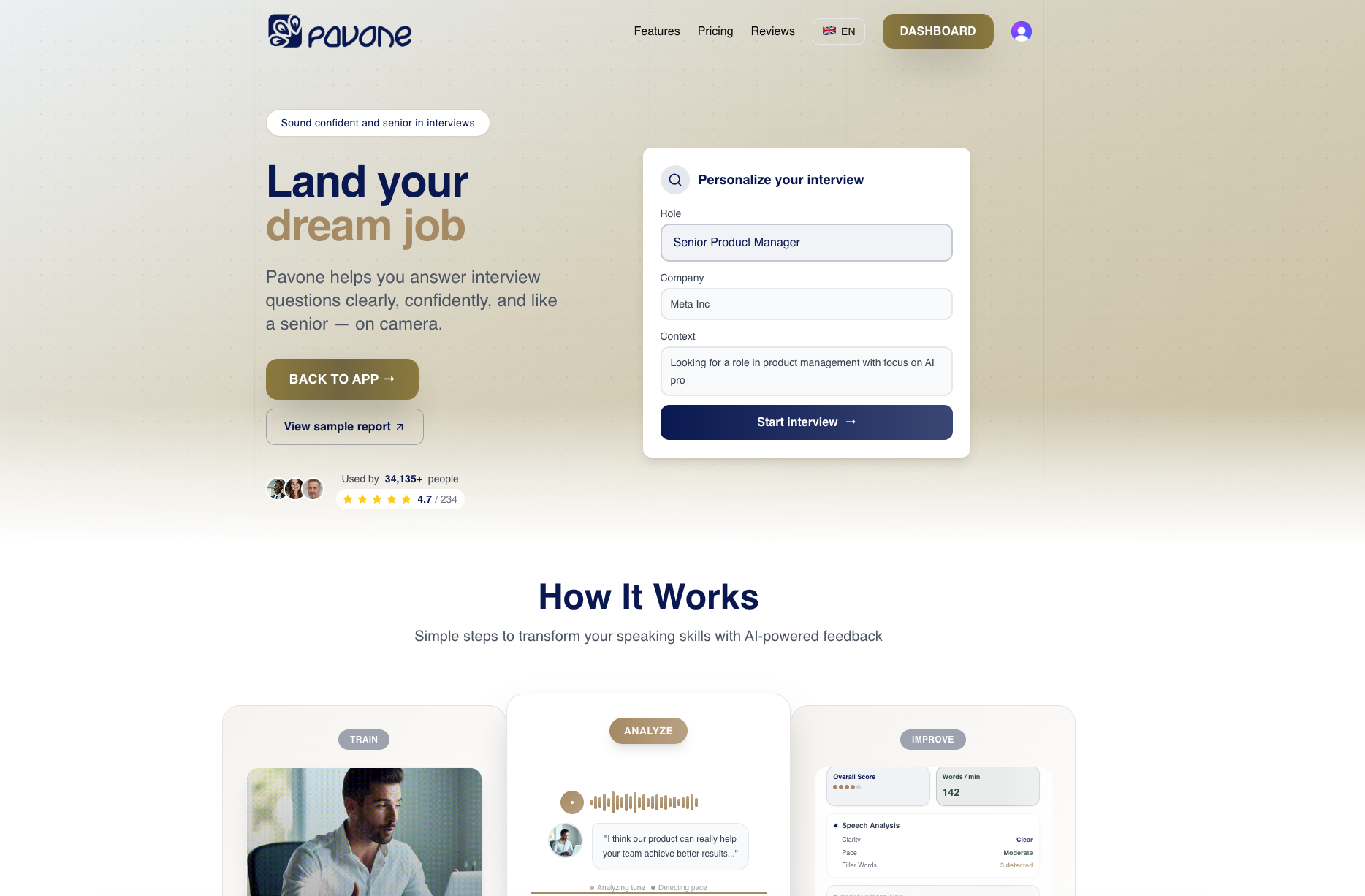
Pavone.ai offers a personalised and private interview preparation platform designed to help you practise interview answers on camera with immediate, actionable feedback. The platform analyses your clarity, pacing, confidence, and filler words so you can pinpoint specific areas to improve. With short, manageable sessions that fit your schedule, Pavone.ai helps you reduce anxiety by building tangible skills and resilience over time. Take control of your interview journey now by visiting Pavone.ai to start practising with real interview questions and tracking your growth. Your next interview is a chance to show your true capability–prepare with Pavone.ai and perform with confidence.
Frequently Asked Questions
What is interview anxiety?
Interview anxiety refers to the nervousness, tension, or worry experienced before and during a job interview, often triggered by the fear of negative evaluation. It is a common response to social evaluation rather than a sign of inadequacy.
How can interview anxiety impact my on-camera performance?
Interview anxiety can lead to various symptoms, such as rapid speech, shaky or hesitant responses, reduced eye contact, and difficulty concentrating. These factors can compromise your ability to communicate effectively and may affect how interviewers perceive your confidence and competence.
What are some strategies to manage interview anxiety during video interviews?
Key strategies include practising on camera to build familiarity, recording answers to common questions to review and identify areas for improvement, slowing your speech to enhance clarity, and focusing on mastering key terminology to alleviate anxiety about language precision.
How can I improve my confidence during virtual interviews?
Improving confidence comes from structured practice sessions, focusing on verbal and non-verbal communication aspects, building psychological resilience through rehearsals, and tracking measurable progress over time to build genuine assurance in your abilities.
Recommended
Ready to practice?
Start improving your speaking skills with AI-powered feedback and analysis.
Try Pavone Free