
Filler Words: Impact on Professional Communication

Every executive remembers that moment in a high-stakes meeting when their thoughts raced ahead of their words, and phrases like “um” or “you know” slipped out. In boardrooms across London, New York, and Singapore, these subtle interruptions can draw attention away from even the strongest ideas. Understanding the true impact of filler words is essential if you want your presentations to project absolute confidence and clarity, not hesitation or uncertainty.
Table of Contents
- Defining Filler Words In Speech And Communication
- Types Of Filler Words And Common Examples
- How Filler Words Impact Credibility And Perception
- Psychological Reasons Behind Using Filler Words
- Strategies To Reduce Filler Words With AI Tools
Key Takeaways
| Point | Details |
|---|---|
| Understanding Filler Words | Filler words, such as “um” and “you know,” can disrupt professional communication and distract from key messages. Recognising and reducing their usage is essential for maintaining credibility. |
| Types of Fillers | Filler words are categorised as either lexicalised (e.g., “so,” “actually”) or unlexicalised (e.g., “um,” “uh”). Each type signals different cues to the audience and requires different strategies for reduction. |
| Impact on Perception | Frequent use of fillers can undermine a speaker’s perceived competence, leading to negative judgments about their confidence and preparation during critical presentations. |
| Strategies for Improvement | Utilising AI tools to track and analyse filler word usage offers actionable insights that help speakers refine their communication skills and reduce reliance on verbal fillers effectively. |
Defining Filler Words in Speech and Communication
Filler words are the verbal pauses and meaningless utterances that slip into your speech when you’re thinking, hesitating, or building momentum. You know them well: “um,” “uh,” “like,” “you know,” “I mean,” and “basically.” These aren’t accidental quirks of speech; they’re predictable patterns that emerge under specific conditions. Disfluencies frequently occurring in spoken discourse such as “uh” and “um” interrupt the regular flow of speech and appear as common elements of spontaneous conversation. What matters for your professional communication is understanding that these verbal fillers don’t simply vanish from your speech. They accumulate, become noticeable, and ultimately distract your audience from your core message.
The functional purpose of filler words reveals something fascinating about human communication. Rather than being entirely redundant or a sign of poor speaking ability, filler words like “I mean” and “you know” serve as linguistic units used to segment speech, particularly during moments of emotional charge or hesitation. They help maintain the continuity of speech and the semiotic context. In executive presentations, boardroom meetings, and client calls, this distinction matters tremendously. When you say “um” whilst collecting your thoughts, you’re not being incompetent. You’re filling dead air, buying time for your brain to catch up with your mouth, and maintaining audience engagement. The problem emerges when these functional moments happen too frequently. A single filler word during a thirty-minute presentation might go unnoticed. Twenty fillers in the same period? Your credibility starts to erode. Listeners unconsciously register a pattern of hesitation, uncertainty, or lack of preparation. This perception can undermine even the most compelling content you’re presenting.
For corporate professionals, the stakes of filler word usage extend beyond mere presentation polish. When you speak with frequent fillers, you inadvertently signal uncertainty to decision makers, clients, and team members. Your words carry less weight. Your ideas receive less consideration. The speaking patterns you’ve developed through years of casual conversation now work against you in high-stakes environments where clarity and confidence matter. If you’ve ever noticed a colleague who speaks with absolute conviction, rarely pausing or searching for words, you’ve witnessed the opposite effect. That speaker commands attention. People lean in. Ideas get implemented. Your ability to articulate your thoughts clearly without verbal padding directly influences how your organisation perceives your competence and suitability for advancement. This isn’t about perfection; it’s about removing the noise that obscures your message.
Professional tip Record yourself presenting for five minutes, then count your filler words. The number often surprises professionals who’ve never tracked this metric before, making it your baseline for improvement.
Types of Filler Words and Common Examples
Not all filler words operate the same way. Your brain produces different types depending on what’s happening in the moment, and understanding these categories helps you identify which fillers plague your own speech. Researchers have identified two primary categories: lexicalised fillers and unlexicalised fillers. The distinction matters because each type signals something different to your audience, and each requires a different approach to reduce. Lexicalised and unlexicalised filler types include phrases like “so” or “you know” on one end, whilst sounds like “uh” and “um” make up the other category. Understanding this classification helps reveal how fillers function in spontaneous speech and their role in signalling hesitation or filling time.
Unlexicalised fillers are the non-word sounds your mouth produces when your mind is processing. Think “um,” “uh,” “umm,” “ah,” and “er.” These exist in every language and every speaker uses them instinctively. The research shows unlexicalised fillers are significantly more common in casual conversation, which means you’re probably using them more than you realise. What makes them particularly problematic in professional settings is their audio prominence. When you say “um,” listeners hear it as a distinct vocal interruption. It’s unmissable. Unlike a slight pause or a breath, an “um” registers as an actual utterance. During a board presentation, a single “um” can trigger a slight wince from your audience. String ten of them together and you’ve created a pattern that overshadows your message entirely. The brain is wired to notice these interruptions, especially when they’re repeated in quick succession.
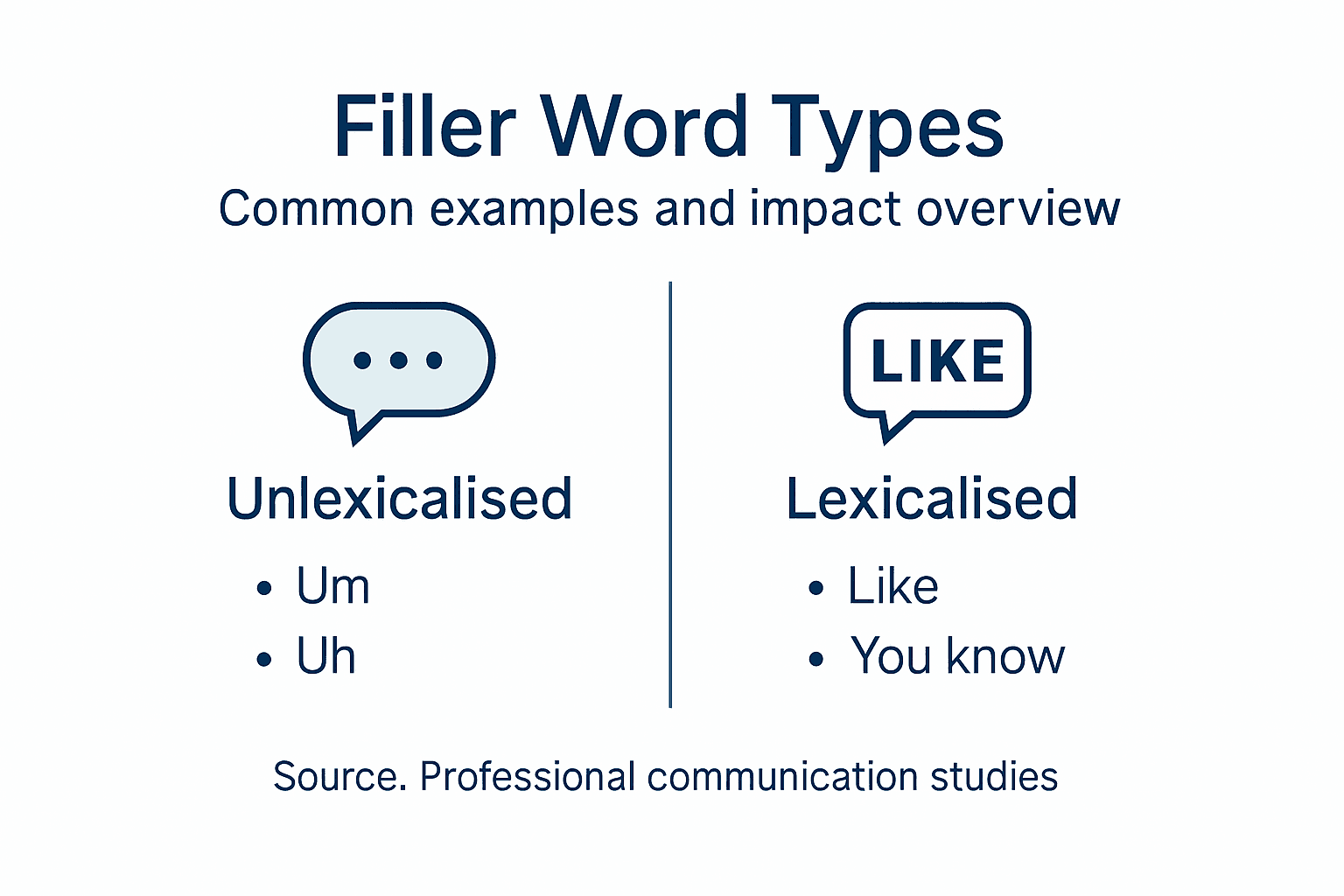
Lexicalised fillers carry semantic meaning, which paradoxically makes them trickier to eliminate in professional speech. Words and phrases like “so,” “actually,” “basically,” “you know,” “I mean,” “like,” and “right” function as actual language. They have definitions. Yet when used as fillers rather than for their intended meaning, they become verbal crutches. You say “basically” not to actually mean basically; you say it to buy a half-second whilst you formulate your next sentence. Research examining tertiary education students’ extemporaneous speeches identified “uhm” and “so” as the most frequent fillers used across speakers. The sneaky danger of lexicalised fillers is that they sound less jarring than “um.” Audiences don’t consciously register them as hesitation markers. But they do register them subconsciously. Over the course of a presentation, repeated “you knows” and “I means” accumulate into a perception of informal, conversational speech rather than polished, executive communication.
Several specific examples dominate professional speech:
- Non-word sounds: “um,” “uh,” “umm,” “ah,” “er”
- Filler phrases: “you know,” “I mean,” “like,” “sort of,” “kind of,” “in a sense”
- Discourse markers used as fillers: “so,” “actually,” “basically,” “right,” “well,” “okay”
- Hedge phrases: “more or less,” “more like,” “pretty much,” “I guess,” “I suppose”
The profiles differ across industries. Technology executives favour “so” and “like.” Finance professionals tend toward “basically” and “actually.” Consultants gravitate toward “right” and “I mean.” Your industry peer group has probably conditioned you toward specific fillers through months of meetings and conversations. That’s precisely why breaking the habit requires conscious effort.
Here’s a quick comparison of lexicalised and unlexicalised filler words and their influence on professional communication:
| Filler Type | Typical Examples | Perceived Impact | Reduction Approach |
|---|---|---|---|
| Unlexicalised | “um”, “uh”, “ah”, “er” | Obvious interruption | Pause or breathe strategically |
| Lexicalised | “so”, “you know”, “basically” | Subtle hesitancy | Increase semantic awareness |
Professional tip During your next internal meeting or call, listen to colleagues’ speech patterns for five minutes without speaking. You’ll quickly identify the dominant fillers in your professional environment, which often become contagious speech habits.
How Filler Words Impact Credibility and Perception
Your audience forms judgements about you within seconds of you opening your mouth. Those judgements stick. When filler words dominate your speech, you’re essentially undermining the very competence you’re trying to demonstrate. Research shows that frequent speech fillers negatively impact perceived communicative competence, with listeners regarding speakers as less fluent and less capable. The consensus from both language instructors and students is clear: fillers reduce clarity and effectiveness. This isn’t a minor cosmetic issue. This is about how your organisation perceives your ability to lead, persuade, and influence. When you’re pitching to investors, presenting quarterly results, or advocating for your team’s budget allocation, every filler word chips away at your perceived authority.
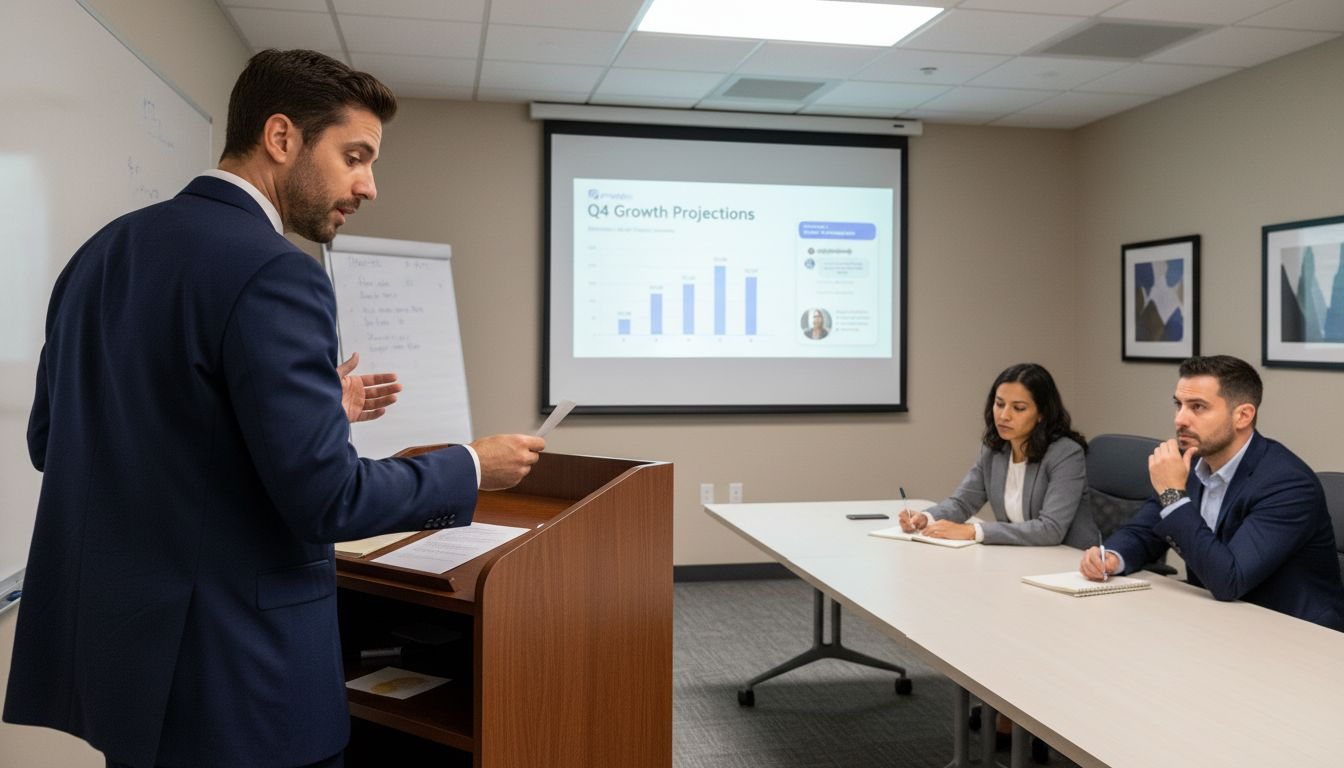
The perception problem runs deeper than surface-level judgement. Overuse of filler words signals lack of confidence, insufficient preparation, or limited language proficiency, which undermines a speaker’s professionalism and credibility. Think about the executives you respect most in your industry. The ones who command rooms. The ones whose ideas get heard and implemented. Notice how rarely they use fillers. They don’t pause awkwardly; they pause with purpose. They don’t fill silence; they let it breathe. That’s not accident. That’s cultivated skill. When you speak with excessive fillers, audiences unconsciously interpret this as lack of preparation, uncertainty about your material, or anxiety about the situation. Suddenly, your compelling data loses its persuasive force. Your innovative proposal seems half-baked. Your expertise becomes questionable. The content hasn’t changed. Only the delivery has, yet perception shifts entirely.
The impact extends to how your ideas get received and acted upon. In high-stakes professional environments, fillers restrict effective communication. Your colleagues might hear your words, but they’re not fully absorbing them. Their brains are partly occupied registering and cataloguing those verbal interruptions. It’s cognitive load you’re creating unnecessarily. Consider a scenario: two managers present similar project proposals. Manager A speaks fluidly with minimal fillers, projecting confidence and preparedness. Manager B delivers the identical content but with fifteen filler words scattered throughout. Which proposal gets approved? Which manager gets considered for promotion? The answer feels obvious because it is. Audiences don’t consciously think “this speaker used eight fillers, therefore I’ll trust them less.” Instead, they feel a subtle erosion of confidence. They perceive less polish, less professionalism, less command. This perception becomes the lens through which they evaluate everything else you communicate.
The cumulative effect matters enormously. A single “um” during a forty-minute presentation might register as nothing. But research examining oral presentations reveals that overuse creates compounding credibility damage. Five fillers distributed across an hour-long presentation? Barely noticeable. Thirty fillers in that same timeframe? You’ve now established a pattern that colours the entire interaction. Listeners stop focusing on content and start counting interruptions. You’ve shifted their attention from what you’re saying to how you’re saying it. For corporate professionals seeking advancement, this distinction determines outcomes. Your ability to speak without verbal padding directly influences how stakeholders perceive your readiness for greater responsibility. Senior executives don’t hire or promote people who sound uncertain. They hire people who sound like they’ve already succeeded.
Professional tip Record a recent presentation or important call you’ve done, then count every filler word. If you find more than one filler per two minutes of speech, that’s your signal that perception damage is likely already occurring with your regular audiences.
Psychological Reasons Behind Using Filler Words
Your brain doesn’t produce filler words by accident. They emerge from specific cognitive processes that happen in real time during speech. Understanding the psychology behind fillers transforms them from shameful habits into recognisable patterns you can actually control. Fillers are linked to cognitive processes such as speech planning and hesitation, occurring when speakers search for words or organise thoughts. They serve as pragmatic markers signalling to listeners a pause for thought rather than a complete breakdown in communication. When you’re formulating a complex idea on the spot, your mouth starts speaking before your mind has finished organising the full thought. That gap between what you want to say and what you’ve actually articulated creates psychological pressure. Your brain responds by filling that gap with sound. An “um” or “uh” buys you processing time. It tells your audience “I’m still here, still thinking, still communicating,” rather than going silent. This mechanism made perfect sense when human conversation happened in real time without consequences. It makes considerably less sense in a board presentation being recorded and potentially reviewed by senior executives.
The psychological function becomes more nuanced when you recognise how fillers manage emotional and cognitive load. Filler words are used during moments of emotional tension and cognitive load to segment speech and maintain flow, helping speakers express themselves whilst managing the complexity of conveying thoughts. Consider what happens in your brain during a high-stakes presentation. Your heart rate elevates. Adrenaline surges. Your nervous system is partially activated. In that state, fillers become a coping mechanism. They provide a rhythmic anchor, a familiar sound that grounds you. They segment your speech into digestible chunks, preventing you from overwhelming your audience with one long, breathless rush of words. The fillers also signal your emotional state to listeners, creating a form of transparency about your internal experience. Yet here’s the paradox: that same transparency that feels authentic in casual conversation reads as unprofessionalism in executive settings. Your vulnerability becomes your liability.
Three primary psychological drivers explain why fillers persist in professional speech:
-
Cognitive load and speech planning Your brain processes language at roughly 150 words per minute during normal speech, but thinking happens faster. Fillers bridge the gap between thought speed and speech speed, buying milliseconds whilst you formulate the next phrase.
-
Anxiety and uncertainty management When you feel unsure about your material or nervous about the audience, fillers increase. They become verbal safety nets, a way to maintain engagement whilst your confidence temporarily dips.
-
Social continuity and turn-taking In conversation, silence creates awkward pauses that can shift speaking rights to someone else. Fillers keep the conversational floor yours, signalling you’re still speaking even whilst thinking.
The problem for corporate professionals is that these psychological mechanisms developed for casual conversation actively work against you in formal settings. When you’re articulating thoughts clearly during important presentations, every filler removes authority from your message. The audience senses your cognitive load or anxiety, and suddenly they’re questioning whether you truly understand your material. Your natural psychological response to speech pressure becomes visible evidence of that pressure. This is why breaking the filler habit requires more than awareness. It requires retraining your brain’s automatic response to cognitive load and anxiety. You need to replace the “um” reflex with alternatives: a strategic pause, a breath, a moment of intentional silence that projects confidence rather than uncertainty.
Below is a summary of psychological drivers behind filler word usage and their effect in business settings:
| Driver | How It Leads to Fillers | Professional Impact |
|---|---|---|
| Cognitive overload | Speaking outruns thinking | Noticeable uncertainty |
| Anxiety or stress | Nervousness prompts verbal pauses | Reduced perceived confidence |
| Social cue management | Fillers keep conversational control | May hinder concise delivery |
Professional tip Next time you’re in a meeting and feel the urge to fill silence with “um” or “like,” deliberately pause for two full seconds instead. Notice that the silence doesn’t collapse the conversation; it actually strengthens your position by projecting deliberation.
Strategies to Reduce Filler Words with AI Tools
Manual awareness alone won’t eliminate filler words. You can know intellectually that you say “um” too often, but in the pressure of a live presentation, your brain reverts to old patterns. This is where technology changes the equation. AI tools provide real-time feedback and post-speech analysis that creates accountability your brain cannot ignore. AI applications monitor filler word usage patterns and offer corrective prompts or exercises to reduce dependency on verbal fillers. Incorporating speech recognition and natural language processing, these tools assist speakers in becoming more fluent, directly improving credibility and communication effectiveness in professional environments. The mechanism works because it removes the guesswork. Instead of wondering whether you used fillers, you get concrete data: you used twelve “ums” in a three-minute pitch. You used “basically” eight times in a thirty-minute presentation. That specificity transforms vague intention into measurable reality. You can’t improve what you can’t measure, and AI tools provide precisely that measurement.
The technical capability behind these tools continues to advance rapidly. Automatic detection and mitigation of fillers using AI models employs techniques like neural semi-Markov conditional random fields and structured state space sequence models to improve filler word segmentation in speech recognition systems. These advances generate cleaner transcripts and enhance speech fluency models to support speaker training and communication aids. What this means practically is that AI systems now catch fillers with remarkable accuracy, often spotting patterns you wouldn’t notice yourself. A tool analysing your presentation might reveal that you consistently use “um” when transitioning between topics, or that “like” increases when you’re discussing unfamiliar material. Once you see the pattern, you can address the root cause. The AI doesn’t just flag problems; it identifies triggers. You discover that anxiety around certain topics drives filler word usage, allowing you to prepare more thoroughly for those sections. Knowledge like this creates targeted improvement rather than generic “speak better” advice.
How to Implement AI-Driven Filler Word Reduction
The practical implementation involves three stages:
-
Record and analyse Capture your speech using tools that transcribe and analyse filler word usage. Record practice presentations, client calls, or team meetings. The tool generates a transcript highlighting every filler word with timestamps showing exactly where they occurred.
-
Identify patterns Review the analysis to spot trends. Do fillers cluster around certain topics? Do they increase when you’re presenting to senior executives? Do specific filler types dominate your speech? Pattern recognition reveals the psychological triggers driving your filler usage.
-
Practice with feedback Record yourself deliberately practising the sections where fillers appeared most frequently. Use the tool’s feedback to monitor improvement. Most speakers show measurable reduction within two weeks of focused practice because they’re receiving immediate, concrete feedback on every attempt.
When you’re using AI tools to perfect your presentation skills, the advantage extends beyond simple counting. Modern platforms provide visual dashboards showing your filler word frequency compared to previous recordings. You see your progress graphically. A line chart trending downward from twelve fillers per minute to three fillers per minute provides motivation that abstract awareness simply cannot match. You’re not trying to improve vaguely; you’re chasing a specific metric. This transforms speaking practice from a chore into a measurable challenge.
The most effective approach combines AI analysis with deliberate practice. Record a presentation. Review the filler word report. Identify your top three most-used fillers. Practise that same presentation again, consciously working to eliminate those three fillers. Record again and compare. The before-and-after data proves improvement is possible. Over successive iterations, your brain rewires its automatic response to cognitive load. The “um” reflex diminishes. Silence becomes your default rather than your exception. This rewiring happens faster with AI feedback than through self-awareness alone because you’re receiving objective measurement every single time you practise.
Professional tip Record one presentation using an AI analysis tool, review the results, then immediately re-record the same presentation with full awareness of your filler patterns. The improvement between take one and take two often exceeds fifty percent reduction, proving how quickly feedback drives change.
Transform Your Speech by Eliminating Filler Words with Pavone.ai
Many professionals struggle with using too many filler words such as “um”, “so”, or “you know” which can unintentionally signal hesitation and reduce credibility in presentations or meetings. This article reveals how these verbal pauses impact perception and highlights the psychological reasons behind them. If you wish to regain control over your speech, reduce cognitive load, and present ideas with greater confidence, targeted practice with precise feedback is essential.
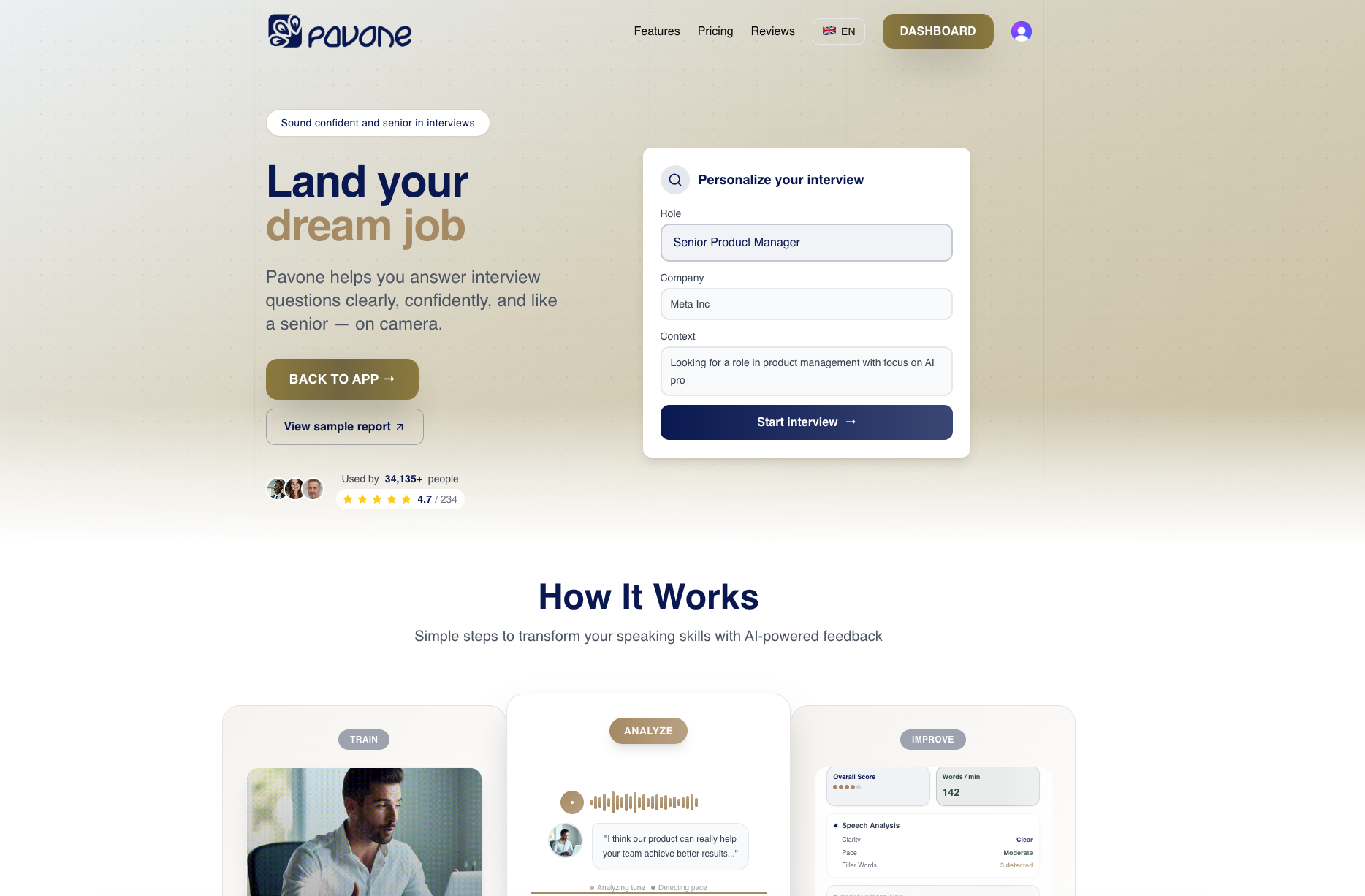
Discover how Pavone.ai uses cutting-edge AI-driven analytics to help you pinpoint exactly when and why fillers sneak into your speech. Record your presentations or conversations and receive clear, actionable insights on filler word patterns alongside other vital communication factors like tone and pace. This personalised coaching platform empowers you to track your progress visually and build speaking confidence faster than ever before. Start improving your professional communication today and make your message truly unforgettable by visiting Pavone.ai.
Frequently Asked Questions
What are filler words and why are they used in speech?
Filler words, such as “um,” “uh,” “like,” and “you know,” are verbal pauses that speakers often use when thinking, hesitating, or organising their thoughts during conversation. They help maintain the flow of speech and keep the audience engaged while the speaker formulates their next point.
How do filler words affect professional communication?
Frequent use of filler words can undermine a speaker’s perceived competence and credibility. They can signal uncertainty and reduce the clarity of the message, leading audiences to doubt the speaker’s preparation and authority.
What types of filler words exist and how do they differ?
Filler words can be categorised into two main types: unlexicalised fillers (e.g., “um,” “uh”) which interrupt the flow of speech, and lexicalised fillers (e.g., “so,” “you know”) that can subtly indicate hesitation. Each type affects audience perception differently and therefore requires distinct approaches for reduction.
What strategies can help reduce the use of filler words in presentations?
Techniques to reduce filler words include practising deliberate pauses, recording and analysing speech for filler word frequency, and using AI tools for real-time feedback. Preparation and increasing awareness of one’s speech patterns are vital for improvement.
Recommended
- Speak Confidently in Meetings - Pavone Academy
- How To Articulate Thoughts Clearly - Pavone Academy
- Pavone - Your AI Speaking Coach
- Pavone - Your AI Speaking Coach
- 12 Communication Skills Every Student Should Master
- Team Communication: Keys to Better Collaboration – Optio Station: Best Project Management App for Prioritization
Ready to practice?
Start improving your speaking skills with AI-powered feedback and analysis.
Try Pavone Free