
Corporate Interview Questions: Succeeding with Clarity

Facing corporate interviews often brings a mix of nerves and anticipation, no matter whether you are in London, Sydney or Mumbai. Understanding the logic behind structured interview questions gives you an edge, helping you focus your preparation and reduce anxiety. This guide uncovers how different question types reveal your strengths and shows proven methods to craft confident, clear responses for every stage of your career.
Table of Contents
- Corporate Interview Questions Defined Clearly
- Types of Questions and What They Reveal
- How to Structure Compelling Answers
- Essential Skills Assessed in Interviews
- Common Mistakes and How to Avoid Them
- Leveraging AI Tools for Confidence
Key Takeaways
| Point | Details |
|---|---|
| Structured Interview Frameworks | Corporate interviews utilise structured methodologies to objectively assess candidate skills and fit for the organisation. |
| Key Question Types | Interviews feature behavioural, situational, competency-based, and cultural fit questions, each focusing on different aspects of professional capability. |
| Effective Answer Structuring | Using frameworks like the STAR method can transform professional experiences into compelling narratives, enhancing interview responses. |
| Avoiding Common Pitfalls | Key mistakes such as lack of preparation and poor communication can significantly undermine interview performance; strategic awareness is crucial. |
Corporate Interview Questions Defined Clearly
Corporate interview questions represent structured assessment tools designed to systematically evaluate a candidate’s skills, experience, and potential organisational fit. Structured interview methodologies provide hiring managers with standardised frameworks to make objective recruitment decisions.
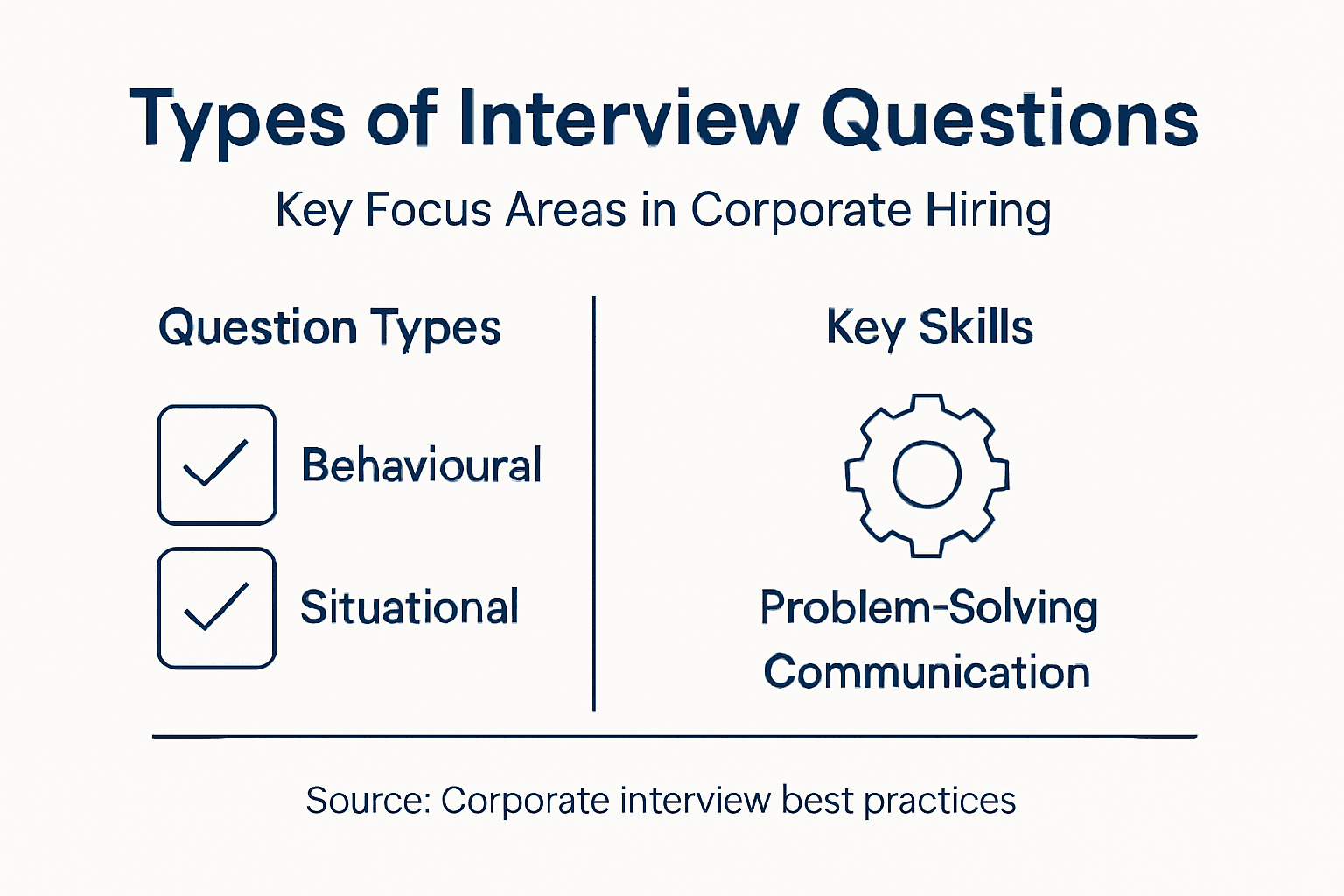
These questions typically fall into three primary categories:
- Behavioural Questions: Explore past professional experiences
- Situational Questions: Present hypothetical workplace scenarios
- Competency-Based Questions: Directly assess specific job-related skills
Behavioural questions require candidates to describe specific past experiences, revealing their problem-solving approaches and interpersonal dynamics. For instance, an interviewer might ask, “Tell me about a time you resolved a significant conflict within your team.”
Situational questions present hypothetical scenarios to understand how candidates might theoretically respond to professional challenges. These assess critical thinking, adaptability, and decision-making capabilities. A typical example might be: “How would you handle a project deadline at risk of being missed?”
Competency-based questions directly evaluate technical skills and role-specific capabilities. These queries aim to confirm whether a candidate possesses the precise abilities required for successful job performance.
Pro tip: Prepare concise, structured responses using the STAR method (Situation, Task, Action, Result) to demonstrate your professional capabilities effectively.
Types of Questions and What They Reveal
Interviews employ various question types to assess candidates comprehensively, each designed to uncover different aspects of professional capability. Understanding these question categories helps candidates prepare more effectively and demonstrates strategic self-awareness during recruitment processes.
The primary interview question categories include:
- Behavioural Questions: Examine historical performance
- Situational Questions: Test hypothetical problem-solving
- Competency-Based Questions: Validate specific skill sets
- Technical Questions: Assess specialised professional knowledge
- Cultural Fit Questions: Evaluate organisational alignment
Behavioural questions demand concrete examples from past experiences, requiring candidates to narrate specific scenarios that reveal their interpersonal skills, decision-making processes, and professional maturity. These queries typically begin with phrases like, “Tell me about a time when…” or “Describe a situation where you…”
Situational questions present hypothetical workplace challenges, evaluating a candidate’s theoretical approach to complex professional scenarios. By presenting abstract problems, interviewers can assess critical thinking, adaptability, and potential leadership capabilities without relying solely on past performance.
Competency-based questions directly target role-specific skills, ensuring candidates possess the precise technical and soft skills required for successful job performance. These targeted queries help organisations minimise recruitment risks by objectively measuring candidate capabilities against predefined professional standards.
The following table summarises key interview question types and their unique recruiter insights:
| Question Type | Focus Area | What Interviewers Learn |
|---|---|---|
| Behavioural | Past real experience | Reliability, teamwork approach |
| Situational | Hypothetical scenarios | Problem-solving, adaptability |
| Competency-Based | Technical/specific skills | Role fit, professional proficiency |
| Cultural Fit | Organisational alignment | Values and working style match |
| Technical | Specialised knowledge | Domain-specific competencies |
Pro tip: Practice articulating your professional experiences using the STAR method to transform your answers from simple narratives into compelling demonstrations of your capabilities.
How to Structure Compelling Answers
Mastering the art of structuring interview responses transforms raw professional experiences into powerful narratives that capture an interviewer’s attention. Effective answer structures provide a clear, logical framework that demonstrates not just what you’ve done, but how you think and approach challenges.
The most widely recognised interview response frameworks include:
- STAR Method: Situation, Task, Action, Result
- STAR+ Method: Adds Reflection to traditional framework
- GRAMS Framework: Incorporates strategic business thinking
- CAR Technique: Context, Action, Result
The traditional STAR method remains the gold standard for crafting compelling interview responses. By breaking down your answer into specific components, you create a structured narrative that provides comprehensive insight into your professional capabilities. The method ensures you cover critical elements: setting the context, explaining your specific responsibilities, detailing the actions you took, and highlighting the concrete results achieved.
Advanced frameworks like STAR+ introduce a critical reflection component, allowing candidates to demonstrate self-awareness and continuous learning. This approach goes beyond simply describing what happened, inviting you to articulate insights gained, lessons learned, and how the experience shaped your professional development.
Quantifying results remains crucial in any response structure. Interviewers appreciate candidates who can translate experiences into measurable outcomes, whether through percentages, financial impacts, efficiency improvements, or other tangible metrics that validate your professional contributions.
Below is a concise comparison of popular interview answer frameworks and their best use cases:
| Framework | Key Components | Best Use Case |
|---|---|---|
| STAR | Situation, Task, Action, Result | Clear achievement explanation |
| STAR+ | STAR plus Reflection | Show learning from setbacks |
| GRAMS | Strategic business logic | Senior-level applications |
| CAR | Context, Action, Result | Concise accomplishment summaries |
Pro tip: Practice your response frameworks aloud, recording yourself to identify areas where you can refine clarity, concision, and impact.
Essential Skills Assessed in Interviews
Interviews are sophisticated assessments designed to evaluate critical professional competencies that extend far beyond traditional technical skills. Understanding these core competencies provides candidates with a strategic approach to presenting their most compelling professional narrative.
The primary skills typically assessed during interviews include:
- Communication Skills: Clarity, articulation, and coherence
- Problem-Solving Abilities: Strategic thinking and analytical approach
- Interpersonal Dynamics: Collaboration, empathy, and team interaction
- Leadership Potential: Initiative, decision-making, and accountability
- Adaptability: Resilience, learning agility, and flexibility
- Emotional Intelligence: Self-awareness and professional maturity
Communication skills represent the foundational competency that underpins all professional interactions. Interviewers meticulously evaluate not just what you say, but how you express your thoughts, looking for candidates who can articulate complex ideas with precision, confidence, and nuance.

Problem-solving abilities reveal your cognitive approach to challenges. Employers seek candidates who can demonstrate structured thinking, creative solutions, and the capacity to analyse complex scenarios systematically. This skill goes beyond finding answers, focusing on your ability to generate innovative approaches and navigate ambiguous professional landscapes.
Interpersonal dynamics assessment explores your potential to integrate effectively within organisational cultures. Beyond technical competence, interviewers are looking for individuals who can collaborate seamlessly, communicate diplomatically, and contribute positively to team environments.
Pro tip: Prepare concrete, quantifiable examples that demonstrate these skills, using specific metrics and outcomes to substantiate your professional capabilities.
Common Mistakes and How to Avoid Them
Navigating corporate interviews requires strategic awareness of potential pitfalls that can undermine even the most qualified candidates. Identifying and mitigating common interview mistakes becomes crucial for maintaining a professional and compelling presentation.
The most critical interview mistakes typically include:
- Lack of Preparation: Insufficient research about the company and role
- Poor Communication: Rambling or providing overly vague responses
- Negative Body Language: Inappropriate non-verbal communication signals
- Inappropriate Dress: Misunderstanding professional dress codes
- Tardiness: Arriving late or without sufficient time buffer
- Unprofessional Demeanour: Displaying inappropriate emotional responses
Poor preparation represents the most fundamental error candidates make during interviews. This encompasses everything from inadequate company research to failing to anticipate potential questions. Successful candidates invest significant time understanding the organisation’s culture, recent achievements, and specific role requirements before the interview.
Communication missteps can rapidly derail an otherwise promising interview. Candidates often struggle with maintaining appropriate response length, oscillating between providing insufficient detail and overwhelming interviewers with excessive information. The key lies in crafting concise, structured answers that directly address the question while demonstrating professional depth and self-awareness.
Non-verbal communication frequently communicates more than verbal responses. Subtle signals like inappropriate eye contact, nervous gestures, or defensive postures can unconsciously undermine a candidate’s credibility. Professional interviews demand a delicate balance of confidence, openness, and respectful engagement.
Pro tip: Record a mock interview and critically analyse your verbal and non-verbal communication to identify and correct potential professional presentation weaknesses.
Leveraging AI Tools for Confidence
Technological advancements are revolutionising interview preparation through sophisticated AI-powered practice platforms that transform traditional skill development approaches. These innovative tools provide personalised, data-driven insights that help candidates systematically improve their communication and presentation capabilities.
Key advantages of AI interview preparation tools include:
- Realistic Simulation: Mimicking actual interview environments
- Instant Feedback: Detailed analysis of communication performance
- Objective Assessment: Unbiased evaluation of verbal and non-verbal skills
- Personalised Learning: Tailored recommendations for improvement
- Anxiety Reduction: Controlled practice environments
- Skill Tracking: Measurable progress over time
AI platforms excel at creating immersive interview simulations that replicate real-world professional interactions. By generating diverse question sets and evaluating responses across multiple dimensions, these tools provide candidates with comprehensive insights into their communication strengths and developmental areas.
Feedback mechanisms represent the most transformative aspect of AI interview preparation. Unlike traditional methods, these tools can analyse nuanced elements of communication, including speaking pace, vocal tone, vocabulary complexity, body language, and structural coherence of responses. This granular assessment enables candidates to make precise, targeted improvements.
Advanced AI technologies also help candidates manage interview-related anxiety by providing a low-stakes, controlled environment for repeated practice. The ability to record, review, and refine responses builds confidence through incremental skill development and self-awareness.
Pro tip: Select an AI interview preparation platform that offers comprehensive analytics and allows multiple practice iterations to systematically enhance your communication skills.
Elevate Your Interview Communication with Pavone.ai
Corporate interviews demand clarity, confidence and precise articulation of your skills using frameworks like STAR to impress recruiters. However, mastering these is challenging without real-time feedback on subtleties such as tone, pace and body language that influence interview success. This article highlights the importance of structuring answers thoughtfully and conveying professionalism through both verbal and non-verbal cues.
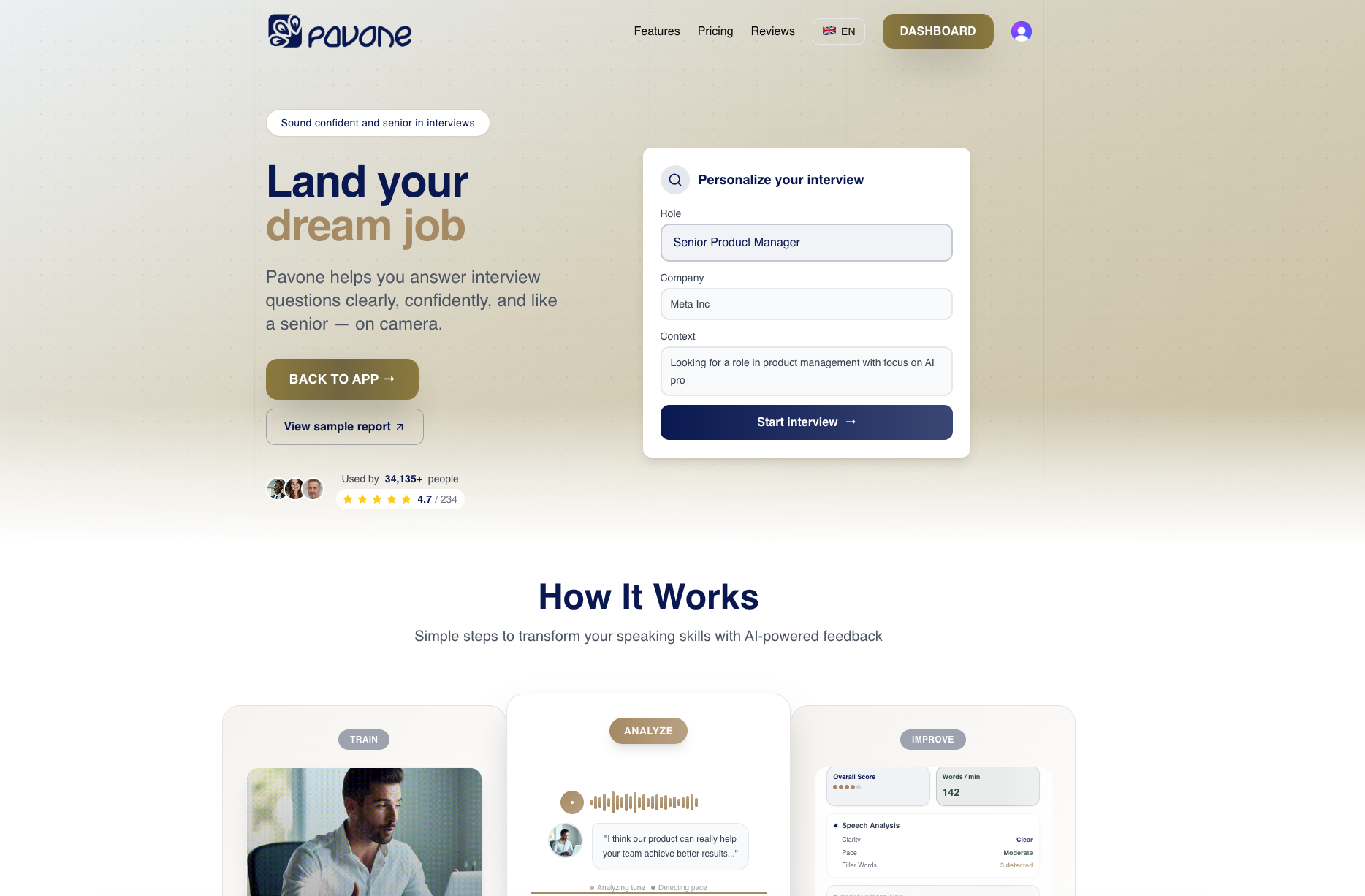
Unlock your full communication potential today with Pavone.ai. Our AI-powered platform offers detailed, instant analysis of your public speaking performance to help you practise interview answers effectively. Benefit from personalised insights into your clarity, vocal delivery and body language while tracking progress over time. Start transforming your interview preparation experience now at Pavone.ai and gain the confidence you need to succeed in corporate interviews with compelling clarity. Visit Pavone.ai to begin your journey towards effortless communication mastery.
Frequently Asked Questions
What types of questions are commonly asked in corporate interviews?
Corporate interviews typically include behavioural questions, situational questions, competency-based questions, technical questions, and cultural fit questions that assess a candidate’s skills and compatibility with the organisation.
How can I prepare effectively for corporate interviews?
Effective preparation involves researching the company, practising your responses using the STAR method, and being ready to articulate your professional experiences clearly and concisely.
What is the STAR method, and how does it help in interviews?
The STAR method stands for Situation, Task, Action, Result. It helps candidates structure their answers in a clear, logical format that highlights their accomplishments and problem-solving abilities during interviews.
What are some common mistakes to avoid in corporate interviews?
Common mistakes include insufficient preparation, poor communication, negative body language, inappropriate dress, arriving late, and displaying unprofessional demeanour. Avoiding these pitfalls can improve your interview performance.
Recommended
Ready to practice?
Start improving your speaking skills with AI-powered feedback and analysis.
Try Pavone Free