
Master the 10 most common interview questions confidently

Most candidates believe longer answers demonstrate expertise, but concise answers scored 30% higher in clarity and engagement. Mid-to-senior level interviews demand structured responses that showcase leadership, self-awareness, and strategic thinking. This guide reveals the ten common interview questions you will face and proven frameworks to answer them with confidence and precision.
Table of Contents
- Understanding The 10 Most Common Interview Questions
- Why Interviewers Ask These Questions And What They Seek
- Effective Frameworks For Answer Structuring
- Verbal And Non-Verbal Communication Strategies For Interview Answers
- Common Misconceptions About Interview Question Responses
- Common Pitfalls In Responding To Core Questions
- Leveraging Practice And Feedback Tools To Build Confidence
- Applying The Insights: Building A Personal Practice Routine
- Boost Your Interview Success With Guided Practice
- Frequently Asked Questions
Key takeaways
| Point | Details |
|---|---|
| Core questions | Identifying the 10 most common interview questions prepares candidates for mid-to-senior roles effectively. |
| Employer intent | These questions assess leadership, motivation, self-awareness, and cultural fit critical for senior positions. |
| Answer frameworks | STAR and PREP structures deliver clear, concise, and professional responses that engage interviewers. |
| Delivery matters | Confident verbal communication and controlled body language elevate perceived seniority and competence. |
| Practice builds confidence | Regular guided practice with feedback reduces anxiety and strengthens interview performance measurably. |
Understanding the 10 most common interview questions
Every mid-to-senior level interview follows a predictable pattern. These 10 questions are consistently asked across industries and roles worldwide. Understanding them helps you prepare strategically rather than reactively.
The core questions include:
- Tell me about yourself
- What is your greatest weakness?
- Describe a time you demonstrated leadership
- Why do you want this role?
- Where do you see yourself in five years?
- Tell me about a conflict you resolved
- What is your greatest professional achievement?
- How do you handle pressure and tight deadlines?
- Why are you leaving your current position?
- What questions do you have for us?
These questions serve specific purposes beyond surface-level curiosity. Interviewers assess your competency, leadership potential, and cultural alignment through your responses. Senior roles demand candidates who articulate complex experiences clearly and demonstrate strategic thinking.
The “tell me about yourself” opener evaluates your ability to summarise your career narrative coherently. Weakness questions test self-awareness and growth mindset. Leadership scenarios reveal problem-solving approaches and team management skills. Understanding this rationale transforms generic answers into strategic demonstrations of seniority.
Why interviewers ask these questions and what they seek
Employers use these questions as diagnostic tools to identify candidates who match senior-level expectations. Each question targets specific competencies essential for leadership roles.
Self-awareness questions like “greatest weakness” reveal whether you recognise growth areas and actively improve. Interviewers value honest reflection over rehearsed perfection. Candidates who acknowledge genuine challenges and explain their development strategies demonstrate maturity.
Leadership and teamwork questions assess your ability to:
- Navigate complex interpersonal dynamics
- Make decisions under uncertainty
- Influence outcomes without formal authority
- Build and maintain high-performing teams
- Balance competing priorities effectively
Motivation questions such as “why this role” and “five-year vision” gauge alignment between your career trajectory and organisational needs. Senior positions require long-term thinking and genuine interest in the company’s mission.
Communication clarity matters enormously. Interviewers evaluate not just what you say but how you structure thoughts, manage pacing, and convey confidence. Rambling answers suggest unclear thinking. Concise, well-organised responses signal strategic minds capable of senior responsibilities.
Cultural fit assessment runs throughout these questions. Your values, work style, and interpersonal approach must align with team dynamics and company culture to succeed in senior roles.
Effective frameworks for answer structuring
Structured frameworks transform scattered thoughts into compelling narratives. Two approaches dominate professional interview preparation: STAR and PREP.
STAR (Situation, Task, Action, Result) works brilliantly for behavioural questions requiring specific examples. You set the context (Situation), clarify your responsibility (Task), explain your approach (Action), and quantify the outcome (Result). This framework suits questions like “describe a leadership challenge” or “tell me about a conflict you resolved.”

PREP (Point, Reason, Example, Point) excels for opinion-based or motivational questions. You state your position (Point), justify it (Reason), illustrate with evidence (Example), then reinforce your stance (Point). Use PREP for questions like “why do you want this role” or “where do you see yourself in five years.”
| Framework | Best for | Advantages | Example questions |
|---|---|---|---|
| STAR | Behavioural questions | Demonstrates concrete experience, quantifiable results | Leadership challenges, conflict resolution, achievements |
| PREP | Opinion/motivation questions | Clear positioning, logical flow, persuasive structure | Career goals, role interest, work preferences |
Both frameworks deliver conciseness and clarity. They prevent rambling by imposing logical structure. Interviewers follow your reasoning easily, and you appear thoughtful and prepared.
Pro Tip: Practise both frameworks with different question types until switching between them feels natural and effortless.
Verbal and non-verbal communication strategies for interview answers
Content matters, but delivery determines impact. Senior candidates must master verbal and non-verbal signals that project confidence and authority.
Verbal strategies include:
- Pacing your speech deliberately to emphasise key points and allow processing time
- Varying tone to maintain engagement and highlight important information
- Projecting clearly without shouting to demonstrate confidence and command
- Eliminating filler words (um, like, you know) that undermine perceived expertise
- Pausing strategically instead of rushing through answers nervously
Non-verbal communication shapes interviewer perception powerfully. Maintain steady eye contact to build trust and demonstrate engagement. Sit upright with shoulders back to convey confidence and professionalism. Use purposeful hand gestures to emphasise points without excessive movement.
Balance enthusiasm with composure. Excessive energy appears unprofessional, whilst flat delivery suggests disinterest. Senior roles demand authentic passion tempered by executive presence.
Your facial expressions should align with your message. Smile when discussing achievements, show thoughtful concern when addressing challenges, and maintain neutral professionalism during complex explanations.
Pro Tip: Record yourself answering common questions and review the footage to identify verbal tics and awkward body language patterns you can correct.
Common misconceptions about interview question responses
Several myths sabotage interview performance despite widespread belief in their effectiveness. Understanding these misconceptions helps you avoid costly mistakes.
Myth one: longer answers demonstrate deeper knowledge. Research proves the opposite. Concise answers under two minutes outperform lengthy responses by 30% in clarity and engagement metrics. Interviewers lose focus during rambling answers, missing your key points entirely.
Myth two: the “greatest weakness” question requires a strength disguised as a weakness. This transparent tactic irritates experienced interviewers. Authentic self-awareness paired with genuine improvement efforts demonstrates maturity far more effectively than claiming “I work too hard.”
Myth three: heavily rehearsed responses prove thorough preparation. Overly scripted answers sound robotic and inauthentic. Interviewers value natural conversation over memorised performances. Prepare frameworks and key points, but allow spontaneous phrasing during actual interviews.
Myth four: technical expertise alone secures senior roles. Communication skills matter equally at leadership levels. You must articulate complex ideas simply and inspire confidence through clear expression, not just demonstrate technical mastery.
Candidates who master interview answers with confidence understand these truths and adjust their preparation accordingly.
Common pitfalls in responding to core questions
Even well-prepared candidates make predictable mistakes that diminish interview performance. Recognising these errors helps you avoid them.
- Rambling during “tell me about yourself” without a clear narrative structure or ending point
- Providing vague weakness responses that lack specific examples of improvement efforts
- Describing leadership scenarios without quantifiable results or measurable outcomes
- Failing to research the company thoroughly before answering “why this role” questions
- Offering unrealistic five-year plans that ignore industry realities or company trajectory
- Discussing conflicts without acknowledging your own contribution or learning from the situation
- Listing achievements without context about challenges overcome or skills demonstrated
- Answering pressure questions with generic stress management platitudes instead of specific strategies
- Criticising previous employers when explaining why you are leaving your current position
- Asking no questions or only compensation-focused questions at the interview’s conclusion
Each pitfall stems from insufficient preparation or misunderstanding interviewer intent. The “tell me about yourself” answer should last 90 seconds maximum, covering professional background, relevant achievements, and current career focus.
Weakness responses require genuine vulnerabilities paired with concrete development actions. “I struggled with delegation but now use a structured framework to assess task priority and team capability” demonstrates growth.
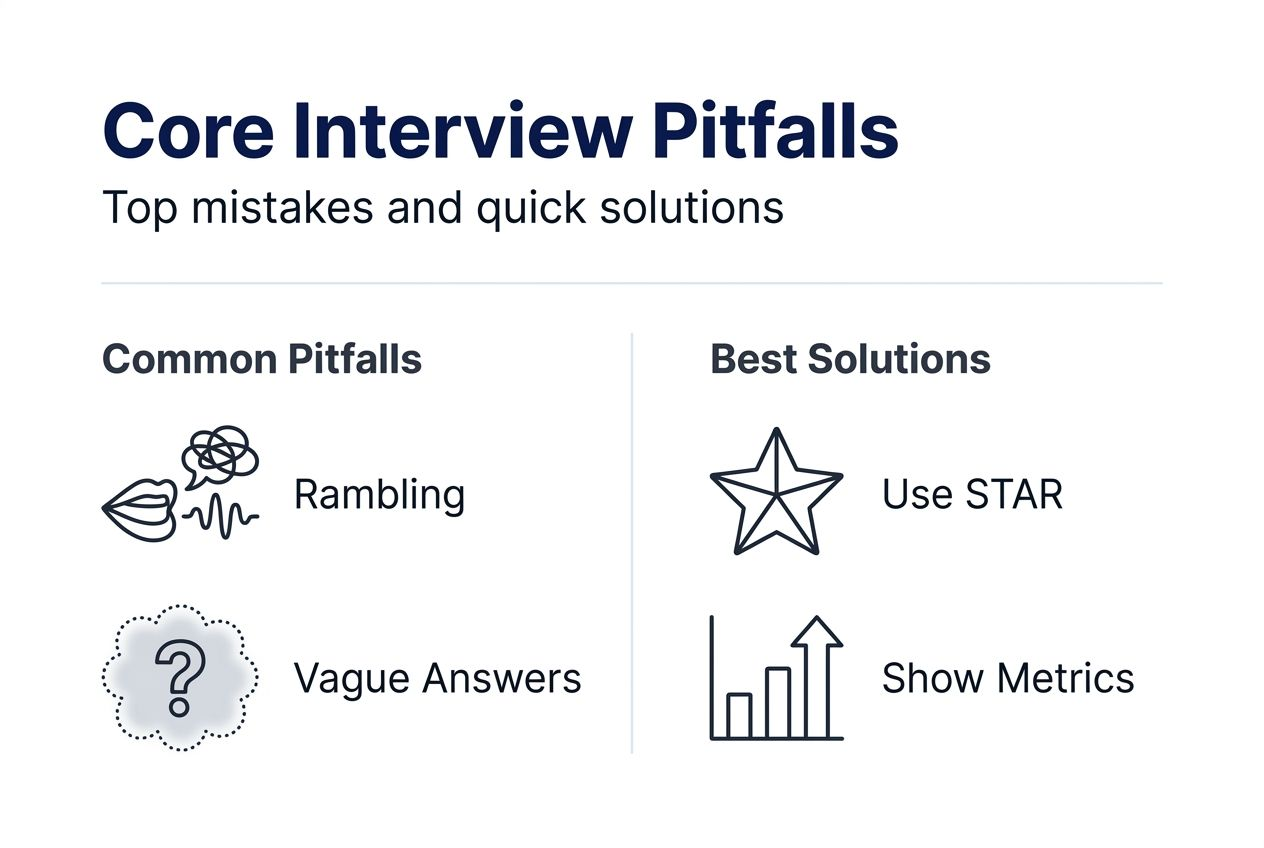
Leadership examples need specific metrics. “I restructured the team workflow, reducing project completion time by 40% whilst improving quality scores” proves impact quantifiably.
Leveraging practice and feedback tools to build confidence
Modern interview preparation extends beyond reading advice articles. Technology-enabled practice platforms deliver personalised feedback that accelerates skill development measurably.
These platforms offer:
- Real-time verbal delivery analysis identifying pacing issues, filler words, and clarity problems
- Non-verbal feedback highlighting posture, eye contact, and gesture patterns
- Question libraries covering industry-specific and role-specific interview scenarios
- Progress tracking showing improvement over multiple practice sessions
- Private, pressure-free environments for building confidence before high-stakes interviews
Candidates who use online interview practice tools report significantly reduced anxiety levels. Recording yourself answering questions reveals blind spots invisible during mental rehearsal. You notice verbal tics, awkward phrasing, and rushed delivery patterns you can then correct.
Immediate feedback creates faster learning cycles than traditional mock interviews. Instead of waiting days for scheduled coaching sessions, you practise daily and adjust techniques continuously.
Repeated exposure to common questions through structured online practice builds familiarity and confidence. Questions that initially felt intimidating become comfortable conversation topics after multiple practice attempts.
Realistic simulations prepare you for actual interview conditions better than mental visualisation alone. The experience of speaking answers aloud whilst being recorded mirrors real interview pressure, making actual conversations feel more manageable.
Platforms focusing on verbal communication excellence help mid-to-senior candidates refine the delivery skills that distinguish leadership-ready professionals from technically competent individual contributors.
Applying the insights: building a personal practice routine
Transforming knowledge into interview success requires deliberate, consistent practice. A structured routine ensures comprehensive preparation across all skill dimensions.
- Identify your target role’s most relevant questions from the core 10 and industry-specific additions
- Prepare STAR examples for three to five significant achievements, challenges, and leadership scenarios
- Develop PREP frameworks for motivational questions about career goals and role interest
- Record yourself answering each question, focusing initially on content accuracy and completeness
- Review recordings to identify verbal and non-verbal improvement areas using specific criteria
- Re-record answers implementing feedback, comparing new versions against previous attempts
- Practise with varied question phrasing to avoid over-rehearsed responses that sound scripted
- Simulate full interview sequences combining multiple questions to build stamina and transitions
- Track progress weekly, noting improvements in clarity, conciseness, and confidence metrics
- Adjust preparation focus based on persistent weak areas revealed through practice analysis
Balance content preparation with delivery excellence. Knowing what to say matters little if poor communication undermines your message. Allocate practice time equally between refining examples and improving verbal presentation.
Consistency trumps intensity. Daily 20-minute practice sessions outperform occasional marathon preparation efforts. Regular exposure builds muscle memory for structured responses and confident delivery.
Most candidates focus exclusively on content, neglecting the communication skills that actually determine interview outcomes. Comprehensive interview preparation addresses both dimensions systematically.
Pro Tip: Schedule recorded mock interviews every week to maintain momentum and measure progress objectively through comparable performance data.
Boost your interview success with guided practice
Mastering interview questions requires more than reading advice. You need practical experience answering questions on camera with immediate feedback on your delivery.
Pavone Academy provides AI-powered mock interviews that analyse your verbal and non-verbal communication in real time. The platform transcribes your answers and evaluates clarity, structure, pacing, confidence, and filler word usage. You receive actionable feedback showing exactly how to improve your delivery.
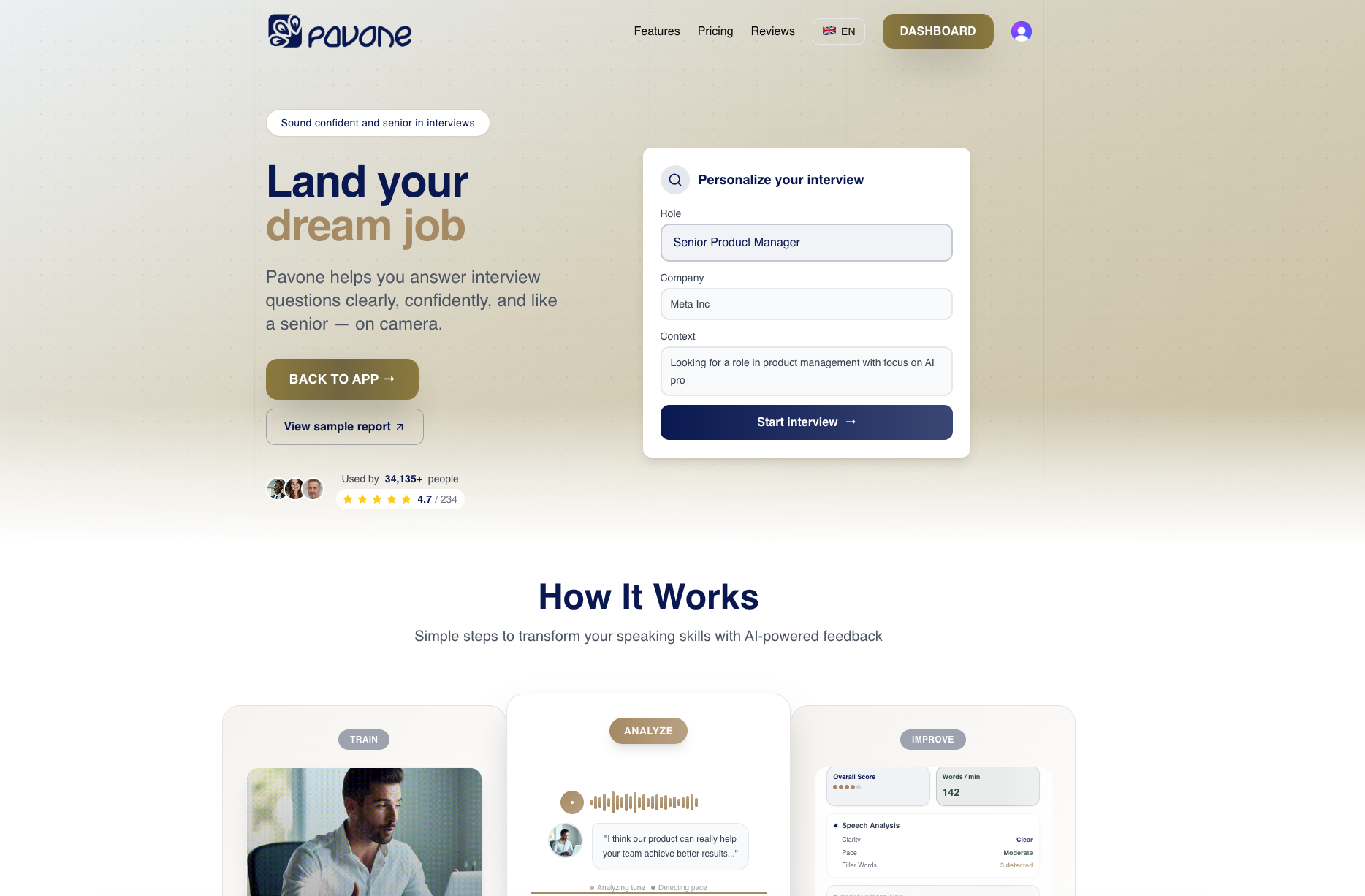
Mid-to-senior candidates benefit enormously from this focused practice approach. Instead of generic interview tips, you get personalised insights into how you actually come across during answers. Track your improvement over time as responses become clearer and more confident.
Online interview practice fits naturally into busy schedules with short sessions you can complete anytime. Build the confidence that distinguishes senior professionals through deliberate, guided preparation. Visit Pavone Academy to start practising today and transform how you communicate in interviews.
Frequently asked questions
What are the 10 most common interview questions for senior roles?
The core questions include: tell me about yourself, greatest weakness, leadership challenge, why this role, five-year vision, conflict resolution, greatest achievement, handling pressure, leaving current position, and your questions for us. These appear consistently across industries for mid-to-senior positions.
How can I structure answers to improve clarity in interviews?
Use STAR (Situation, Task, Action, Result) for behavioural questions requiring specific examples. Apply PREP (Point, Reason, Example, Point) for opinion-based or motivational questions. Both frameworks deliver concise, logical responses that interviewers follow easily.
What are the best ways to reduce interview anxiety?
Practise with platforms offering real-time feedback on your verbal and non-verbal delivery to build confidence through familiarity. Develop a structured routine covering question preparation and communication skills. Repeated exposure to common questions transforms intimidating scenarios into comfortable conversations.
How long should my interview answers be?
Aim for 90 seconds to two minutes maximum per answer. Concise responses maintain interviewer engagement and demonstrate clear thinking. Longer answers often dilute key points and reduce clarity, regardless of content quality.
Why do interviewers ask about weaknesses?
This question assesses self-awareness, growth mindset, and professional maturity. Interviewers want genuine reflection on development areas paired with concrete improvement actions, not strengths disguised as weaknesses. Authentic responses demonstrate leadership readiness far more effectively than scripted perfection.
Recommended
Ready to practice?
Start improving your speaking skills with AI-powered feedback and analysis.
Try Pavone Free