
Master the three common interview questions for confident success

Over 75% of interviews begin with the same three questions, yet many candidates stumble through them without structure or confidence. These aren’t random queries; they’re designed to assess how clearly you communicate, how well you know yourself, and whether you genuinely want the role. Mastering these questions transforms interview anxiety into calm authority, helping you stand out as a polished, senior professional.
Table of Contents
- Understanding The Three Common Interview Questions
- Crafting Strong Answers: Question 1 – ‘Tell Me About Yourself’
- Crafting Strong Answers: Question 2 – ‘What Are Your Strengths And Weaknesses?’
- Crafting Strong Answers: Question 3 – ‘Why Do You Want This Job?’
- Frameworks For Structuring Responses
- Improving Communication: Clarity, Confidence, And Delivery
- Common Misconceptions And Pitfalls
- Bridging Understanding To Practice: How To Use Pavoneai
- Boost Your Interview Success With Pavoneai
- Frequently Asked Questions
Key takeaways
| Point | Details |
|---|---|
| Identify core questions | The three most common questions assess communication, self-awareness, and motivation across industries. |
| Use structured frameworks | STAR method improves clarity by 25% and helps you deliver concise, professional answers. |
| Practise on camera | Video rehearsal reveals pacing issues, filler words, and body language habits that undermine confidence. |
| Avoid common pitfalls | Generic answers, clichés, and resume recitation fail to demonstrate genuine fit or growth mindset. |
Understanding the three common interview questions
The three most common interview questions are ‘Tell me about yourself,’ ‘What are your strengths and weaknesses?’ and ‘Why do you want this job?’. This trio consistently appears across industry surveys as foundational. These questions aren’t filler; they’re strategic tools interviewers use to assess whether you can communicate clearly, evaluate yourself honestly, and align your motivation with organisational needs.
Understanding what interviewers seek helps you craft responses that hit the mark. When they ask you to introduce yourself, they want a concise narrative linking your experience to the role, not a chronological resume recital. Strengths and weaknesses reveal self-awareness and growth mindset, showing whether you reflect on performance and seek improvement. The motivation question uncovers cultural fit and genuine interest, distinguishing enthusiastic candidates from those merely job-hopping.
These questions appear universally because they expose how candidates think, not just what they’ve done. Interviewers listen for structure, confidence, and authenticity. Candidates who grasp this intent tailor answers that demonstrate clarity and professionalism, positioning themselves as senior communicators who understand workplace expectations.
You can explore deeper insights on how interviewers evaluate responses to refine your approach further.
Crafting strong answers: question 1 – ‘Tell me about yourself’
This opening question sets the tone for the entire interview. Your answer should weave a compelling story connecting your background to the role, not list job titles chronologically. Start with a brief professional summary highlighting relevant achievements, then bridge to why this position fits your trajectory. Avoid rambling; keep it under 90 seconds.
Common pitfalls include treating this as an invitation to recite your CV or sharing irrelevant personal details. Instead, focus on three key points: where you are professionally, what you’ve accomplished that’s relevant, and why this role excites you. This structure keeps you concise whilst demonstrating self-awareness and purpose.
Practising this narrative on camera reveals habits you don’t notice in your head. You might discover you speed up when nervous or use filler words excessively. Recording yourself forces you to hear how your story lands, helping you refine pacing and emphasis.
Pro Tip: Write your answer as three bullet points first, then practise speaking naturally from those points. This keeps you structured without sounding rehearsed or robotic during delivery.
Crafting strong answers: question 2 – ‘What are your strengths and weaknesses?’
Authentic self-awareness matters more than polished boasting here. Interviewers want evidence you reflect on performance and seek growth, not candidates who claim perfection or dodge vulnerability. Choose real strengths backed by examples, and pair them with genuine weaknesses you’re actively improving.

Common mistakes include selecting clichéd weaknesses like ‘I’m a perfectionist’ or ‘I work too hard,’ which signal evasion rather than honesty. Instead, identify a non-critical weakness you’ve recognised and explain concrete steps you’re taking to address it. This shows maturity and commitment to development.
For strengths, avoid vague claims. Rather than saying ‘I’m a great communicator,’ describe a situation where your communication solved a problem or improved outcomes. Interviewers value specificity because it demonstrates real capability, not self-promotion.
Developing confident on-camera delivery helps you discuss weaknesses without undermining your authority. Practising this balance ensures you sound thoughtful, not apologetic.
Crafting strong answers: question 3 – ‘Why do you want this job?’
This question shifts focus from skills to motivation and cultural fit. Generic answers like ‘It’s a great opportunity’ fail because they could apply anywhere. Interviewers seek evidence you’ve researched the organisation and genuinely connect with its mission, values, or trajectory.
Tailoring your answer requires preparation. Review the company’s recent projects, leadership statements, and employee reviews to identify what genuinely appeals to you. Then articulate how this role aligns with your career goals and values, making your motivation both specific and authentic.
Avoid overemphasising salary or perks; focus on professional growth, team culture, or meaningful work. Recruiters prioritise candidates who demonstrate long-term interest over those seeking any job. Your answer should convey enthusiasm rooted in understanding, not desperation.
Researching thoroughly and practising your delivery ensures you sound genuine rather than rehearsed. This authenticity differentiates you from candidates offering surface-level enthusiasm.
Frameworks for structuring responses
Using the STAR method (Situation, Task, Action, Result) to structure answers shows a 25% higher clarity score according to communication experts. This framework breaks responses into digestible chunks, helping interviewers follow your logic whilst keeping you concise and focused.
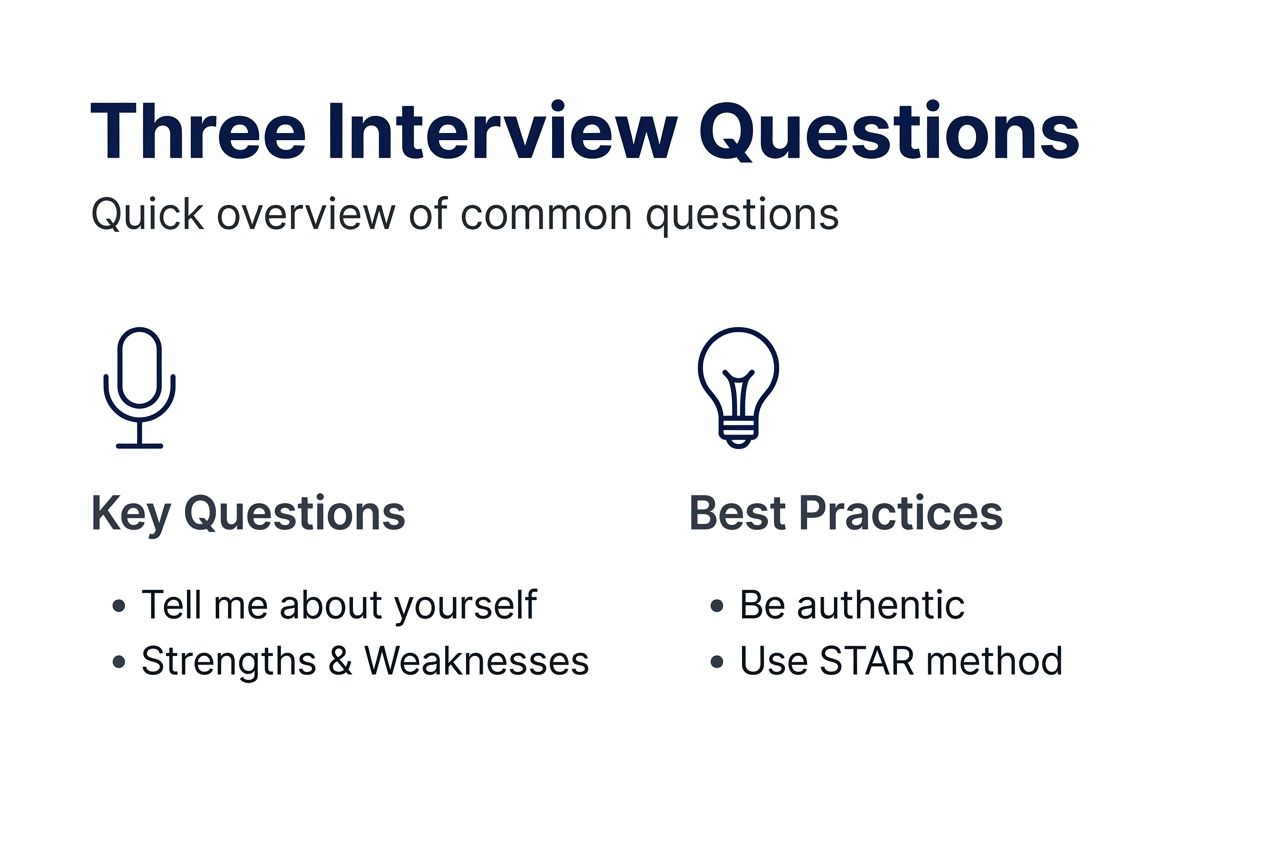
STAR works across all three common questions. For ‘Tell me about yourself,’ use it to highlight a pivotal achievement. For strengths and weaknesses, apply it to demonstrate how you’ve leveraged strengths or addressed weaknesses. For motivation, frame a past experience that drew you toward this type of role or organisation.
| Approach | Clarity | Engagement | Professionalism |
|---|---|---|---|
| Unstructured | Low | Medium | Low |
| STAR Method | High | High | High |
Pro Tip: Practise applying STAR to your top three career stories, so you can adapt them fluidly to different questions. This preparation makes you sound polished without appearing scripted.
Improving communication: clarity, confidence, and delivery
Content alone doesn’t win interviews; delivery matters equally. Pacing, tone, eye contact, and body language shape how interviewers perceive your confidence and professionalism. Speaking too quickly signals anxiety, whilst monotone delivery suggests disengagement. Balanced pacing and varied tone convey authority and enthusiasm.
Filler words like ‘um,’ ‘like,’ and ‘you know’ distract listeners and undermine credibility. Majority of candidates—55%—neglect practising with video recording, missing critical nonverbal feedback that can improve confidence and presence. Recording yourself reveals these patterns, allowing you to reduce them through targeted practice.
On-camera rehearsal builds muscle memory for calm delivery. Initially, watching yourself feels uncomfortable, but repeated exposure reduces self-consciousness and sharpens your awareness of distracting habits. Over time, you’ll notice improvements in posture, gesture control, and vocal steadiness.
Practising interviews for confident delivery transforms nervous energy into composed professionalism. Candidates who rehearse through video practice boost their hiring chances by refining both content and presence systematically.
Common misconceptions and pitfalls
Many candidates believe ‘Tell me about yourself’ invites a resume recital, but interviewers already have your CV. They want a narrative showcasing how your experience connects to this specific role. Listing job titles chronologically wastes time and fails to demonstrate strategic thinking.
Another misconception treats the strengths and weaknesses question as a trap designed to expose flaws. In reality, it’s an opportunity to showcase self-awareness and growth. Candidates who frame weaknesses as learning opportunities signal maturity, whilst those who dodge the question appear defensive or unaware.
For ‘Why do you want this job?’, overemphasising skills over genuine motivation misses the point. Interviewers know you’re qualified; they want to understand whether you’ll thrive in the culture and stay engaged long-term. Generic enthusiasm fails to convince.
| Common Mistake | Recommended Approach |
|---|---|
| Reciting resume for ‘Tell me about yourself’ | Craft a concise narrative linking experience to role |
| Offering clichéd weaknesses | Share genuine growth areas with improvement steps |
| Generic motivation claims | Research company and articulate specific alignment |
| Ignoring delivery practice | Rehearse on camera to refine pacing and presence |
Bridging understanding to practice: how to use Pavone.ai
Knowing what to say matters, but mastering how you say it determines interview success. Pavone.ai offers on-camera practice that mirrors real interview conditions, helping you refine both content and delivery through immediate, actionable feedback. You record answers to common questions, then receive detailed analysis on pacing, filler words, structure, and tone.
This iterative process builds confidence without the pressure of a live interview. Each practice session highlights specific areas for improvement, such as reducing ‘ums’ or slowing your pace during key points. Over time, these adjustments become automatic, transforming your delivery from hesitant to authoritative.
The platform tracks progress across multiple attempts, showing measurable improvements in clarity and confidence. 55% of candidates do not use video practice before interviews, missing critical nonverbal feedback. Those who do gain a competitive edge by arriving fully prepared, with rehearsed answers that sound natural and polished.
You can master interview online practice by using Pavone.ai’s tailored mock interviews, which focus on the three common questions covered here. The feedback loop accelerates improvement, helping you build confidence and clarity faster than traditional preparation methods.
Pro Tip: Practise answering each question three times, reviewing feedback after each attempt. Focus on one improvement area per iteration, such as reducing filler words first, then refining pacing.
Boost your interview success with Pavone.ai
Mastering the three common interview questions requires more than knowing what to say. You need to practise delivering answers with clarity, confidence, and professionalism. Pavone.ai gives you a private, pressure-free environment to record your responses and receive instant feedback on tone, pacing, filler words, and body language.
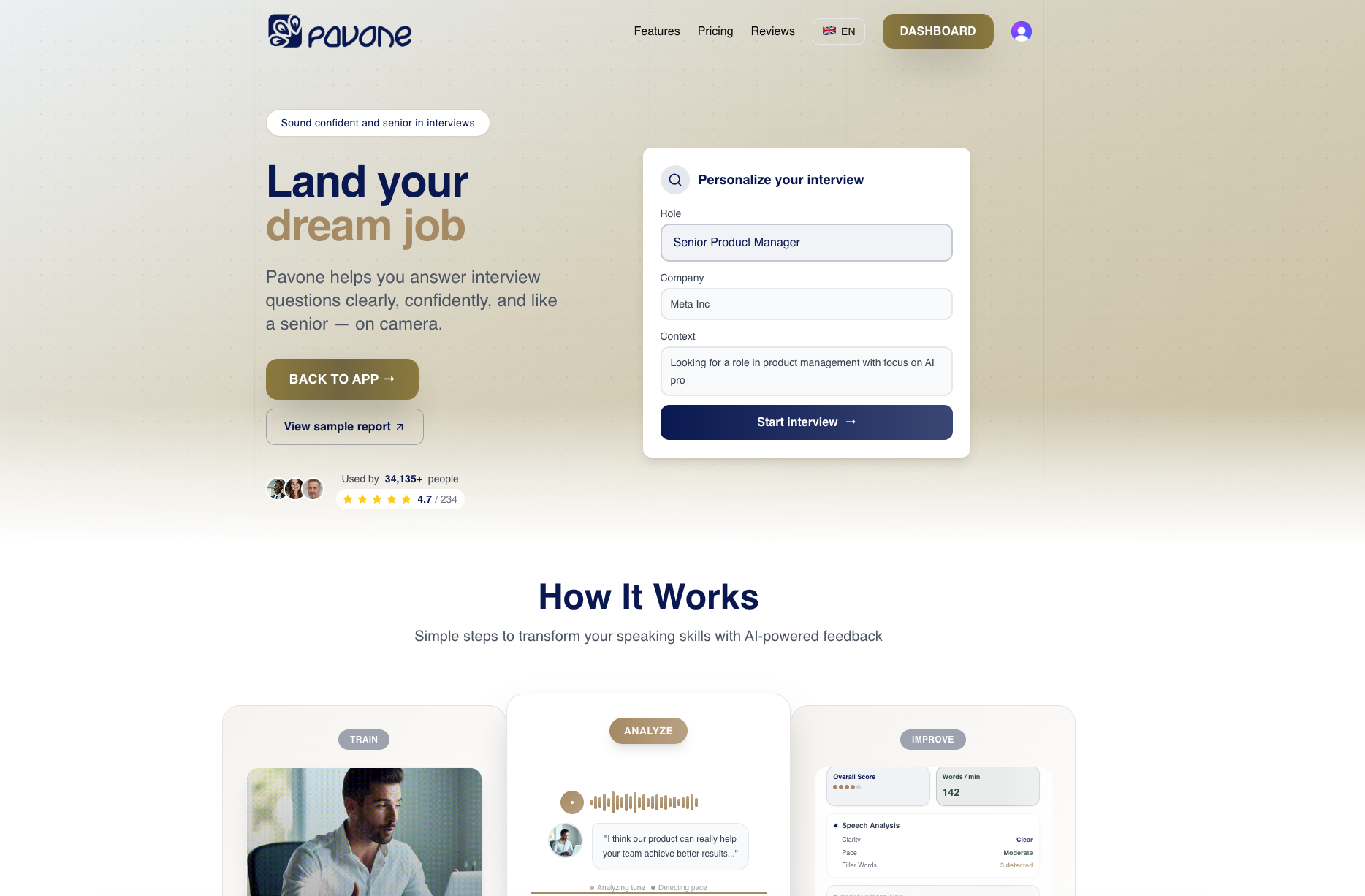
The platform helps you iterate quickly, refining answers until they feel natural and authoritative. Whether you’re preparing for your first interview or aiming to elevate your on-camera presence, Pavone.ai supports your journey to confident delivery. You’ll build the skills needed for interview practice confidence on camera, transforming anxiety into calm authority. Candidates who practise systematically boost their hiring chances significantly, arriving fully prepared to impress interviewers.
Frequently asked questions
What is the best way to start answering ‘Tell me about yourself’?
Start with a brief professional summary linked to the role. Highlight relevant achievements without reciting your CV, then bridge to why this position fits your trajectory.
How can I choose authentic weaknesses to share?
Pick real but non-critical weaknesses, then explain steps taken to improve them. Avoid clichés like ‘perfectionism,’ which signal evasion rather than genuine self-awareness.
Why is on-camera practice crucial for interview success?
Video practice reveals distracting habits you don’t notice otherwise. It improves pacing, tone, and body language whilst building confidence and reducing filler words through repeated exposure.
How does the STAR method improve interview answers?
STAR structures responses into clear chunks: Situation, Task, Action, Result. This framework boosts clarity, keeps you concise, and helps interviewers follow your logic easily.
Can I use the same answer for multiple interviews?
Avoid generic answers. Tailor each response to the specific role and company, demonstrating research and genuine interest rather than rehearsed scripts that could apply anywhere.
Recommended
Ready to practice?
Start improving your speaking skills with AI-powered feedback and analysis.
Try Pavone Free