
Types of Communication Skills: 77% Employers Value Clarity

Communication skills were the top requested ability across nearly 2 million global job postings in December 2024. Yet mid and senior professionals still struggle with on-camera clarity and confidence during interviews. This article breaks down the key communication skill types to help you stand out confidently, guiding you through verbal, nonverbal, visual, and written skills to master your next interview performance.
Table of Contents
- How to Choose Which Communication Skills to Focus On
- Verbal Communication Skills: Clarity, Pacing, and Confidence
- Nonverbal Communication Skills: Body Language, Facial Expressions, and Eye Contact
- Visual Communication Skills: Using Visuals to Enhance Clarity
- Written Communication Skills for Preparation and Follow Up
- Summary Comparison of Communication Skills Types
- Situational Recommendations: Which Communication Skills to Prioritise Based on Interview Context
- Boost Your On-Camera Interview Confidence with Pavone Academy
- Frequently Asked Questions
Key Takeaways
| Point | Details |
|---|---|
| Communication skills dominate hiring priorities | Nearly 2 million job postings emphasise communication as the top ability employers seek globally. |
| Four key types shape interview success | Verbal, nonverbal, visual, and written communication each contribute uniquely to how you come across. |
| Adaptability increases perceived seniority | Tailoring communication style to interview format and audience boosts confidence and authority. |
| Practising specific skills reduces pitfalls | Targeted practice on clarity, pacing, and body language minimises common interview mistakes. |
| Prioritise based on interview context | Focus communication efforts on skills most relevant to your role level and interview format. |
How to Choose Which Communication Skills to Focus On
Selecting the right communication skills to prioritise starts with understanding what interviewers value most. Communication skills were the top requested ability across nearly 2 million global job postings in December 2024, often valued equally or more than technical expertise. Employers prioritise communication skills for building trust, collaboration, and reducing misunderstandings that cause costly inefficiencies.
Four key types demand your attention: verbal, nonverbal, visual, and written. Your interview format determines which to emphasise. On-camera interviews, for example, require strong verbal and nonverbal skills since your tone, pacing, and body language shape how confident and senior you appear.
Adapting your communication style to your audience and context matters enormously. A technical role may demand precise verbal explanations, while mid and senior role interview strategies often require persuasive storytelling and executive presence. Clear articulation paired with controlled delivery strongly influences perceived authority.
Consider these selection criteria:
- Interview format: Video calls need verbal and nonverbal focus; presentations add visual communication.
- Role seniority: Senior positions demand adaptability and persuasive communication.
- Audience type: International panels may require simpler language and cultural awareness.
- Your current strengths: Build on existing skills while addressing gaps revealed in practice.
Prioritising communication skills strategically transforms how interviewers perceive your readiness and leadership potential.
Understanding the importance of communication skills in hiring helps you allocate practice time effectively. Once you know which types matter most for your context, you can dive deep into mastering each.
Verbal Communication Skills: Clarity, Pacing, and Confidence
Verbal communication forms the foundation of how you deliver your message on camera. Clarity reduces misunderstandings and instantly boosts how authoritative you sound. When you articulate ideas precisely without rambling, interviewers perceive you as organised and senior.
Controlling your speech pacing and reducing filler words like “um” and “like” dramatically improves professionalism. Rushed speech signals nervousness, while deliberate pacing conveys confidence. Tone modulation keeps interviewers engaged, helping you emphasise key points and build rapport naturally.
Active listening enhances understanding and respect, helping you respond more effectively rather than simply waiting to speak. Pausing to process questions before answering demonstrates thoughtfulness, a trait valued in leadership roles.
Adapting language for international audiences increases inclusivity. Avoiding jargon or explaining technical terms simply ensures your message lands clearly across cultural contexts. For global roles, this adaptability becomes essential.
Key verbal skills to practise:
- Articulation: Pronounce words clearly to avoid misinterpretation.
- Speech pacing: Maintain a steady rhythm, avoiding rushed or dragging delivery.
- Filler word reduction: Replace “um” and “uh” with brief pauses.
- Tone variation: Use pitch and volume changes to emphasise important points.
- Active listening: Show engagement through verbal acknowledgments and relevant responses.
Pro Tip: Record and review practice answers to identify pacing issues and filler word patterns. Watching yourself on camera reveals habits you cannot notice in real time, making improvement faster and more targeted.
Mastering speech clarity and pacing tips prepares you for the verbal demands of mid-senior interview communication. Building persuasive speaking techniques amplifies your ability to influence interviewers through words alone.
Nonverbal Communication Skills: Body Language, Facial Expressions, and Eye Contact
Nonverbal cues often convey more meaning than your spoken words. Interviewers form rapid impressions based on posture, facial expressions, and eye contact before processing what you actually say. Strong posture signals confidence and readiness, while slouching suggests disengagement or insecurity.

Controlled facial expressions boost perceived authority. A calm, attentive expression shows you are listening and thinking critically. Excessive nodding or anxious expressions undermine your message, regardless of how well you articulate ideas verbally.
Sustained eye contact builds trust and connection with interviewers. In video interviews, this means looking directly at the camera rather than the screen. Glancing away frequently signals discomfort or dishonesty, damaging rapport instantly.
Visual and nonverbal communication critically enhance persuasive impact and message clarity in recorded interviews. Your body language either reinforces or contradicts your verbal message, making alignment essential.
Avoid common pitfalls like looking down at notes constantly, crossing arms defensively, or displaying nervous gestures such as fidgeting or excessive hand movements. These behaviours distract interviewers and weaken your professional image.
Key nonverbal skills to master:
- Posture: Sit upright with shoulders back to project confidence.
- Facial expressions: Maintain calm, engaged expressions that match your message tone.
- Eye contact: Look at the camera consistently to simulate direct eye contact.
- Hand gestures: Use purposeful gestures sparingly to emphasise points without distraction.
- Stillness: Avoid fidgeting or excessive movement that signals nervousness.
Pro Tip: Practise video recorded mock interviews to self assess body language. Reviewing footage helps you spot distracting habits and refine your nonverbal presence before high stakes interviews.
Building confidence with nonverbal skills transforms how interviewers perceive your readiness for senior roles. When verbal and nonverbal communication align, you project authority effortlessly.
Visual Communication Skills: Using Visuals to Enhance Clarity
Visual aids like charts, diagrams, slides, and annotated documents can simplify complex ideas during interviews. When used strategically, visuals complement your verbal message without overwhelming or distracting the interviewer. They are especially valuable in presentation heavy interview formats or when explaining technical processes.
Visual communication supports concise explanation of complex information and complements verbal messages effectively. However, clarity matters more than quantity. One clean chart explaining a strategy outperforms five cluttered slides that confuse rather than clarify.
Use visuals sparingly to avoid shifting focus away from you as the candidate. Interviewers should remember your insights, not just your slides. Choose visuals that clarify rather than complicate, ensuring each element has a clear purpose tied directly to your message.
Ensure visuals are professional, clear, and easy to interpret at a glance. Avoid dense text blocks or overly complex diagrams that require lengthy explanations. Simple bar charts, clean flowcharts, or annotated screenshots often work best.
Key principles for effective visual communication:
- Simplicity: Use clean designs with minimal text and clear labels.
- Relevance: Include only visuals that directly support your key points.
- Professional quality: Ensure high resolution images and consistent formatting.
- Integration: Reference visuals naturally within your verbal narrative rather than reading from them.
- Backup plan: Be prepared to explain concepts verbally if technical issues prevent visual sharing.
Visual communication becomes critical in interviews involving case studies, data analysis, or strategic planning presentations. For roles requiring frequent stakeholder communication or executive reporting, demonstrating visual communication competence signals you understand how to distil complexity for decision makers.
Written Communication Skills for Preparation and Follow Up
Written communication extends beyond the interview itself, shaping how you prepare and how you follow up afterward. Preparing concise scripts to structure on-camera answers improves clarity and reduces rambling. While you should not read verbatim, having written frameworks ensures you cover key points logically.
Taking brief notes during interviews helps you stay organised and focused, especially in multi part questions or panel formats. Jotting down interviewer names, key topics, or follow up points demonstrates attentiveness and professionalism.
Sending clear, professional follow up emails reinforces a positive impression after the interview concludes. A concise thank you message that references specific discussion points shows genuine engagement and strong communication skills. Written communication skills remain foundational in remote and hybrid interviews for preparation and follow up professionalism.
Written communication becomes vital in remote and hybrid interview setups where email exchanges often precede or follow video conversations. Your ability to articulate ideas clearly in writing complements verbal strengths, presenting a well rounded communication profile.
Practising writing skills alongside verbal practice ensures consistency across all touchpoints. Well structured emails, clear summaries, and concise documentation signal that you communicate effectively in every medium.
Key written communication skills:
- Concise scripting: Outline key points without writing full paragraphs to read aloud.
- Note taking: Capture critical details during interviews for reference and follow up.
- Professional email writing: Craft clear, error free follow up messages that reinforce your candidacy.
- Summary skills: Distil complex topics into brief written summaries for clarity.
- Grammar and tone: Maintain professional tone and correct grammar in all written correspondence.
Developing strong written communication skills through interview preparation guidance ensures you present polished professionalism before, during, and after interviews. Understanding the written communication importance helps you allocate preparation time appropriately.
Summary Comparison of Communication Skills Types
Understanding how each communication type contributes to interview success helps you prioritise practice time effectively. Verbal communication directly affects clarity, nonverbal shapes perceived seniority, visuals aid complexity, and written supports preparation. Each type serves distinct purposes depending on interview context and role requirements.
| Communication Type | Primary Strengths | Best Contexts | Measurable Impact |
|---|---|---|---|
| Verbal | Direct message delivery, clarity, tone control | All interviews, especially conversational formats | Reduced filler words, improved pacing, clearer articulation |
| Nonverbal | Confidence projection, engagement signals, authority perception | On-camera and in-person interviews | Enhanced perceived seniority, stronger interviewer connection |
| Visual | Simplifies complex information, supports presentations | Technical roles, case studies, strategy discussions | Faster comprehension, memorable key points |
| Written | Preparation structure, follow-up professionalism, documentation | Remote/hybrid interviews, pre and post-interview touchpoints | Professional image reinforcement, clarity in correspondence |
Adaptability underpins effectiveness across all four types. Professionals who adjust communication style based on audience, format, and context consistently outperform those who rely on a single approach. For senior roles, demonstrating versatility across verbal, nonverbal, visual, and written communication signals leadership readiness.
This types of communication comparison framework guides strategic skill development. Rather than practising all types equally, focus on those most critical for your target role and interview format.
Situational Recommendations: Which Communication Skills to Prioritise Based on Interview Context
Applying communication skills strategically requires matching your focus areas to specific interview scenarios. Different contexts demand different skill emphasis to maximise your impact and perceived fit.
-
On-camera video interviews: Prioritise verbal clarity and nonverbal presence. Your tone, pacing, eye contact, and posture become primary evaluation factors. Use feedback tools to identify filler words and body language issues.
-
Presentation or case study interviews: Add strong visual communication skills to your verbal and nonverbal foundation. Prepare clean slides or charts that clarify your reasoning without overshadowing your insights.
-
Remote and hybrid interviews: Focus on written communication for preparation scripts and follow up emails. Your ability to articulate clearly in writing complements on-camera performance and extends your professional impression.
-
Senior and executive role interviews: Invest heavily in adaptability and persuasive communication. Senior positions require adjusting communication style dynamically based on audience expertise and organisational culture.
-
Panel or group interviews: Strengthen active listening and nonverbal engagement skills. Acknowledging multiple interviewers through eye contact and verbal responses demonstrates respect and awareness.
-
Technical or specialised role interviews: Balance precise verbal explanations with supportive visual aids when discussing complex topics. Clear articulation of technical concepts for non-technical interviewers shows communication maturity.
Pro Tip: Use feedback platforms like Pavone.ai to measure and improve specific skills relevant to your interview context. AI driven analysis identifies exactly which communication elements need refinement, making practice efficient and targeted.
Tailoring your communication skill focus to interview format and role level ensures you invest preparation time where it creates the most impact. On-camera interview practice becomes exponentially more effective when guided by contextual recommendations.
Boost Your On-Camera Interview Confidence with Pavone Academy
Mastering communication skills requires more than knowledge. It demands deliberate practice with actionable feedback. Pavone Academy offers targeted courses focusing on verbal and nonverbal communication skills essential for on-camera interview success.
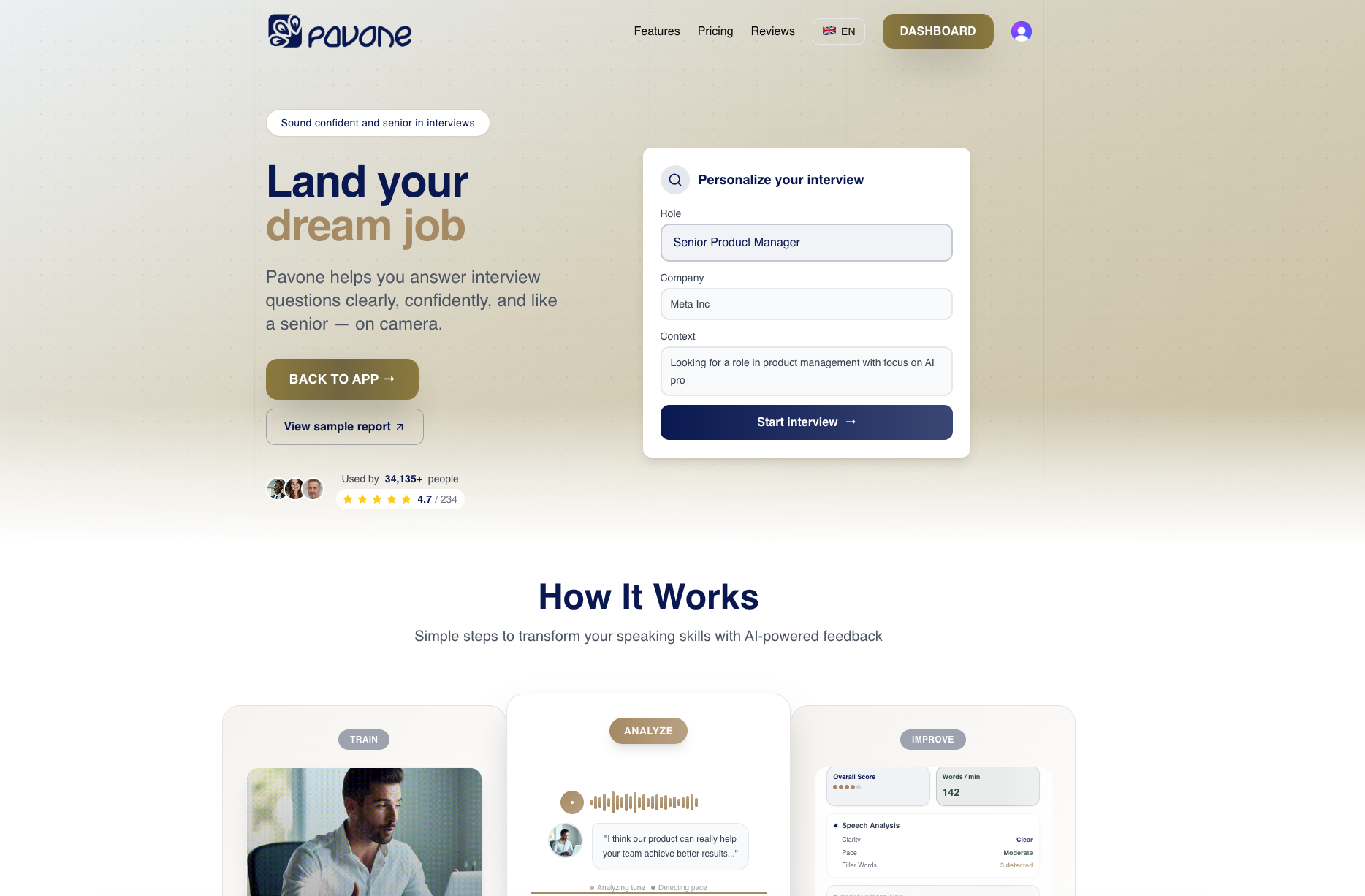
AI driven feedback identifies filler words, pacing issues, and eye contact problems instantly, helping you refine delivery with precision. Practice exercises adapt to your role level and interview formats, ensuring relevance to your specific career goals. Join thousands of professionals improving clarity and confidence on camera through master interview online practice and interview practice with Pavone.
Frequently Asked Questions
What Are the Four Main Types of Communication Skills?
The four main types are verbal, nonverbal, visual, and written communication. Verbal involves spoken words, tone, and pacing. Nonverbal includes body language, facial expressions, and eye contact. Visual uses charts or images to clarify complex ideas. Written covers scripting, notes, and follow up emails.
How Can I Practice Reducing Filler Words in On-Camera Interviews?
Record simulated interview answers to monitor your filler word patterns objectively. Practise deliberate pauses instead of saying “um” or “like” when thinking. Use feedback tools to track filler frequency over time, celebrating gradual improvement. Reviewing speech clarity and filler reduction techniques accelerates progress significantly.
What Nonverbal Cues Should I Avoid During Video Interviews?
Avoid looking away from the camera frequently, as it breaks eye contact and signals discomfort. Refrain from slouching or adopting closed off postures like crossed arms. Minimise distracting facial expressions such as excessive frowning or rapid blinking. Developing nonverbal confidence building skills eliminates these common pitfalls.
How Important Is Written Communication for Remote Interview Follow Ups?
Follow up emails reinforce positive impressions and demonstrate professionalism beyond the interview itself. Clarity and conciseness in writing prevent misunderstandings and show respect for the interviewer’s time. Written communication remains critical in remote and hybrid interviews for maintaining engagement. Good written skills complement verbal abilities, presenting a complete communication profile that importance of follow-up emails underscores.
Recommended
Ready to practice?
Start improving your speaking skills with AI-powered feedback and analysis.
Try Pavone Free