
AI for job interviews: transform your public speaking in 2026

TL;DR:
- AI-powered tools analyze speech mechanics to improve confidence and reduce interview anxiety.
- Structured AI simulations help build real interview skills and familiarity with high-pressure scenarios.
- Combining AI feedback with human coaching optimizes performance and maintains natural delivery.
Imagine walking into your next interview feeling genuinely calm, clear-headed, and ready. For many professionals, that feels like a distant dream. But AI-powered practice tools are making it a measurable reality. Research shows that repeated AI-based practice reduces public speaking anxiety and builds real confidence through private, low-pressure repetition. This guide walks you through exactly how AI is reshaping interview preparation, which tools and techniques deliver the strongest results, and how to blend AI coaching with human feedback for the sharpest possible performance when it counts.
Table of Contents
- How AI is changing public speaking for job interviews
- Simulating interviews with AI: practice that feels real
- Boosting confidence and reducing anxiety with AI
- Strengths and limitations: when to use AI and when to seek human feedback
- A fresh perspective: what most experts get wrong about AI and public speaking
- Take the next step with tailored AI-powered interview practice
- Frequently asked questions
Key Takeaways
| Point | Details |
|---|---|
| Personalised AI feedback | AI can assess your speaking tempo, filler words and clarity in real time for faster progress. |
| Real-world interview simulation | AI-powered platforms let you safely rehearse challenging interview scenarios from your home. |
| Measurable confidence gains | Studies show up to 80% improvement in confidence and reduced anxiety after using AI for practice. |
| Know AI’s limits | AI can’t replace nuanced human feedback but excels at improving mechanics and providing safe space for repetition. |
| Blended preparation is best | Combining AI tools with expert coaching delivers the strongest results for important interviews. |
How AI is changing public speaking for job interviews
With the benefits in mind, let’s clarify what AI actually does in public speaking and why it matters for interview success.
AI in public speaking means using software to analyse how you speak, not just what you say. When people talk about “real-time feedback,” they mean the tool listens to your answer as you give it and flags issues instantly. “AI coaching” refers to a system that tracks patterns across multiple sessions and guides you toward measurable improvement over time.
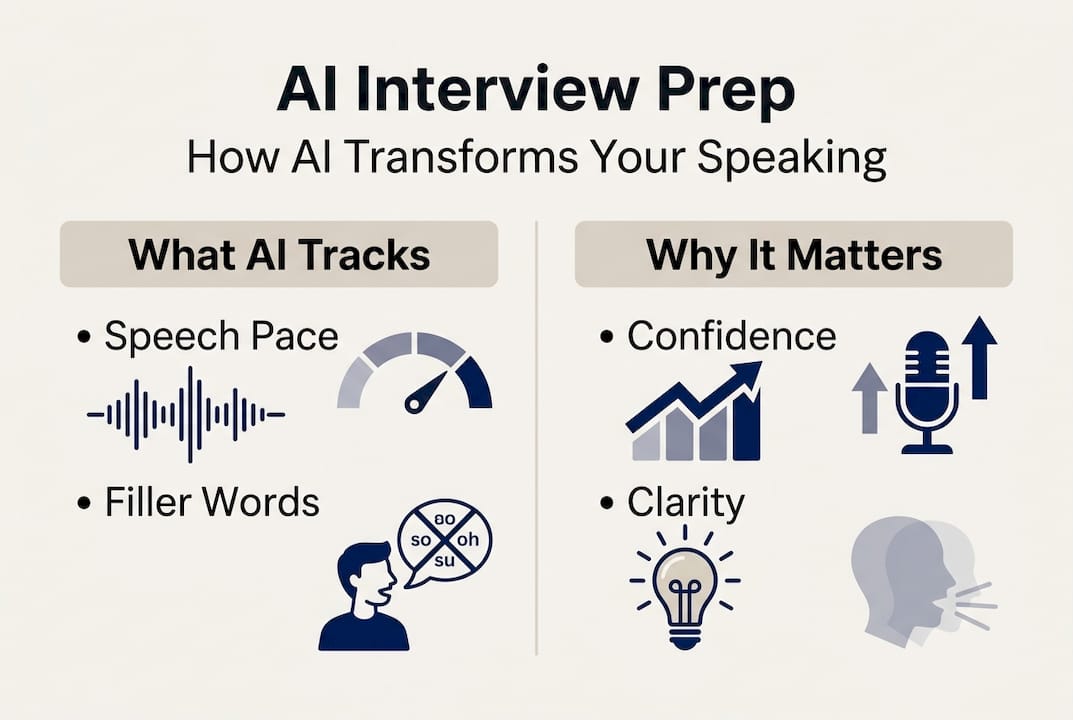
AI tools analyse speech mechanics like pacing, filler words, tone, clarity, and body language to provide real-time feedback that sharpens your delivery for job interviews. Here is a snapshot of what leading tools typically measure:
| Metric | What it measures | Why it matters in interviews |
|---|---|---|
| Filler words | Frequency of “um,” “uh,” “like” | Signals confidence and preparation |
| Pacing | Words per minute | Affects clarity and perceived authority |
| Tone variation | Pitch and energy shifts | Keeps the listener engaged |
| Clarity score | Sentence structure and word choice | Ensures your message lands |
| Eye contact | Gaze direction (video tools) | Builds rapport with interviewers |
Beyond the metrics, AI helps you in several practical ways:
- Clarity: It flags when your answers are vague or overly long, pushing you to be more direct.
- Conciseness: It tracks whether you stay on point or wander off-topic mid-answer.
- Confidence: Consistent positive reinforcement after strong moments builds your self-belief.
- Energy: It detects flat delivery and prompts you to vary your tone.
The data behind these tools is compelling. Studies report a standardised mean difference of 1.033 for proficiency gains in groups using AI-assisted speaking practice, which is a substantial improvement by any research standard. For professionals working on public speaking tips for tech professionals or any high-stakes interview format, these gains translate directly into better first impressions. Pairing this kind of analytical feedback with AI roleplay for job interviews creates a structured, repeatable practice loop that builds real skill fast.
Simulating interviews with AI: practice that feels real
Now that you know what AI can analyse, let’s explore how you can put it to work by simulating real interviews, from standard to high-pressure formats.
One of the most powerful features of modern AI tools is scenario simulation. Rather than practising into a void, you can rehearse against a realistic virtual interviewer that adapts its questions based on your responses. AI simulates realistic scenarios such as job interviews, pitches, and audience Q&A, giving you exposure to the full range of situations you might face.
Here is how different simulation types compare:
| Simulation type | Best for | Key benefit |
|---|---|---|
| Job interview mode | Standard competency questions | Builds structured, confident answers |
| Investor pitch mode | Presenting ideas under scrutiny | Sharpens conciseness and conviction |
| Hostile Q&A mode | High-pressure or panel interviews | Develops composure under challenge |
| Presentation mode | Formal delivery practice | Improves pacing and audience awareness |
Setting up your first AI practice session is straightforward. Follow these steps:
- Choose your scenario. Pick the interview format that matches your upcoming role, whether that is a competency-based interview or a senior leadership panel.
- Record your answer. Speak naturally. Resist the urge to stop and restart. Treat it like the real thing.
- Review the feedback. Focus on two or three specific metrics per session rather than trying to fix everything at once.
- Iterate. Re-record the same question with the feedback in mind. Notice the difference.
- Track your progress. Review your scores across sessions to spot patterns and celebrate genuine improvement.
Pro Tip: Commit to one focused AI roleplay session per day in the two weeks before an important interview. Short, consistent sessions outperform occasional marathon practice every time. You can explore AI interview roleplay chat formats to find the style that suits your preparation rhythm.
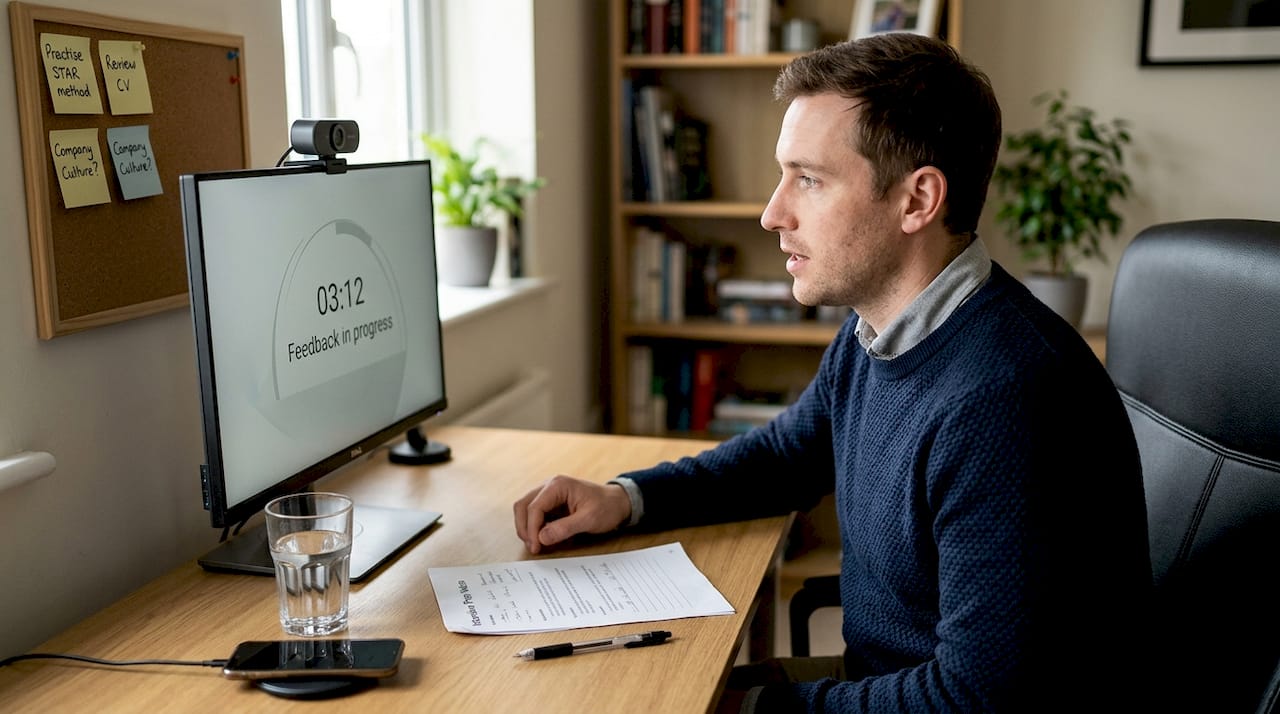
The realism of these simulations matters more than you might expect. When your brain experiences a situation repeatedly, even a simulated one, it builds memory traces that make the real event feel familiar. This is why AI chatbots for mid-senior interviews are particularly effective for professionals stepping into more senior roles, where the pressure and unpredictability increase significantly. Enterprise users of AI speaking tools report 92% customer satisfaction scores, which reflects how genuinely useful these simulations feel in practice.
Boosting confidence and reducing anxiety with AI
Once you begin practising, the effects are more than just technical. Here is what happens to your confidence and nerves with regular AI use.
The psychological shift that comes from consistent AI practice is one of the most underreported benefits. When you practise privately, without the fear of being judged by a recruiter or a peer, your nervous system gradually recalibrates. The threat feels smaller. Your responses feel more automatic.
Research published in peer-reviewed journals found that AI and VR-based practice leads to significant reductions in public speaking anxiety, with 80% of participants reporting increased confidence after structured AI-driven sessions.
The psychological benefits of frequent, private AI practice include:
- Reduced fear of judgement: Practising alone removes the social stakes, letting you focus purely on improvement.
- Real-time positive reinforcement: When the tool flags a strong, clear answer, that moment of recognition builds genuine self-belief.
- Increased familiarity: Repetition makes the interview format feel routine rather than threatening.
- Objective self-awareness: Seeing your own patterns in data form is far more motivating than vague self-criticism.
- Reduced cognitive load: When delivery becomes more automatic, you have more mental space to think clearly during the actual interview.
For non-native English speakers or candidates with high baseline anxiety, tools that offer accent coaching and pronunciation feedback add an extra layer of support. These features help you feel understood and credible, which is a significant confidence booster in itself.
Pro Tip: Set a baseline score in your first session and review it weekly. Progress tracking is only motivating when you can actually see the distance you have travelled. Avoid the trap of practising so much that your answers start to sound rehearsed. The goal is natural fluency, not a polished script. Explore how to use AI for interview success in a way that keeps your delivery authentic.
Strengths and limitations: when to use AI and when to seek human feedback
While AI brings measurable advantages, it is important to understand its limits and how to balance it with human insight for optimal growth.
AI is genuinely excellent at certain things. It is objective, tireless, and available at midnight when you are anxious about tomorrow’s interview. Here is where it performs best:
- Identifying filler words and pacing issues with precision
- Providing consistent feedback across multiple attempts without bias
- Allowing private, low-pressure practice at any time
- Tracking improvement over time through data
- Offering rapid iteration on specific answers
However, AI excels at objective mechanics like fillers and pace but misses nuances such as emotional connection, reading the room, and responding to unexpected audience reactions. These are areas where human feedback remains essential.
A good human coach or trusted colleague will notice things no algorithm currently catches: whether your energy feels genuine, whether your eye contact feels warm or evasive, whether your story landed emotionally. For high-stakes interviews at senior level, that human dimension is not optional.
The smartest approach is to blend both. Use AI for the mechanics and repetition, then bring in a human reviewer for a full-length mock interview once or twice before the real thing. This combination gives you objective data and subjective insight.
One genuine risk worth naming is robotic delivery. If you over-practise a scripted answer with AI, you can start to sound like you are reading from memory. The fix is simple: vary your practice questions, and occasionally answer cold without reviewing feedback first. Staying adaptable is the point. You can explore the benefits and limits of AI roleplay in more detail to build a practice plan that keeps your delivery human.
A fresh perspective: what most experts get wrong about AI and public speaking
Now that we have mapped the benefits and boundaries, let’s tackle what gets missed in most conversations about AI public speaking tools.
Most advice you will read treats AI as either a miracle or a gimmick. Neither framing is useful. The uncomfortable truth is that AI is an amplifier. It makes disciplined practice more efficient, but it cannot replace the self-awareness that comes from genuinely listening to yourself and adapting in the moment.
Here is what the data actually supports: 2 to 3 focused AI sessions produce measurable improvement, and this matters because it tells you something important. More is not always better. The professionals who improve fastest are not those who practise the most. They are the ones who practise with intention, review their feedback honestly, and adjust.
The deeper issue is that 70% of jobs require strong speaking skills, yet most candidates still treat interview prep as content rehearsal rather than communication training. AI shifts that focus, but only if you let it. If you use it to polish a script rather than build genuine fluency, you will sound confident in practice and stilted in the room.
The most effective professionals we see use AI to sharpen their on-camera delivery and then test themselves in unpredictable conversations. That combination of structured feedback and live adaptability is what actually moves the needle.
Take the next step with tailored AI-powered interview practice
Feeling ready to put AI into action? Here is how you can take your interview preparation further using proven AI tools.
If this guide has shown you anything, it is that the gap between a hesitant answer and a confident, clear one is smaller than you think. With the right practice structure, you can close it faster than you expect.
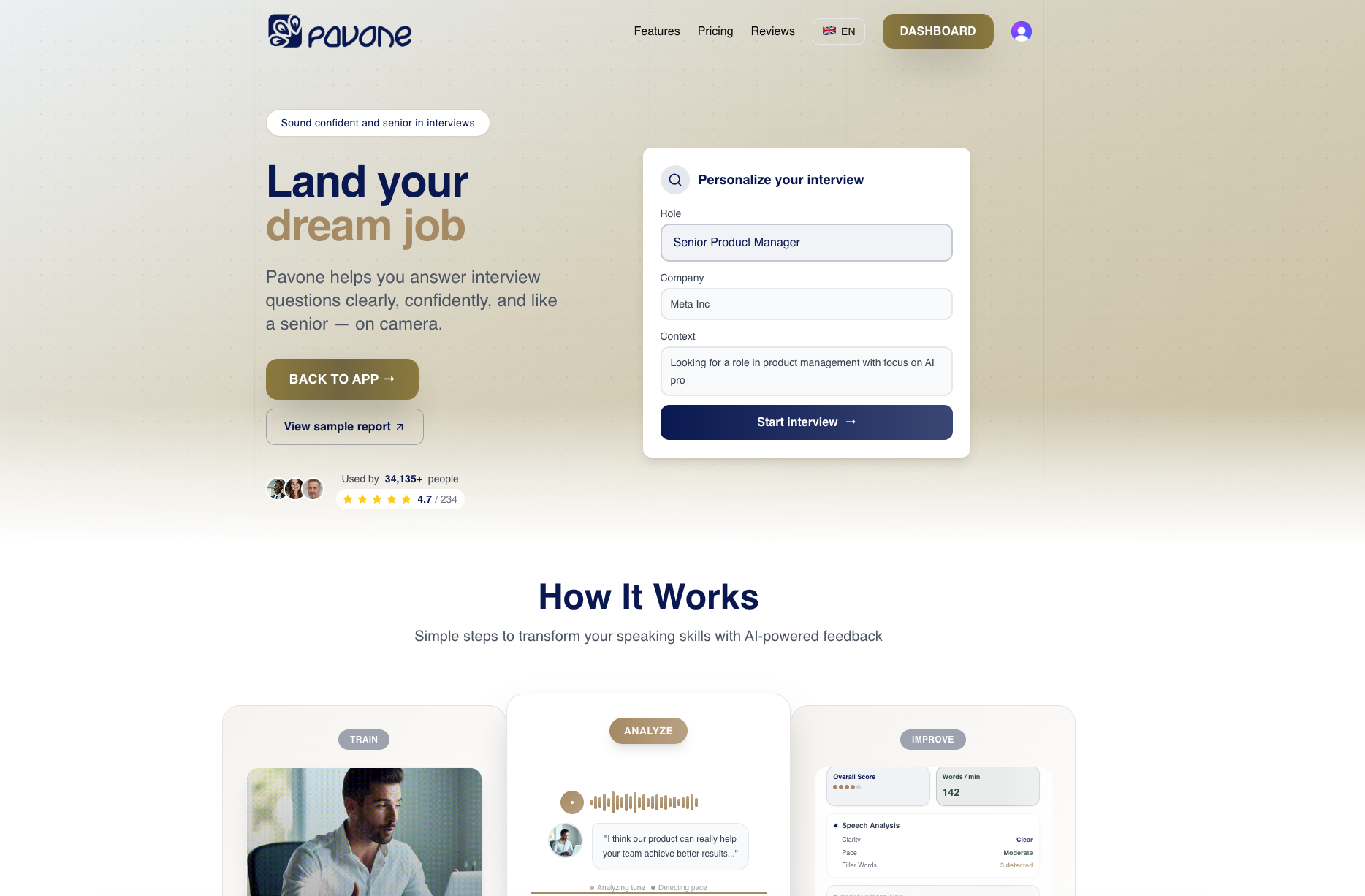
Pavone.ai is built specifically for professionals who want to practise real interview answers on camera and receive immediate, actionable feedback on how they come across. Whether you are working through your first sessions with our job interview preparation guide, looking to sharpen your delivery with AI practice interview tools, or building the kind of confidence in speaking that makes a real difference in the room, Pavone gives you a private, pressure-free space to improve every day.
Frequently asked questions
Which AI tool is best for practising job interview answers?
For interview-specific practice, tools like Yoodli, Orai, and Mockstar are strong choices because they provide detailed metrics on clarity, pacing, and confidence that map directly to interview performance.
Can AI really reduce my interview anxiety?
Yes. Repeated AI and VR-based practice has been shown to significantly reduce public speaking anxiety, with studies reporting up to an 80% increase in self-reported confidence among regular users.
Does AI pick up on body language in my interview responses?
AI is most reliable for voice mechanics such as filler words and pacing. Body language and eye contact feedback is limited unless the tool includes dedicated video analysis features.
How quickly can I see improvement using AI for public speaking?
Empirical research suggests that 2 to 3 focused sessions with a quality AI tool and consistent feedback review are enough to produce measurable improvement in delivery.
Is AI-based feedback private and secure for sensitive interview practice?
Most platforms offer private practice environments, but you should always review the privacy policy carefully, particularly if you are using a team or enterprise subscription where recordings may be stored or shared.
Recommended
Ready to practice?
Start improving your speaking skills with AI-powered feedback and analysis.
Try Pavone Free